A Filter Press in Chemical Industry applications is often evaluated only as dewatering equipment, but that narrow view can create costly problems. If I select the wrong design, corrosive slurry, fine particles, or high temperatures can reduce performance quickly. The right solution improves chemical solid-liquid separation, product recovery, and long-term operating stability.
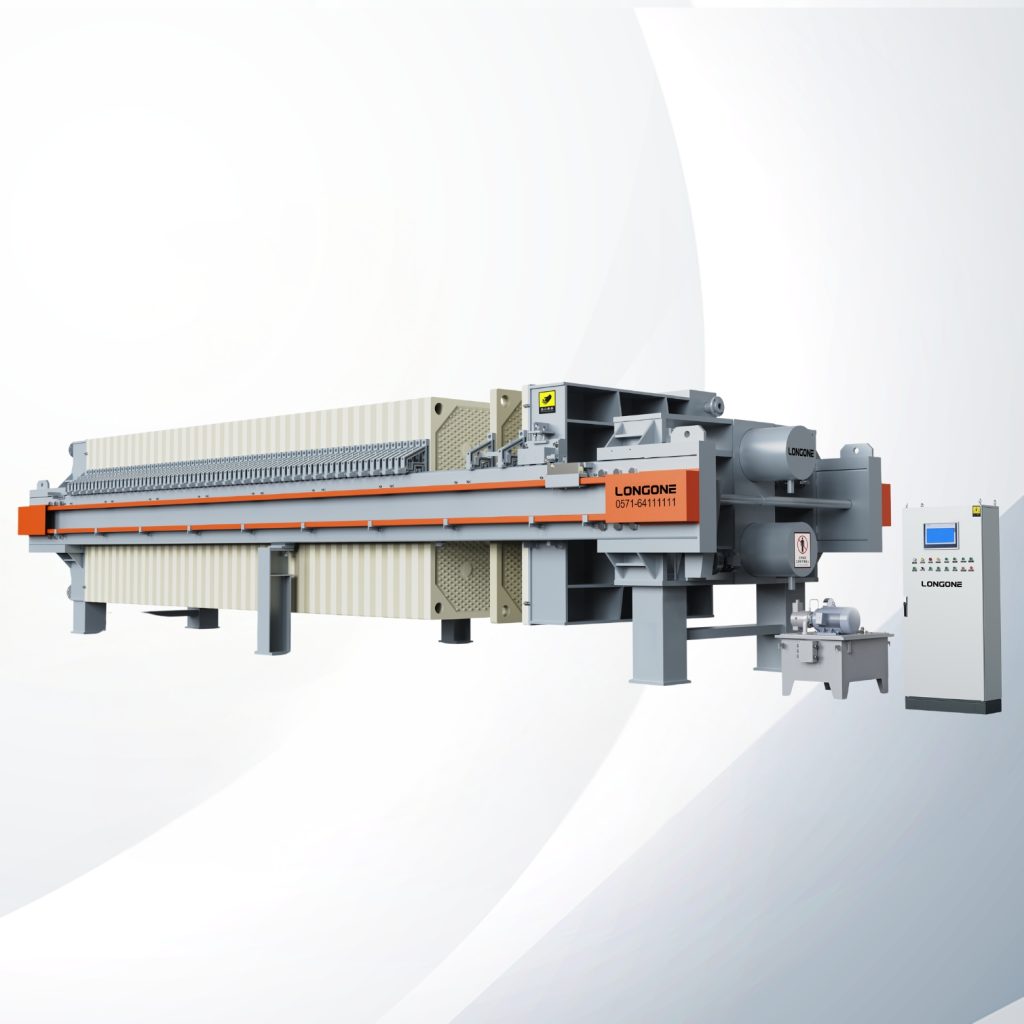
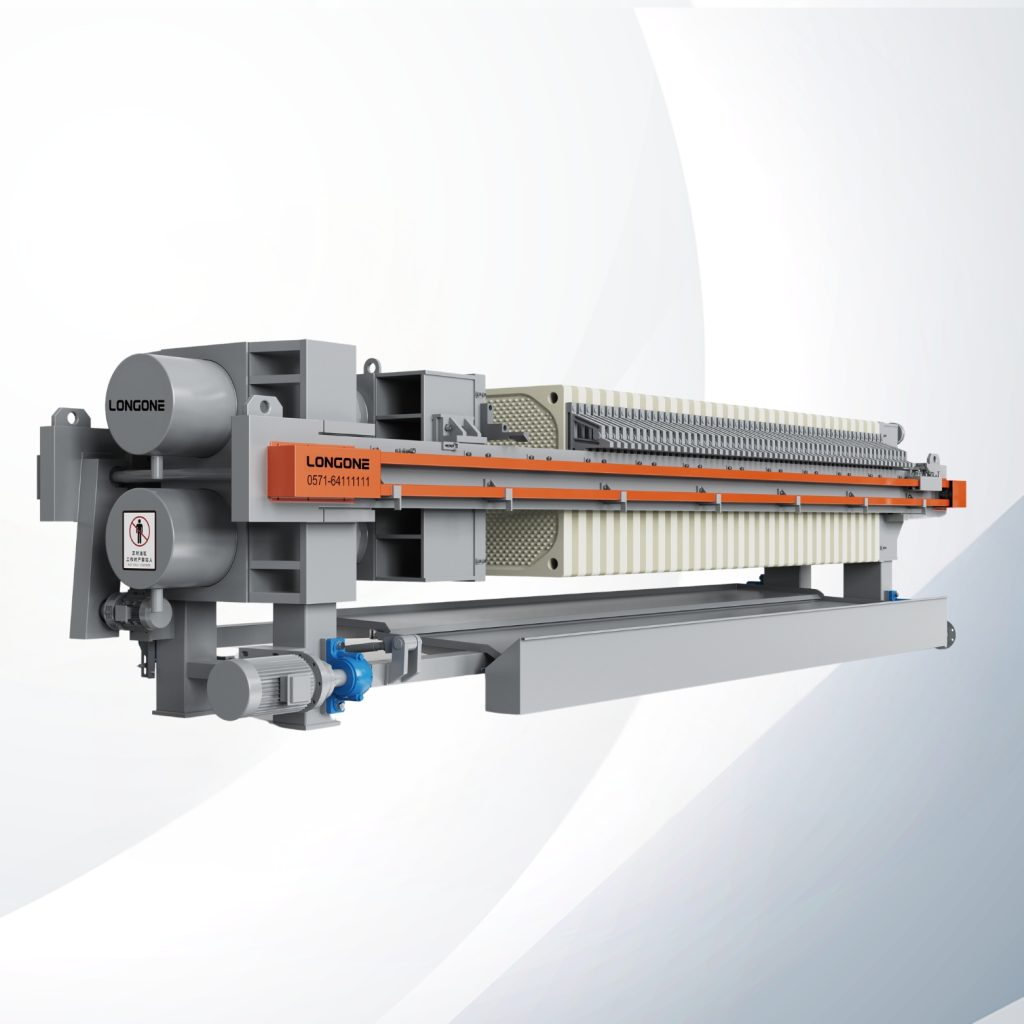
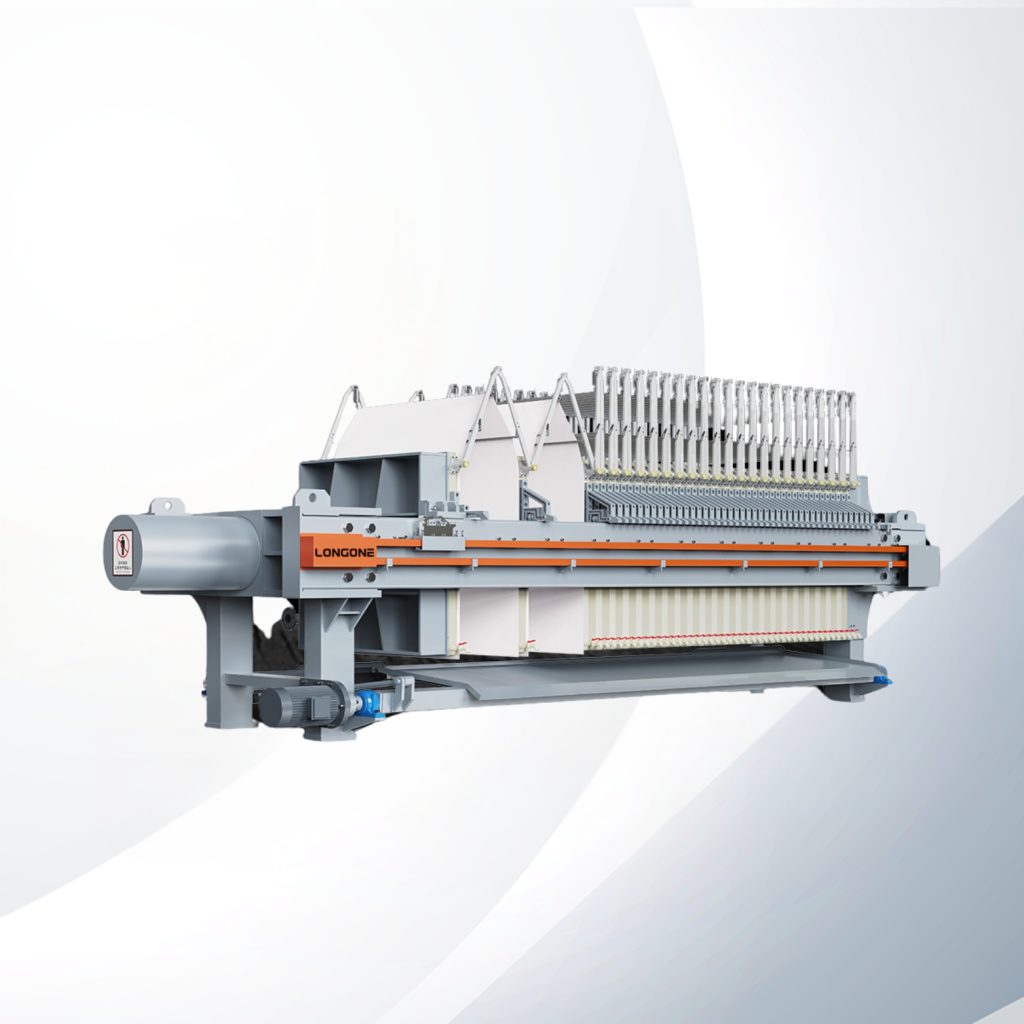
A Filter Press in Chemical Industry applications separates solids from liquids by pumping chemical slurry into chambers lined with filter cloth. Solids form a filter cake, while clarified liquid exits through drainage channels. The best design depends on slurry chemistry, particle size, viscosity, temperature, pressure, cake dryness requirements, and corrosion resistance.

Chemical manufacturers rarely deal with one “standard” slurry. I usually look at the full process before recommending a press, including the material being recovered, the filtrate quality required, operator workload, and the plant’s maintenance habits.
What Is a Filter Press and Why Is It Essential in the Chemical Industry?
A Filter Press in Chemical Industry operations solves a basic but difficult problem: chemical slurries often contain valuable solids, hazardous liquids, or wastewater streams that must be separated reliably. If filtration is unstable, production slows, quality varies, and disposal costs rise.
A chemical filter press is essential because it provides batch pressure filtration for demanding slurries. It helps chemical plants recover solids, clarify liquids, reduce sludge volume, and control cake moisture. It is widely used in pigments, dyes, catalysts, inorganic chemicals, salts, and chemical wastewater treatment.
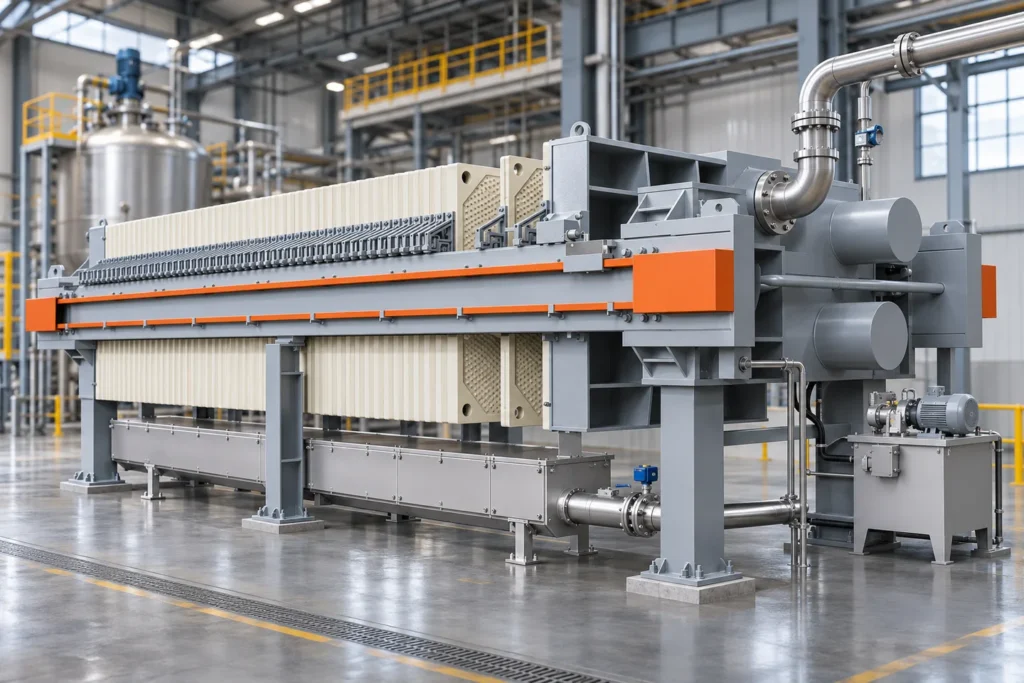
Why chemical filtration is different
In general wastewater treatment, many slurries are relatively predictable. In chemical manufacturing, I see much wider variation. One batch may contain fine pigment particles. Another may contain acidic wastewater, catalyst fines, salts, or viscous reaction residues.
That is why I do not treat an Industrial Filter Press as a simple commodity machine. I treat it as part of the process. The equipment must match:
- Slurry composition
- Particle size distribution
- Chemical corrosiveness
- Operating temperature
- Feed pressure
- Required cake dryness
- Filtrate clarity target
- Discharge and automation requirements
Main functions in chemical plants
A Filter Press in Chemical Industry use case may focus on one or several goals:
| Goal | Practical value for chemical plants |
|---|---|
| Product recovery | Captures pigments, catalysts, salts, and fine chemical solids |
| Liquid clarification | Reduces suspended solids in process liquids |
| Sludge dewatering | Lowers disposal volume and transport cost |
| Wastewater treatment | Helps meet internal discharge or reuse targets |
| Process consistency | Supports stable downstream drying, packaging, or reuse |
In my experience, buyers should avoid choosing only by filtration area or price. A 100 m² press from one supplier may not perform like another 100 m² press if the plate design, cloth type, hydraulic system, and sealing performance differ. For technical procurement, I always recommend reviewing slurry test data, material compatibility, and supplier manufacturing records before final approval.
At LONGONE, we manufacture automatic filter presses and complete filtration systems for different industrial processes. For chemical buyers, I position the discussion around process fit first, then equipment configuration.
Common Chemical Processes That Use Filter Press Equipment?
Chemical plants use filter press equipment in many applications, but the challenge is never just “removing water.” If I ignore slurry behavior, the press may blind quickly, leak around the plates, or produce cakes that are too wet for downstream handling.
Common Filter Press Applications in chemical manufacturing include pigment filtration, dye production, catalyst recovery, inorganic chemical processing, salt production, fine chemical separation, chemical wastewater sludge dewatering, and valuable solid recovery. Each application may require different cloths, plate materials, feed pressures, and washing or squeezing steps.

Practical examples by chemical sector
Chemical manufacturers use filter presses in both production and environmental stages. I usually divide applications into two groups: process filtration and waste treatment filtration.
Process filtration examples
- Pigments and dyes: Fine particles require careful cloth selection and good cake release.
- Catalyst recovery: Valuable solids may require high capture efficiency and gentle handling.
- Inorganic chemicals: Salts, oxides, hydroxides, and carbonates may need corrosion-resistant components.
- Fine chemicals: Small-batch production may need flexible operation and easy cleaning.
- Crystallization processes: Crystal size and cake washing requirements affect press design.
Waste treatment examples
- Chemical wastewater sludge: The goal is often lower moisture and lower disposal cost.
- Neutralization sludge: Slurries may contain metal hydroxides and variable solids content.
- Spent process slurry: Plants may need separation before recycling or safe disposal.
Application comparison
| Application | Typical challenge | Common filter press focus |
|---|---|---|
| Pigments | Fine particles and cloth blinding | Cloth permeability, cake release, pressure control |
| Dyes | Color carryover and washing | Filtrate clarity, washing efficiency |
| Catalysts | Valuable solid recovery | High capture rate, enclosed handling |
| Inorganic salts | Corrosion and crystal structure | Plate material, drainage design |
| Wastewater sludge | High moisture and variable feed | Membrane squeezing, automation |
| Fine chemicals | Batch flexibility | Easy cleaning, material compatibility |
For global buyers, I suggest asking suppliers for similar project references. However, I also recommend treating references as starting points, not proof that the same configuration will work. Two pigment plants may use similar raw materials but still have different particle sizes, additives, temperatures, and cake dryness targets.
A good Chemical Filter Press selection process should begin with sample testing or at least a detailed process questionnaire. I want to know the feed solids percentage, pH, temperature, viscosity, corrosive components, expected daily throughput, and cake discharge method. These details decide whether the plant needs a chamber press, membrane press, stainless steel design, or a more customized corrosion-resistant filter press.
How Does a Filter Press Work in Chemical Manufacturing?
A Filter Press in Chemical Industry service works under pressure, so small design choices matter. If the feed system, plate stack, cloth, and discharge method are not coordinated, the plant may see slow cycles, wet cakes, leakage, or inconsistent filtrate quality.
A filter press works by closing filter plates under hydraulic pressure, pumping chemical slurry into the chambers, retaining solids on filter cloth, and discharging filtrate through drainage channels. After filtration, optional cake washing, air blowing, or membrane squeezing can reduce impurities and moisture before cake discharge.

Basic operating cycle
Most chemical filter press operations follow a batch cycle. The details vary, but the principle is consistent.
- Plate closing: The hydraulic system compresses the plate pack.
- Slurry feeding: A pump sends slurry into the chambers.
- Filtration: Liquid passes through the cloth, while solids form a cake.
- Cake build-up: Pressure rises as cake resistance increases.
- Optional washing: Wash liquid removes soluble impurities.
- Optional squeezing: Membrane plates compress the cake mechanically.
- Air blowing: Compressed air may remove additional liquid.
- Plate opening: Cakes discharge manually or automatically.
- Cloth cleaning: Operators clean cloths when needed.
Chamber vs. membrane filter press
One important decision is whether to use a chamber filter press or a membrane filter press. I compare them early because this choice affects cake moisture, cycle time, and investment cost.
| Type | How it works | Best fit | Key consideration |
|---|---|---|---|
| Chamber filter press | Solids fill fixed chambers formed by recessed plates | General chemical solid-liquid separation | Lower initial cost, simple structure |
| Membrane filter press | Flexible membranes squeeze the cake after feeding | Slurries needing lower cake moisture | Higher cost, but often shorter cycles and drier cakes |
A chamber filter press can be a good choice when the slurry filters easily and cake dryness requirements are moderate. A membrane filter press is often better when disposal cost is high, when downstream drying is expensive, or when the plant needs better cake release.
Why pressure control matters
Chemical filtration is not always improved by simply raising pressure. Higher pressure can compact fine particles and reduce permeability. It can also increase leakage risk if the slurry is corrosive or the sealing surface is not suitable.
I normally evaluate:
- Initial feed pressure
- Final filtration pressure
- Pump flow curve
- Cloth permeability
- Cake compressibility
- Plate strength
- Seal design
LONGONE manufactures filter presses with pressure ratings up to 6.0 MPa, but buyers should select pressure based on process requirements, not just maximum rating. For application-specific decisions, I recommend qualified engineering evaluation and, when possible, pilot testing.
Key Factors to Consider When Choosing a Chemical Filter Press?
Choosing a Chemical Filter Press only by filtration area can create procurement risk. If I do not match the press to chemical compatibility, slurry behavior, and production capacity, the plant may spend more later on downtime, cloth replacement, and maintenance.
Key selection factors include slurry composition, particle size, viscosity, pH, temperature, filtration pressure, daily capacity, cake moisture target, filtrate clarity, plate material, cloth type, sealing performance, automation level, and supplier engineering support. No universal filter press fits every chemical application.
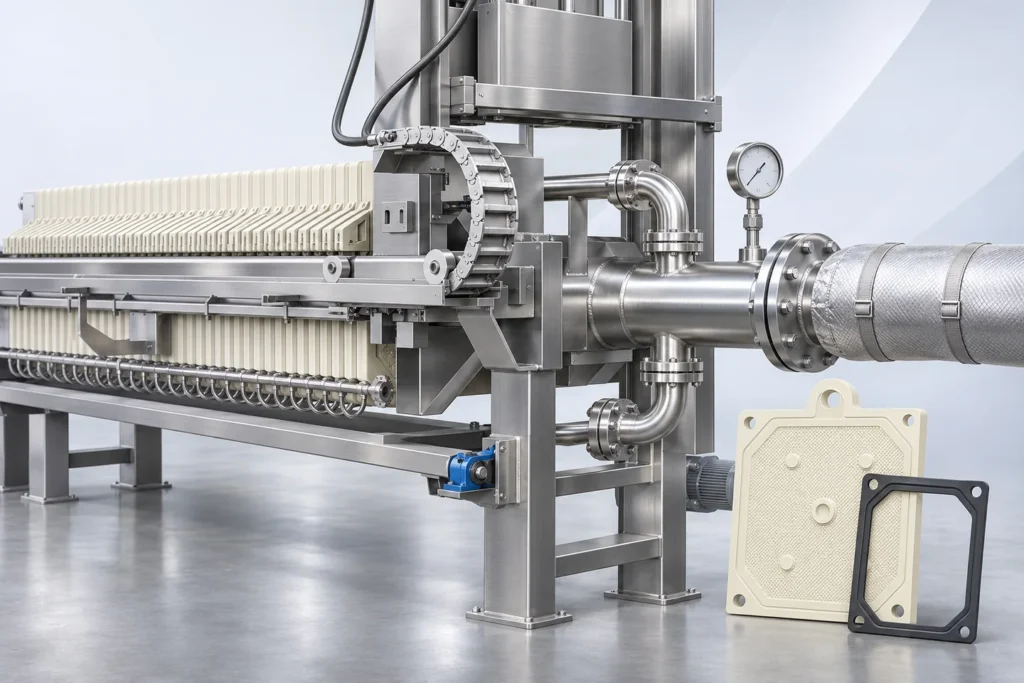
A practical buyer’s checklist
When I help evaluate an industrial filtration project, I start with process data. If the buyer cannot provide all information, I ask for samples, lab reports, or operating records from existing equipment.
Process data to collect
- Feed slurry volume per hour or per batch
- Solids concentration by weight
- Particle size distribution
- pH value and corrosive chemicals
- Operating temperature
- Viscosity and settling behavior
- Desired filtrate clarity
- Target cake moisture
- Available compressed air and utilities
- Required automation level
Equipment configuration factors
| Selection item | Why it matters |
|---|---|
| Filtration area | Determines batch capacity and cycle planning |
| Plate size and chamber depth | Affects cake volume and discharge behavior |
| Plate material | Must resist chemicals and temperature |
| Filter cloth | Controls filtration rate, clarity, and cake release |
| Feeding pump | Must match pressure and slurry abrasiveness |
| Sealing system | Reduces leakage risk in corrosive or hazardous service |
| Automation | Reduces manual handling and improves repeatability |
| Frame material | Important for corrosive environments and washdown areas |
Corrosive materials and high temperatures
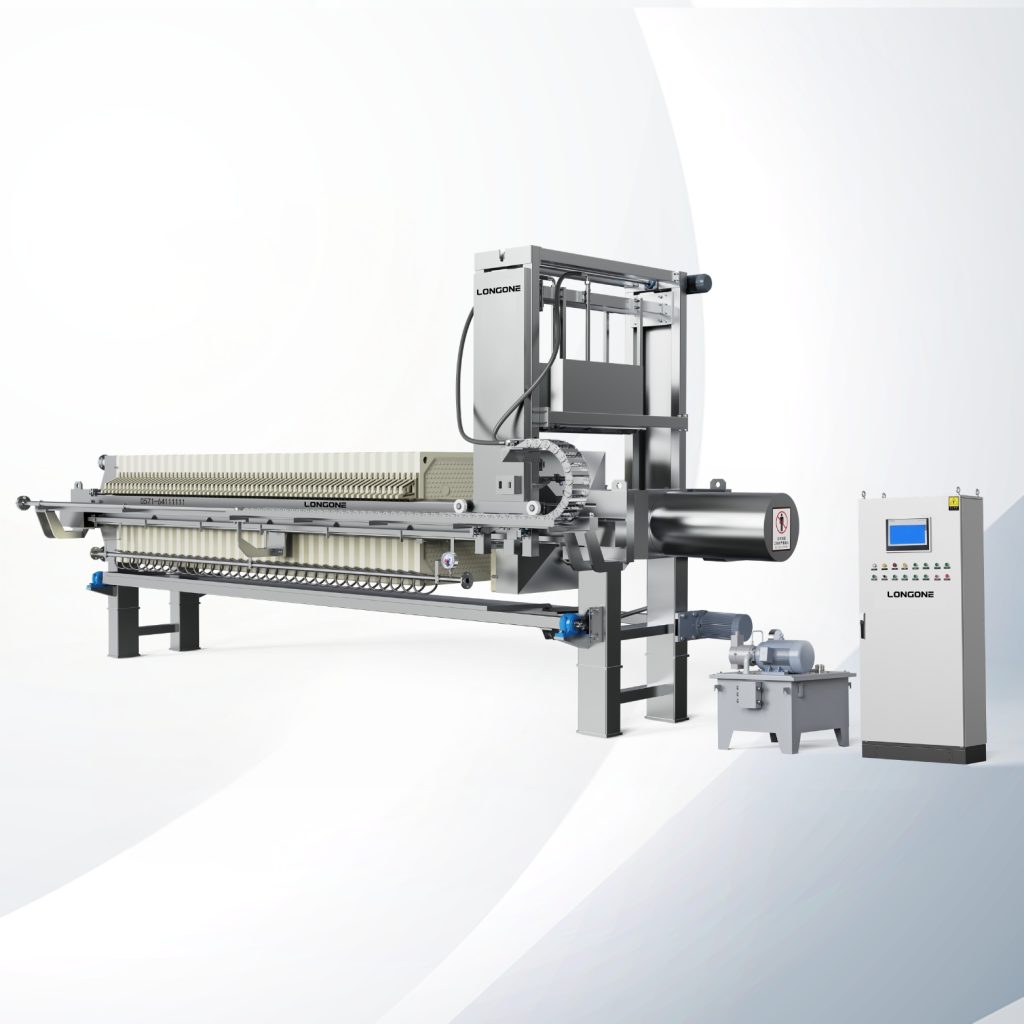
A Corrosion-Resistant Filter Press may use PP plates, stainless steel frames, special coatings, rubber-lined contact parts, or sealed designs depending on the chemical. For strongly acidic, alkaline, solvent-containing, or high-temperature applications, I avoid assumptions. Compatibility should be verified through chemical resistance charts, sample testing, and engineering review.
For example, polypropylene plates are widely used in many chemical applications, but the actual suitability depends on concentration and temperature. Stainless steel may be needed for structural strength or sanitation, but stainless grade selection must match corrosion conditions. Buyers should verify material certificates, welding quality, and surface treatment.
If the process involves food, pharmaceutical, or high-purity chemicals, additional documentation may be required. I recommend that buyers verify ISO certificates, material certificates, and quality inspection records directly during supplier evaluation.
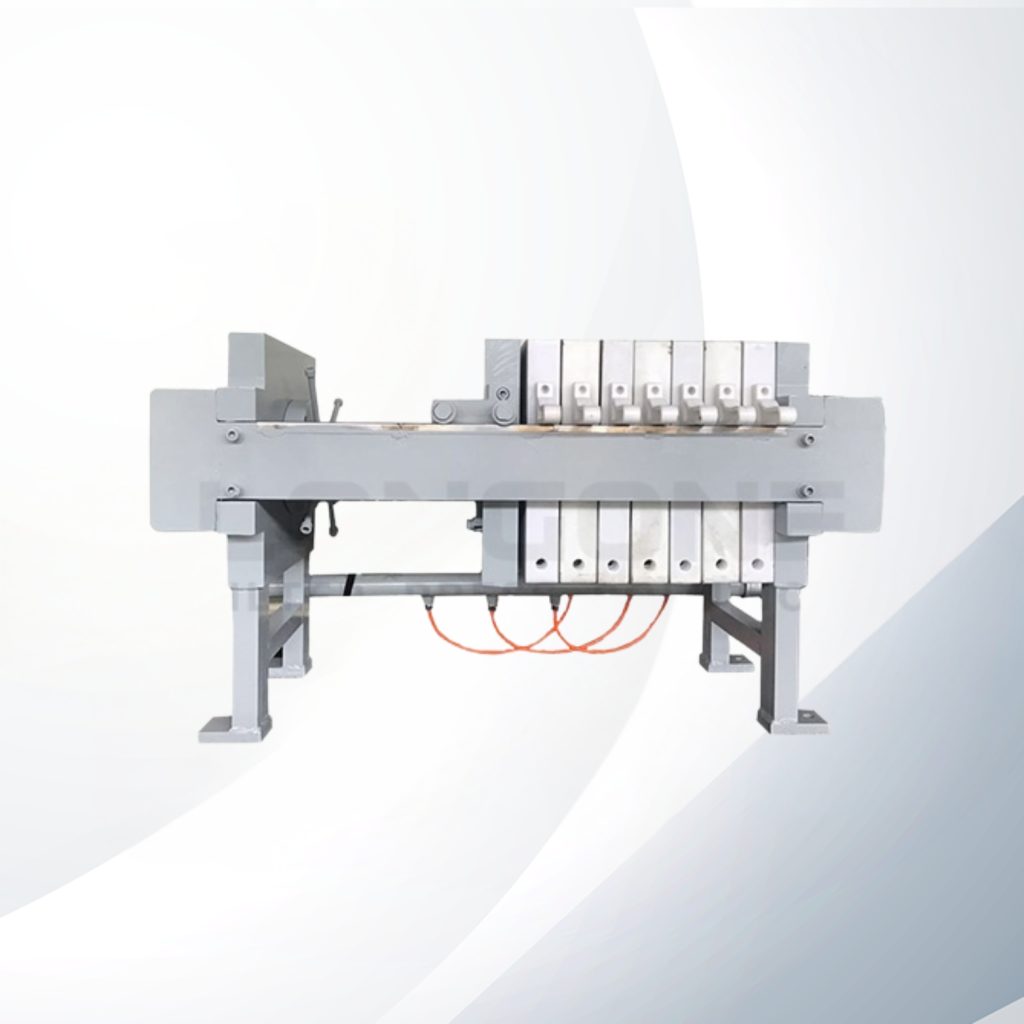
At LONGONE, our product range covers filtration areas from 0.16 to 1,600 m². That range allows us to support lab-scale, pilot, and large industrial projects, but I still treat the process data as the starting point.
Filter Plates and Filter Cloths for Different Chemical Applications?
Filter plates and cloths may look simple, but they decide much of the real-world performance. If I select the wrong cloth weave or plate material, chemical slurry filtration may become slow, unstable, or difficult to clean.
Filter plates provide chamber structure, drainage, and sealing, while filter cloths retain solids and allow liquid flow. For chemical applications, both must be selected according to pH, temperature, particle size, abrasiveness, filtrate clarity, cake release, washing needs, and chemical compatibility.

Filter plate options
Most chemical filter presses use recessed chamber plates or membrane plates. The material and design depend on the slurry.
| Plate type | Main advantage | Typical use |
|---|---|---|
| PP recessed plate | Good chemical resistance and common availability | General chemical filtration |
| Membrane plate | Lower cake moisture through squeezing | Waste sludge, fine chemicals, difficult cakes |
| Stainless steel plate | Strength, heat resistance, special process requirements | High-temperature or sanitary-related processes |
| Rubber-coated or lined parts | Additional corrosion protection | Aggressive chemical environments |
For buyers comparing equipment, I suggest looking beyond plate price. Plate flatness, sealing surface quality, drainage channel design, and molding consistency affect long-term operation. LONGONE manufactures large volumes of filter plates each year, and I would still encourage buyers to inspect samples or request quality documentation before purchasing.
Filter cloth selection
Filter cloth selection is one of the most important steps in Chemical Solid-Liquid Separation. The cloth must capture solids while allowing enough flow. If the cloth is too tight, cycle time increases. If it is too open, filtrate clarity suffers.
Common cloth materials include:
- Polypropylene: Common for acid and alkali resistance in many applications.
- Polyester: Good strength and dimensional stability in suitable conditions.
- Nylon: Strong abrasion resistance, but chemical compatibility must be checked.
- Specialty fabrics: Used for high temperature, fine particles, or specific chemicals.
Cloth characteristics to evaluate
- Weave pattern
- Air permeability
- Particle retention
- Surface finish
- Cake release behavior
- Shrinkage under temperature
- Resistance to cleaning chemicals
- Expected service life
Sealing and leakage control
Chemical plants often need better sealing than basic industrial users. Leaks can create safety risks, corrosion around the press, and product loss. Gasketed plates, improved cloth installation, drip trays, splash guards, or enclosed filtrate systems may be required.
If the chemical is hazardous, volatile, or valuable, I recommend reviewing the full system layout, not just the press body. Feed tank design, pump selection, pipe material, filtrate collection, ventilation, and operator access all affect safe operation.
For stainless or corrosion-focused designs, buyers can also review our stainless steel filter press options as a starting point.
Benefits of Using an Industrial Filter Press in Chemical Production?
An Industrial Filter Press can improve chemical production, but the benefit depends on proper process matching. If I oversell the machine and ignore operating conditions, the plant may not achieve the expected savings or product quality.
The main benefits of using a Filter Press in Chemical Industry production include higher solids recovery, clearer filtrate, lower sludge volume, reduced cake moisture, improved product handling, lower disposal cost, and more stable batch operation. Automation can also reduce manual labor and improve safety.
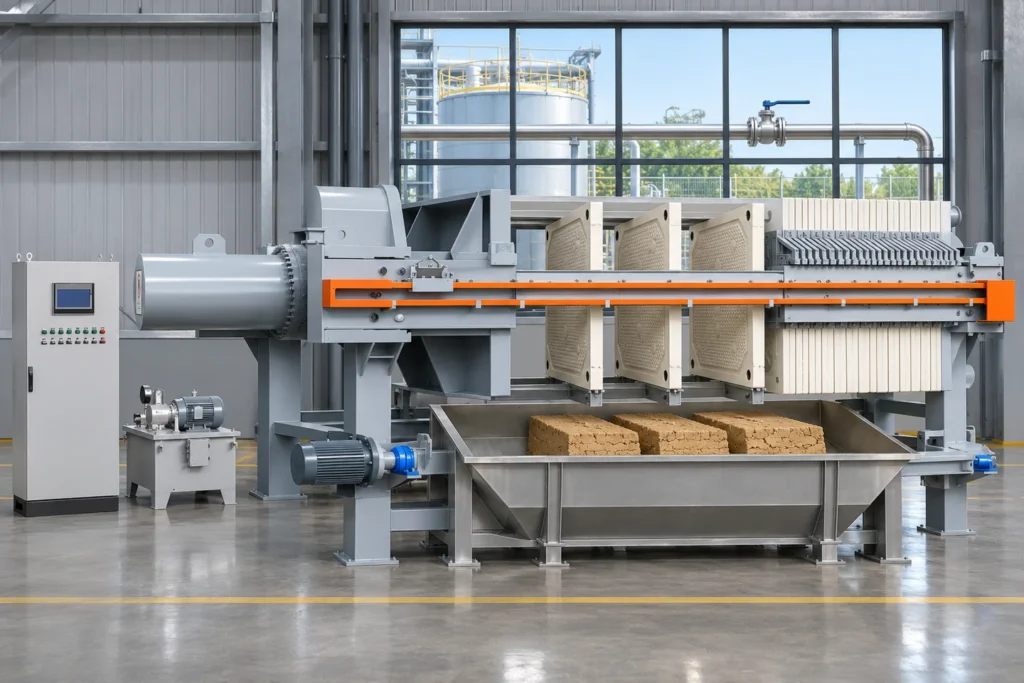
Where value is usually created
The economic value of a filter press often appears in several places at once. I look at both direct and indirect savings.
Direct benefits
- Less liquid in filter cakes
- Lower sludge disposal volume
- Higher recovery of valuable solids
- Reduced loss of product in wastewater
- Lower downstream drying load
Indirect benefits
- Cleaner work area
- More consistent production batches
- Lower manual handling
- Easier cake transport
- Better process documentation
Cake moisture and downstream cost
Cake moisture is a major cost driver. A few percentage points can matter when daily sludge volume is high. For example, if a plant produces 20 tons of wet cake per day, reducing moisture from 65% to 55% can significantly reduce the mass sent to disposal or drying. The exact savings depend on solids density, transport fees, and disposal pricing.
A membrane filter press may justify a higher investment when:
- Disposal cost is high
- Drying energy is expensive
- Cake must be transported long distances
- Product solids have high value
- Operators need faster discharge and cleaner cakes
Product recovery
In catalyst, pigment, and fine chemical production, solids are often not waste. They are product or reusable material. A properly selected Chemical Filter Press helps retain these solids and reduce product loss in filtrate.
For high-value solids, I pay close attention to:
- Cloth retention rating
- Cake washing efficiency
- Residual mother liquor
- Filtrate recirculation strategy
- Dead zones in piping
- Cake discharge contamination risk
Automation and safety
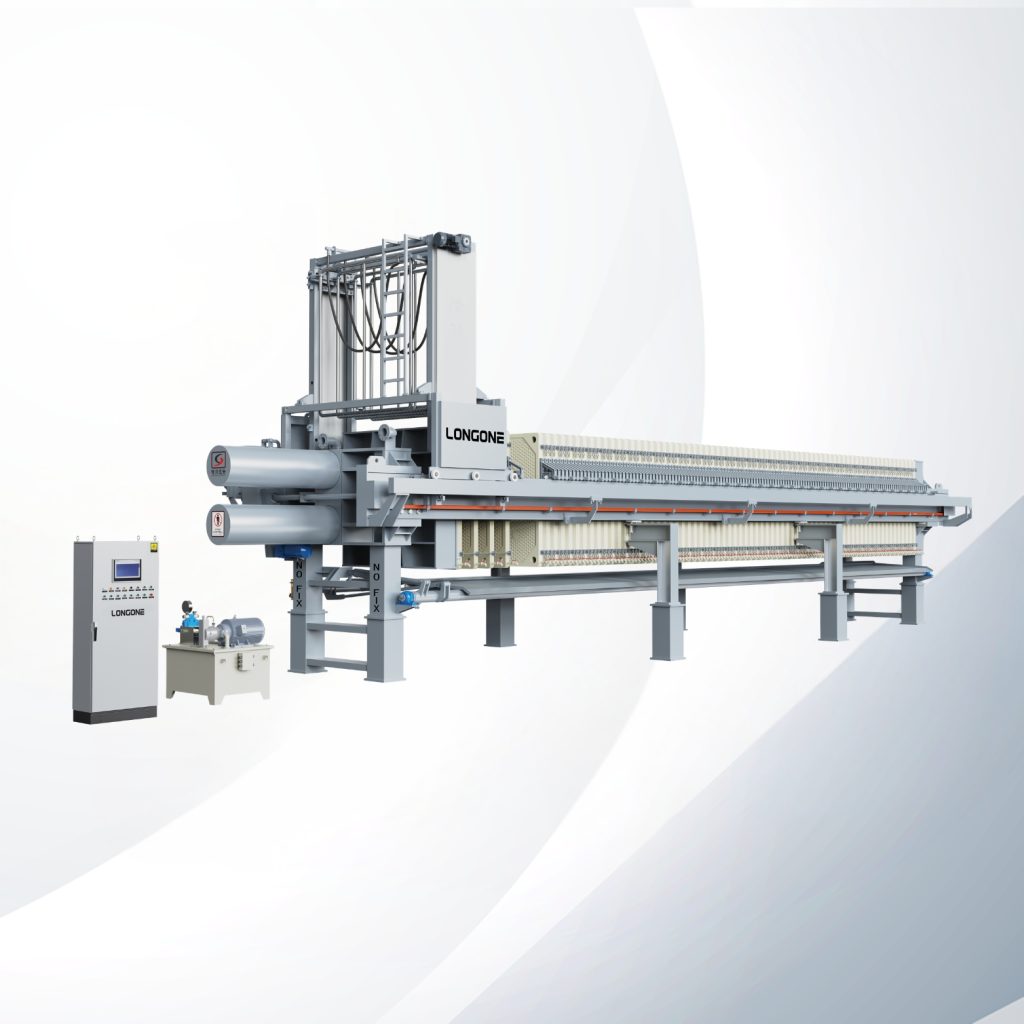
Automatic plate shifting, cloth washing, drip trays, conveyors, and control systems can reduce operator workload. They can also help plants standardize operation across shifts. I do not suggest automation for every small plant, but I often recommend it for corrosive, high-volume, or labor-sensitive chemical operations.
LONGONE produces filter presses, conveyors, filter plates, filter cloths, and accessories. This matters because a chemical filtration system is more than one machine. Cake discharge, filtrate handling, and site installation affect total performance.
How to Improve Filtration Efficiency and Reduce Operating Costs?
Improving filtration efficiency is not just about buying a larger press. If I want lower operating cost, I must optimize slurry conditioning, cloth selection, feed pressure, cycle time, cake discharge, and maintenance routines together.
To improve filtration efficiency, chemical plants should test slurry behavior, choose suitable filter cloths, optimize feed pressure, maintain clean cloth surfaces, use membrane squeezing when justified, control cake washing, and monitor cycle data. These actions can reduce cake moisture, shorten cycles, and lower labor, disposal, and energy costs.

Practical optimization steps
1. Start with slurry testing
Slurry testing gives useful clues about filtration rate, cake structure, and cloth performance. I prefer testing before final equipment sizing, especially for fine particles, high viscosity, or unknown chemical mixtures.
Testing may evaluate:
- Filtration speed
- Cake thickness
- Cake moisture
- Filtrate clarity
- Cloth blinding tendency
- Washing performance
- Chemical compatibility
2. Match the pump to the press
A filter press needs the right feed curve. Too much flow at high pressure can disturb cake formation or cause leakage. Too little flow can extend cycle time. Progressive cavity pumps, diaphragm pumps, centrifugal pumps, or plunger pumps may be considered depending on slurry abrasiveness and pressure requirements.
3. Control the filtration cycle
I recommend tracking basic operating data:
| Data point | Why it helps |
|---|---|
| Feed time | Shows cycle stability |
| Final pressure | Indicates cake resistance |
| Filtrate flow | Helps identify cloth blinding |
| Cake moisture | Measures real dewatering result |
| Cloth washing frequency | Shows maintenance burden |
| Cake discharge time | Affects labor and total cycle cost |
When operators record these values, the plant can identify changes before they become failures. For example, longer feed time at the same slurry concentration may mean cloth blinding or pump wear.
4. Improve cake release
Poor cake release increases labor and damages cloths. Better release may come from cloth surface treatment, correct cake thickness, membrane squeezing, air blowing, or adjusted feed solids.
5. Reduce cloth blinding
Cloth blinding is common in fine chemical and pigment filtration. Plants can reduce it by:
- Selecting the right weave and permeability
- Avoiding excessive pressure early in the cycle
- Using suitable pre-coat or body feed when appropriate
- Washing cloths at the right interval
- Preventing oil or polymer contamination when possible
Cost control is long-term
The lowest purchase price may not be the lowest cost. I usually compare total cost of ownership, including cloth life, plate life, power consumption, labor, downtime, disposal, and spare parts availability.
A well-designed Filter Press in Chemical Industry process can pay back through reduced disposal, better product recovery, and fewer operating interruptions. However, buyers should ask suppliers for realistic assumptions, not generic savings claims.
Why Choose a Customized Filter Press Solution for Chemical Processing?
A standard machine may work for simple filtration, but chemical processing often needs more. If I force a standard design onto a difficult slurry, I may create leakage, corrosion, high moisture, or maintenance problems that last for years.
A customized filter press solution is valuable because chemical slurries vary widely in pH, temperature, particle size, viscosity, solids content, and corrosion risk. Custom design can align plates, cloths, sealing systems, automation, materials, pumps, conveyors, and controls with actual process requirements.

What customization can include
A customized Chemical Filter Press is not always complex. Sometimes customization means choosing the right cloth and plate combination. In other projects, it may involve a complete filtration line.
Common customization areas include:
- Filtration area and chamber volume
- Plate material and plate size
- Membrane or chamber plate configuration
- Gasketed or non-gasketed sealing
- Corrosion-resistant frame coating
- Stainless steel contact parts
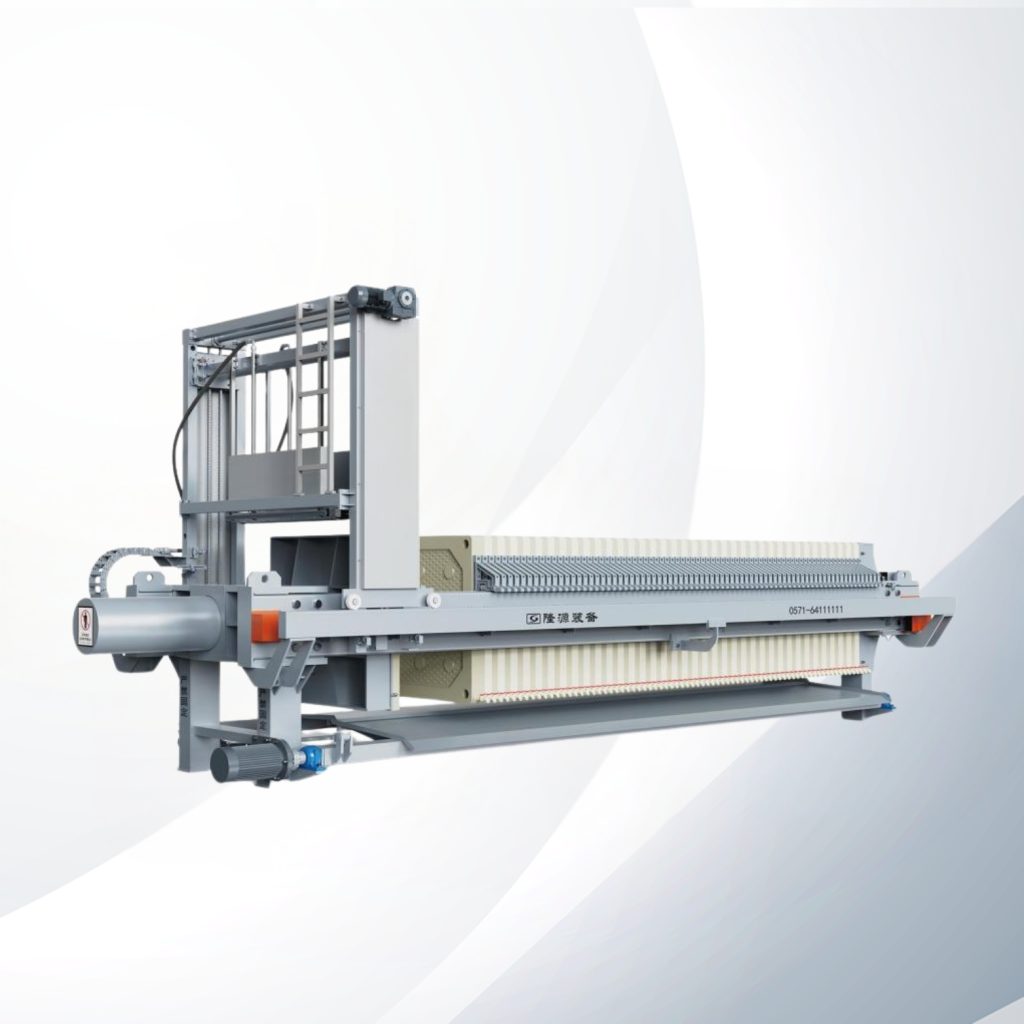
- Automatic plate shifting
- Automatic cloth washing
- Drip trays and splash protection
- Cake conveyors or hoppers
- PLC control and instrumentation
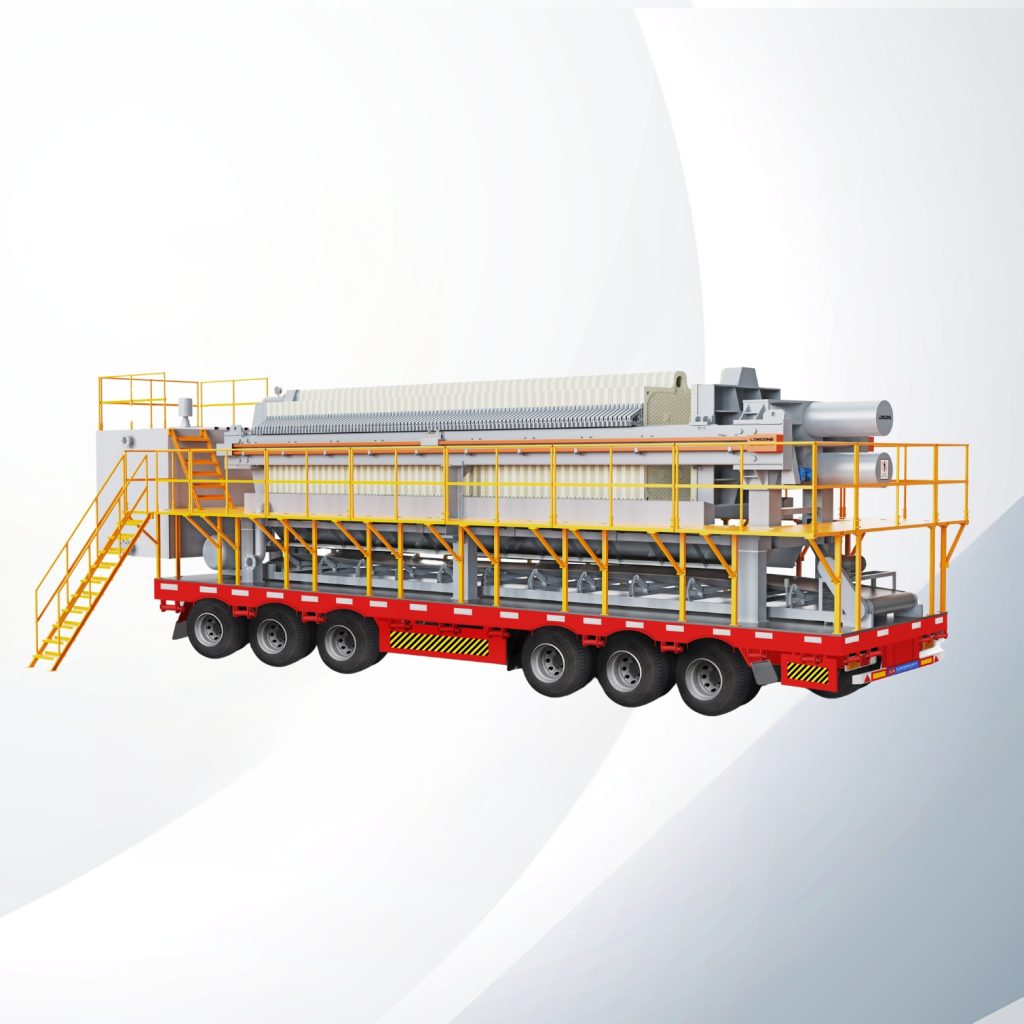
- Skid-mounted auxiliary systems
Why supplier capability matters
For global procurement teams, supplier selection should include more than quotation comparison. I suggest evaluating whether the supplier can support the full project cycle.
| Supplier capability | Why buyers should verify it |
|---|---|
| Engineering support | Confirms process-based equipment selection |
| Manufacturing capacity | Supports delivery for large or repeat orders |
| Quality control records | Helps reduce procurement risk |
| Export experience | Supports documentation, packing, and logistics |
| Installation guidance | Reduces commissioning delays |
| Spare parts support | Improves long-term reliability |
LONGONE was founded in 2007 and is based in Zhejiang, China. In our business context, we manufacture automatic filter presses and complete filtration systems, including filter plates, cloths, conveyors, and accessories. We produce more than 3,000 filter presses and 110,000 filter plates annually, and each unit carries a 12-month warranty. Buyers should still verify ISO certification documents, inspection records, and project references during procurement.
Integrated solution approach
I prefer to position LONGONE as a filtration solution provider rather than only a filter press supplier. For chemical customers, that means we can discuss:
- Process review
- Equipment selection
- Customized design
- Manufacturing
- Factory inspection
- Export packing
- Installation support
- Commissioning guidance
- Technical support and spare parts
If a buyer already knows the required configuration, our filter press machine page can help with equipment comparison. If the process is still uncertain, I recommend sharing slurry data first so the technical discussion starts from the actual operating conditions.
A customized Corrosion-Resistant Filter Press may cost more at the beginning, but it can reduce downtime, improve safety, and extend service life in aggressive chemical environments.
Frequently Asked Questions
What is the best filter press for chemical slurry filtration?
The best filter press depends on slurry composition, particle size, pH, temperature, viscosity, cake moisture target, and capacity. A chamber press suits many general applications, while a membrane press is better when lower cake moisture or shorter cycles are required.
How do I choose filter cloth for chemical solid-liquid separation?
I choose filter cloth based on particle retention, permeability, chemical resistance, temperature resistance, cake release, and cleaning method. Polypropylene, polyester, nylon, and specialty fabrics can all be suitable, but the final choice should be verified against the actual slurry.
Can a filter press handle corrosive chemical materials?
Yes, a corrosion-resistant filter press can handle many corrosive slurries if materials are selected correctly. Buyers should review plate material, frame coating, sealing design, piping, pump materials, and chemical compatibility at the required concentration and temperature.
What is the difference between chamber and membrane filter presses?
A chamber filter press uses fixed recessed chambers to form cakes. A membrane filter press adds flexible membranes that squeeze the cake after feeding. Membrane presses usually reduce cake moisture and cycle time, but they cost more than standard chamber presses.
Why is customization important for chemical filter press equipment?
Customization is important because chemical processes vary widely. A customized design can match slurry behavior, corrosion risk, filtration temperature, automation needs, and cake dryness goals. This improves reliability, efficiency, product recovery, and long-term operating cost control.
Conclusion
A Filter Press in Chemical Industry applications is not a one-size-fits-all machine. I need to evaluate slurry chemistry, particle size, viscosity, temperature, pressure, filter plates, cloths, sealing, automation, and corrosion resistance before choosing the right system. For chemical manufacturers, the best result usually comes from process-based design and supplier collaboration. If you are comparing filter press options for pigments, dyes, catalysts, inorganic chemicals, or chemical wastewater treatment, contact LONGONE to discuss a customized filtration solution based on your actual process data.