
- laboratory filter press
Lab Filter Press
Lab filter press manufacturer in China. LONGONE provides laboratory filter press, mini filter press and customized filtration solutions for R&D, wastewater treatment and small-scale production.
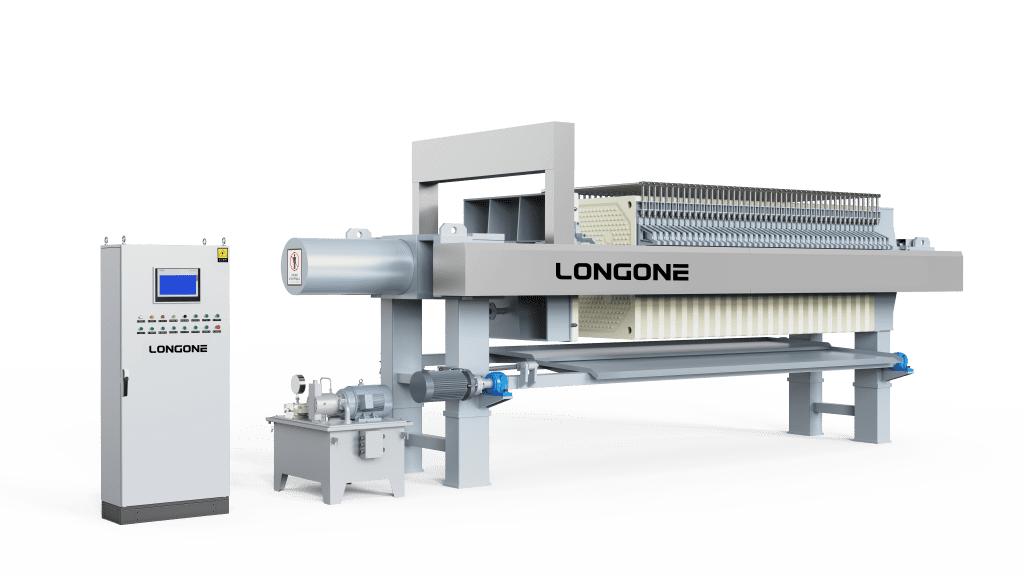
Your Trusted Lab Filter Press Manufacturer
LONGONE is a professional filter press manufacturer integrating OEM and ODM services. We possess a complete production process, including sintering, turning, welding, painting, bonding, electroplating, and assembly, ensuring stable and reliable product quality.
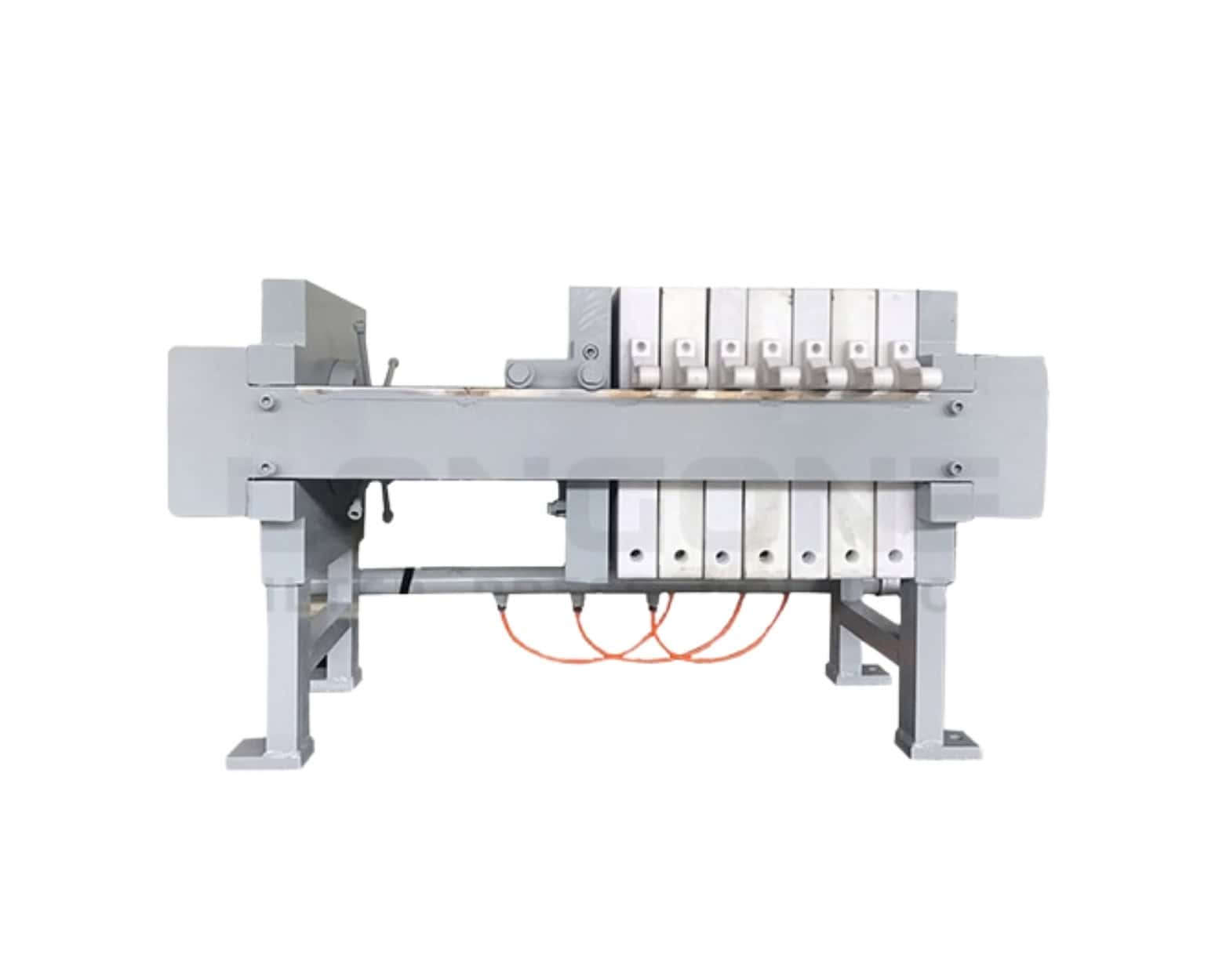
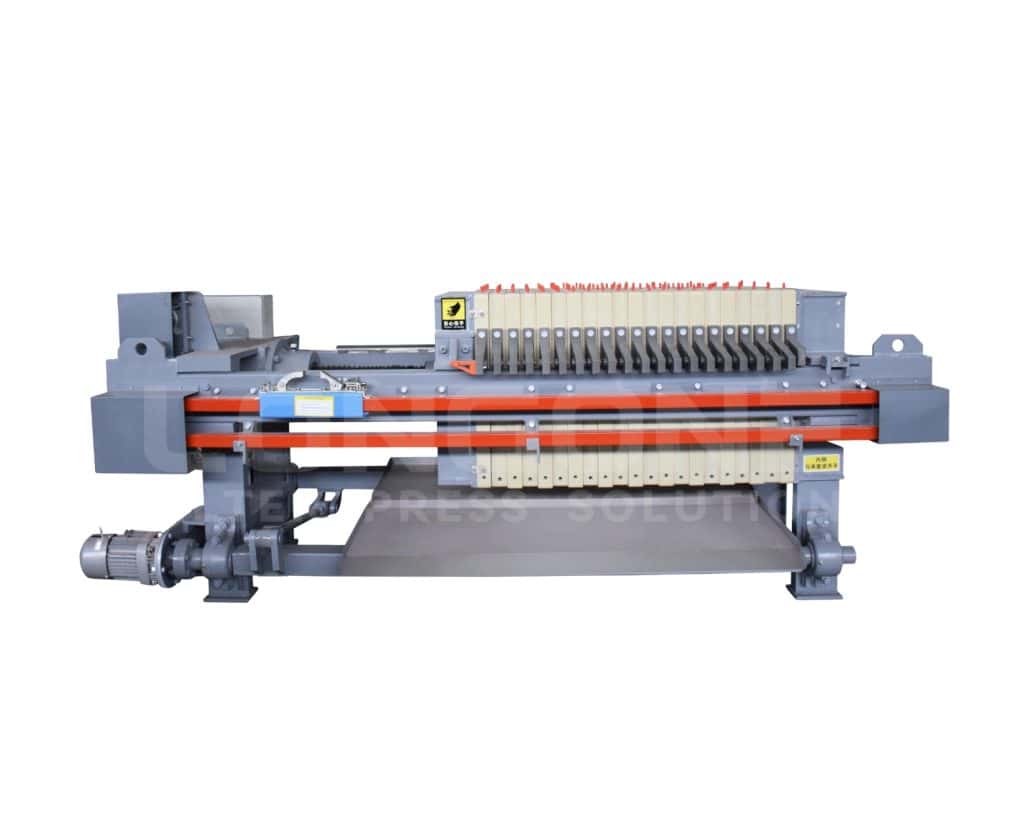
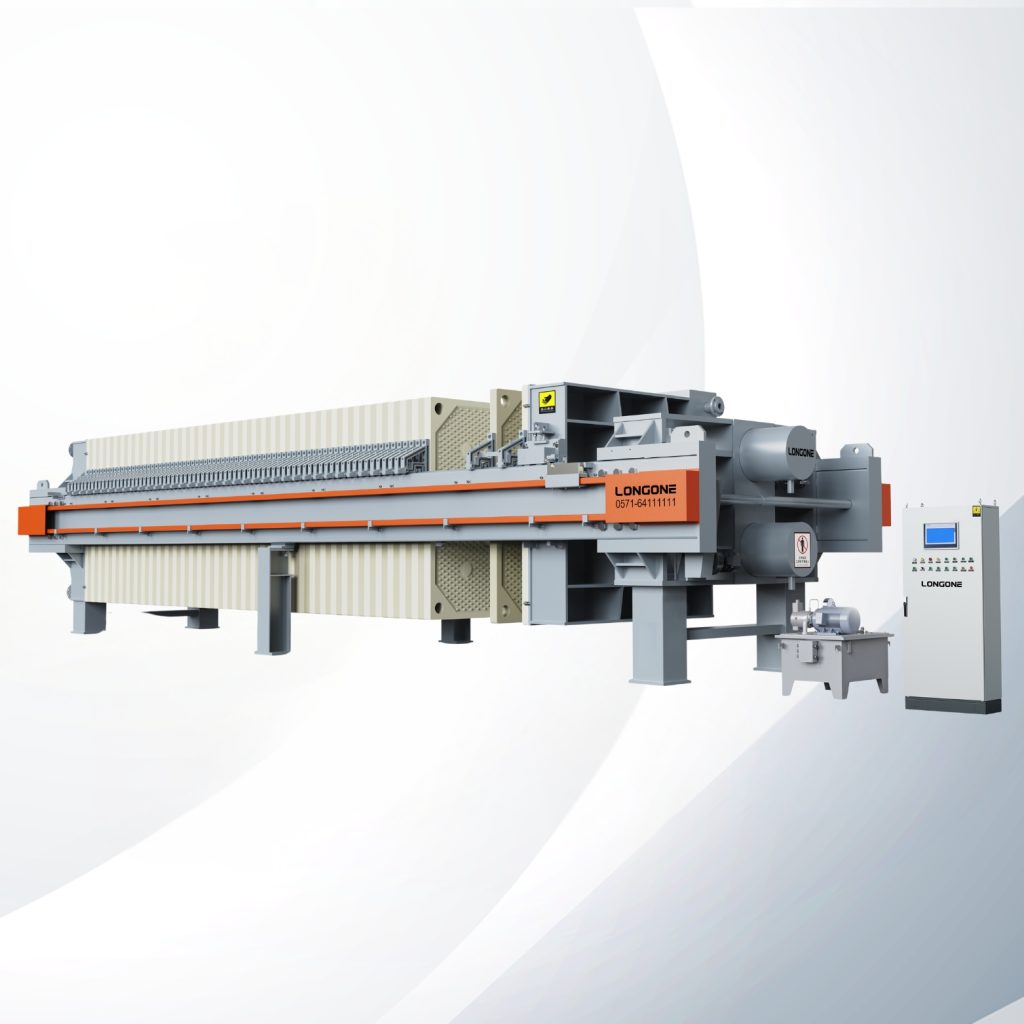
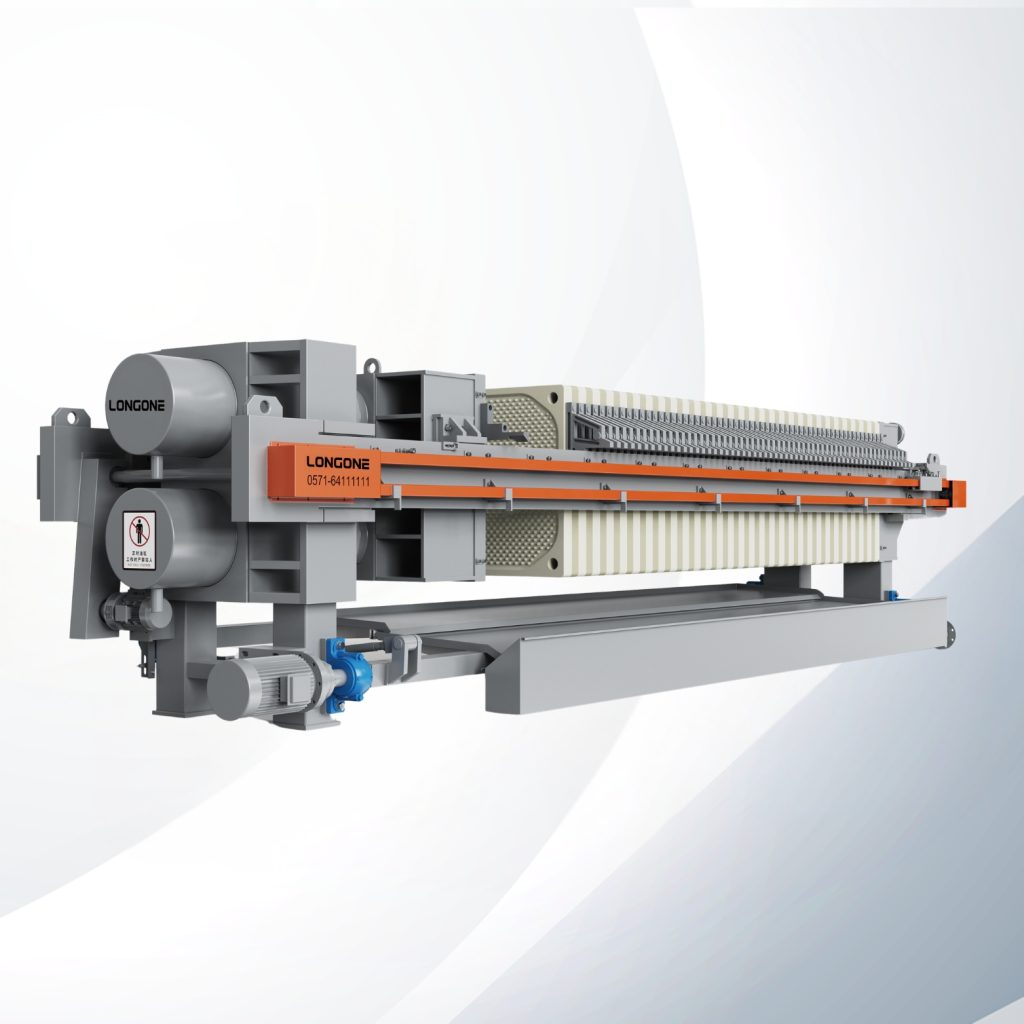
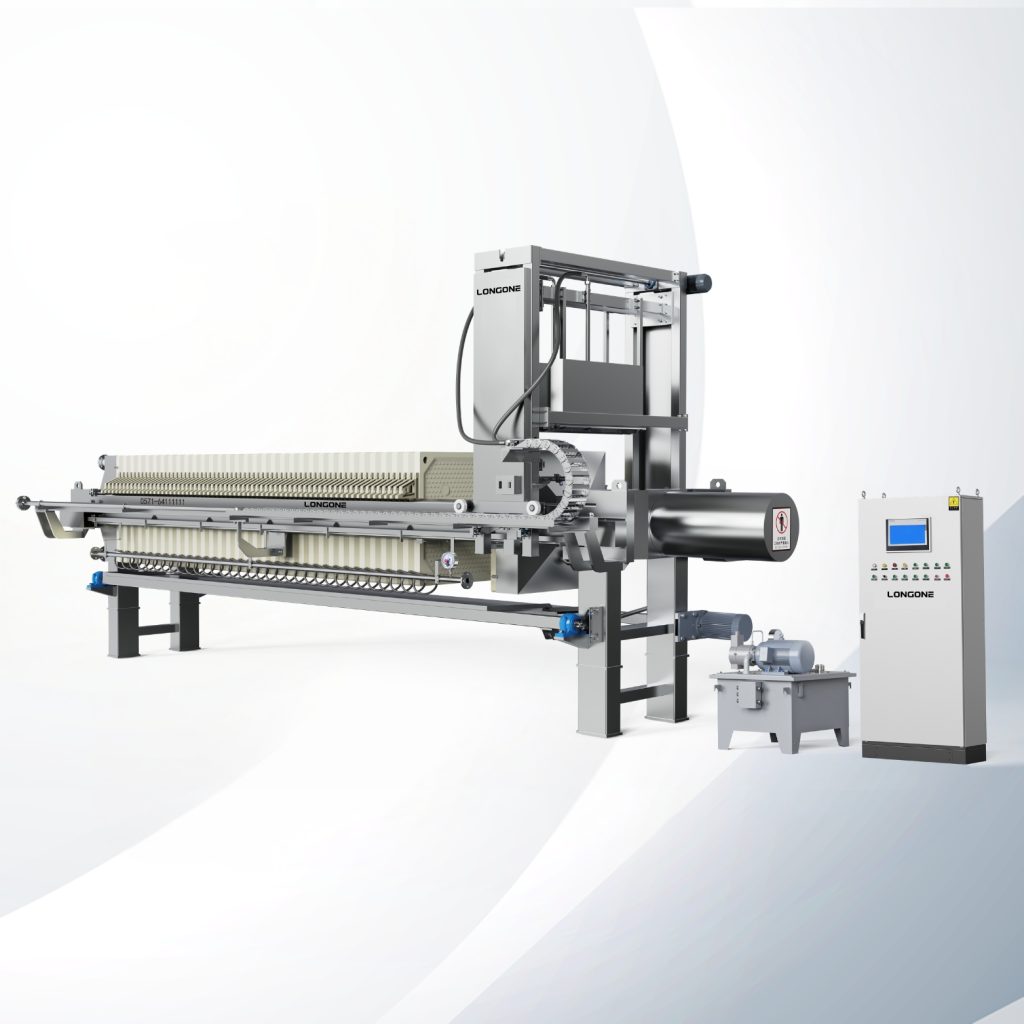
Our Lab Filter Press, also known as Laboratory Scale Filter Press or Mini Filter Press, is designed specifically for scientific research, small-scale production, and filtration process development.
The basic structure, working principle, and filtration process of our laboratory filter press are almost identical to those of industrial hydraulic filter presses, but in a smaller size, making it ideal for laboratory testing and small-batch production.
mini filter press
A laboratory filter press is a small-scale solid-liquid separation device used in laboratory environments, primarily for:
- Filtration experimental research
- Filter cake dewatering experiments
- Filtration process development
- Small-scale production testing
- Research on filter material performance
This equipment can efficiently dewater small amounts of liquid, achieving filtration results comparable to industrial filter presses.
Advantages of Our Lab Filter Press
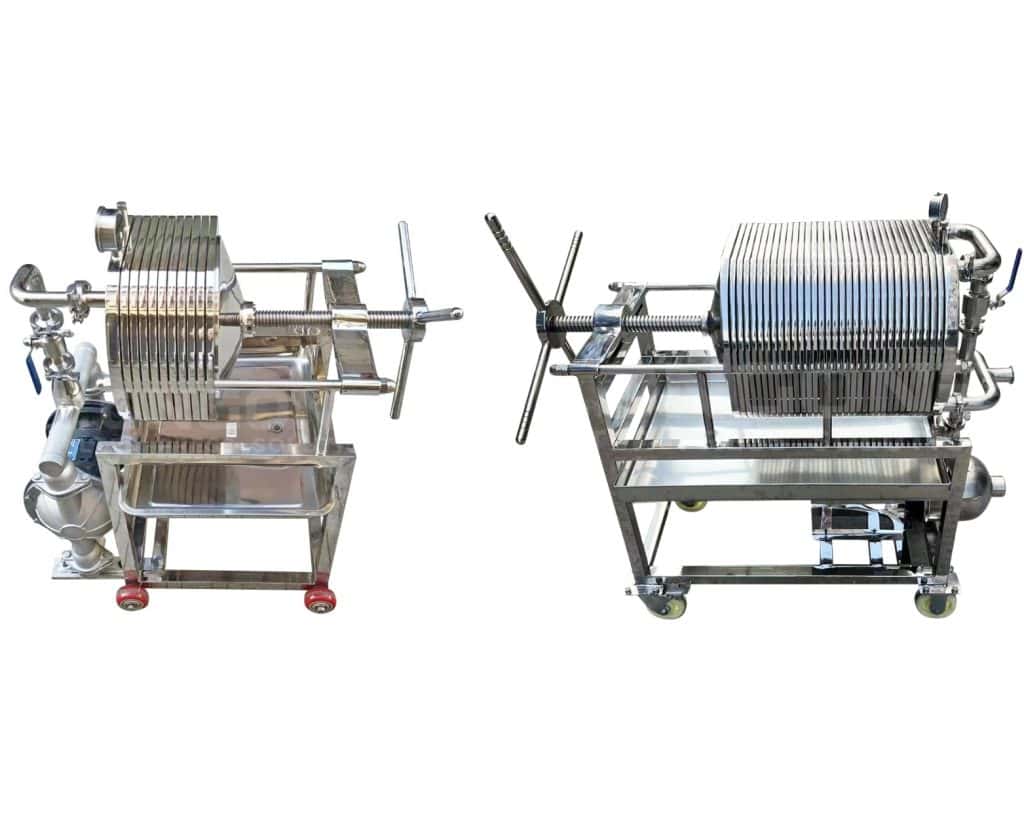
- Compact and Mobile Design : The lab filter press features a compact structure and is equipped with wheels, making it easy to move and ideal for laboratory environments with limited space.
- Industrial-Grade Filtration Performance : Designed based on the same working principle as industrial filter presses, it provides reliable filtration results that closely simulate real production conditions.
- Flexible Testing and Customization : Users can conduct multiple filtration tests while adjusting variables such as pressure, filtration time, and filter media to optimize process parameters.
- Durable and Corrosion-Resistant Materials : Constructed from high-quality stainless steel (304/316L) or PP materials, ensuring excellent corrosion resistance, durability, and long service life.
how does a lab filter press work
Laboratory filter presses operate similarly to industrial filter presses.
The suspension is fed into the filter press via a feed pump (pneumatic diaphragm pump). Under pressure:
- The liquid passes through the filter cloth and is discharged.
- Solid particles are trapped, forming a filter cake.
- The filter cake gradually thickens, completing solid-liquid separation.
By adjusting the filtration pressure, filtration time, and filter cloth material, multiple filtration experiments can be conducted to obtain optimal filtration parameters.
Lab Filter Press Specs
| Parámetro | Especificación |
|---|---|
| Frame Material | Stainless Steel 304 / 316L / Carbon Steel Q345 |
| Área de filtración | 0.016 m² – 10 m² |
| Filtration Pressure | 0.6 – 6.0 MPa |
| Filtration Temperature | -40°C – 120°C |
| Feeding Method | Top Feed / Center Feed / Corner Feed |
| Hydraulic System | Manual / Semi-Automatic |
Why LONGONE is a Trusted Partner
CE Certification
All materials and manufacturing processes comply with international standards, ensuring reliable quality, safety, and consistent performance for laboratory filtration equipment.
OEM & ODM Support
LONGONE provides flexible OEM and ODM services, allowing customers to customize filter press design, materials, filtration area, and configurations.
Garantía de un año
We provide a one-year warranty and responsive technical support, ensuring stable operation, quick troubleshooting, and long-term reliability for customers.
Production System
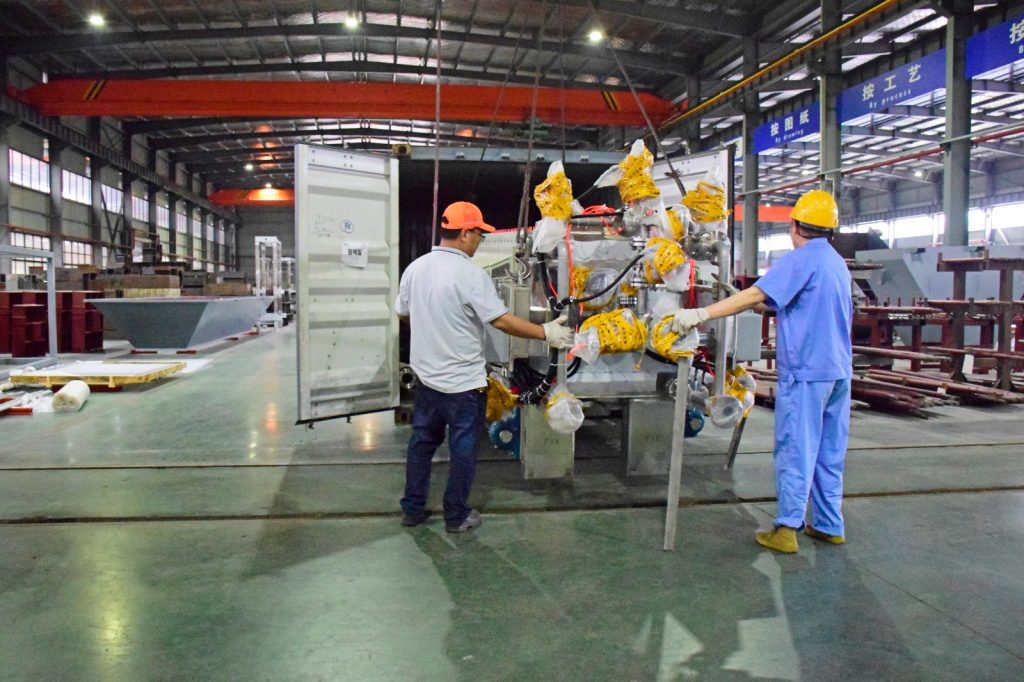
Our factory integrates sintering, machining, welding, painting, plating, and assembly, ensuring strict quality control throughout the entire manufacturing process.
Filter Press Ordering and Shipping
Payment methods: L/C, T/T.
Min. order Qty: 1 unit.
Lead time: 30-45 days.
Customization: Support.
Transportation: Ocean.
Shipping port: Ningbo.
Incoterm: EXW, FOB, CIF, DAP, DDU, DDP.
Productos más vendidos
Preguntas frecuentes
A lab filter press is used for solid-liquid separation in laboratory environments. It is commonly applied in filtration testing, process development, wastewater treatment research, and small-scale production. The equipment allows researchers and engineers to evaluate filtration efficiency, filter cake formation, and dewatering performance before scaling up to industrial filter press systems.
Laboratory filter presses are typically manufactured using stainless steel (304 or 316L), polypropylene (PP), or carbon steel (Q345). Stainless steel provides excellent corrosion resistance and durability, while PP plates are lightweight and resistant to many chemicals. The material selection depends on the filtration medium, temperature, and chemical compatibility requirements.
Sí. Apoyamos el envío global y podemos organizar transporte marítimo, transporte terrestre u otras soluciones logísticas según la ubicación del cliente.
Yes. The lab filter press can be customized according to specific application requirements. Custom options include filter plate size, number of plates, filtration area, frame material, feed type, and control system. Additional auxiliary systems such as pumps, pressure gauges, and filtration membranes can also be integrated to create a complete laboratory filtration station.
Lab filter presses are widely used in industries such as chemical processing, pharmaceuticals, mining, environmental protection, wastewater treatment, food processing, and research institutions. They are especially useful for testing filtration parameters and optimizing industrial filtration processes.
The filtration area of a lab filter press typically ranges from 0.016 m² to 10 m², depending on the plate size and number of plates. The filtration pressure generally ranges from 0.6 MPa to 6.0 MPa, allowing users to simulate different filtration conditions and achieve effective solid-liquid separation.
A laboratory filter press uses the same filtration principle as industrial filter presses, including pressure filtration, filter cake formation, and filtrate discharge. By adjusting filtration pressure, time, and filter media, users can replicate industrial filtration conditions and obtain reliable data for process optimization and scale-up.
Envíe su consulta hoy
¿Listo para mejorar el rendimiento de su filtración?
Contáctenos hoy para programar una consulta o para obtener más información sobre nuestros servicios.