A filter press is a long-term asset. Once it is installed, its frame design shapes how fast you can discharge cake, how easily your team changes cloths, how much floor space and building height you need, and how much you spend on upkeep for the next 15 to 20 years. Yet frame type is often decided late in the buying process, sometimes by default rather than by analysis.
The choice comes down to one structural question: how are the filter plates supported? In a sidebar filter press, the plates rest on two side beams. In an overhead filter press, the plates hang from beams above. That single difference affects capacity, automation, access, and cost.
This guide explains how each design works, where each one fits best, and how to match the frame to your slurry, plate size, and site conditions.
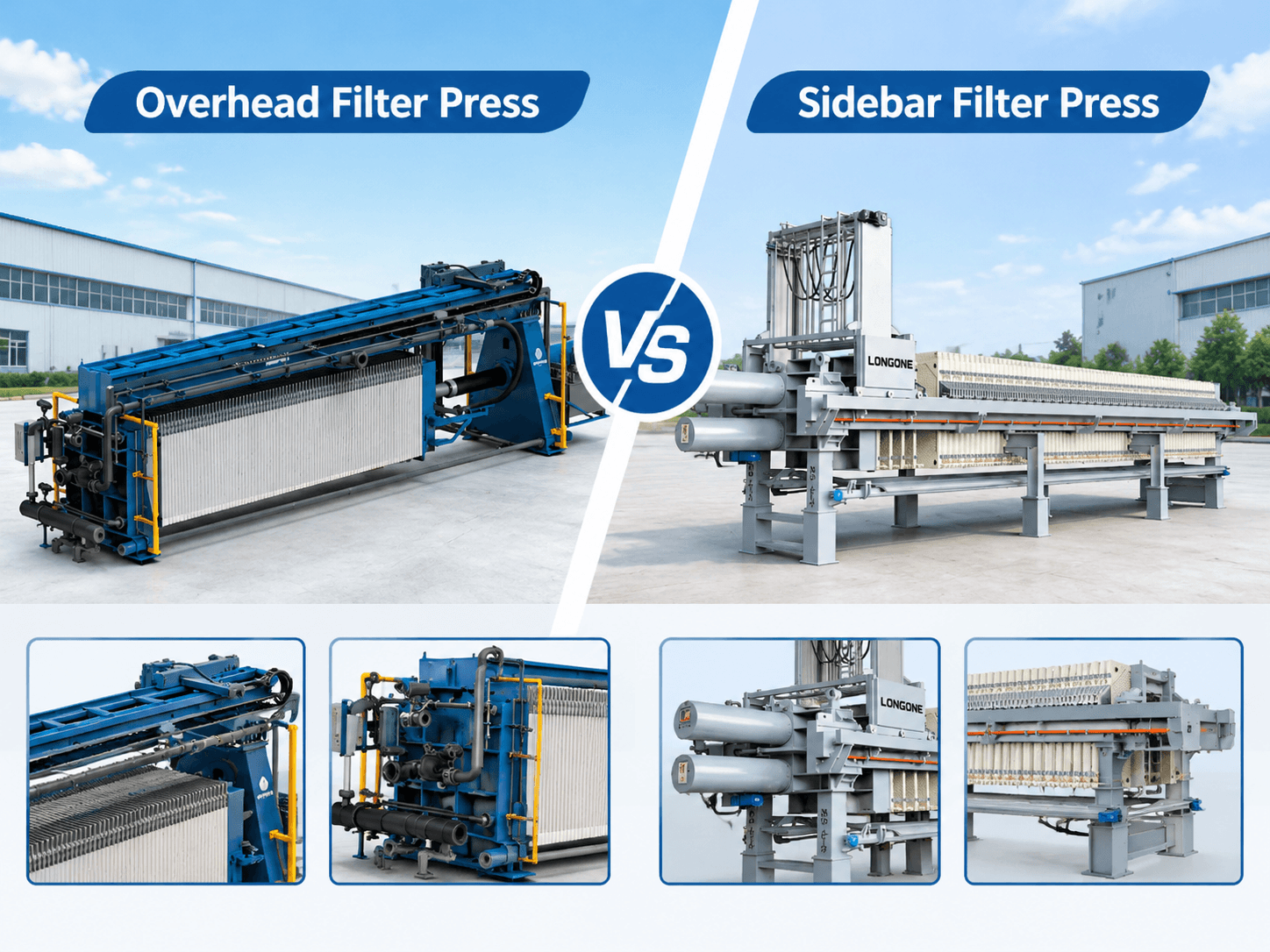
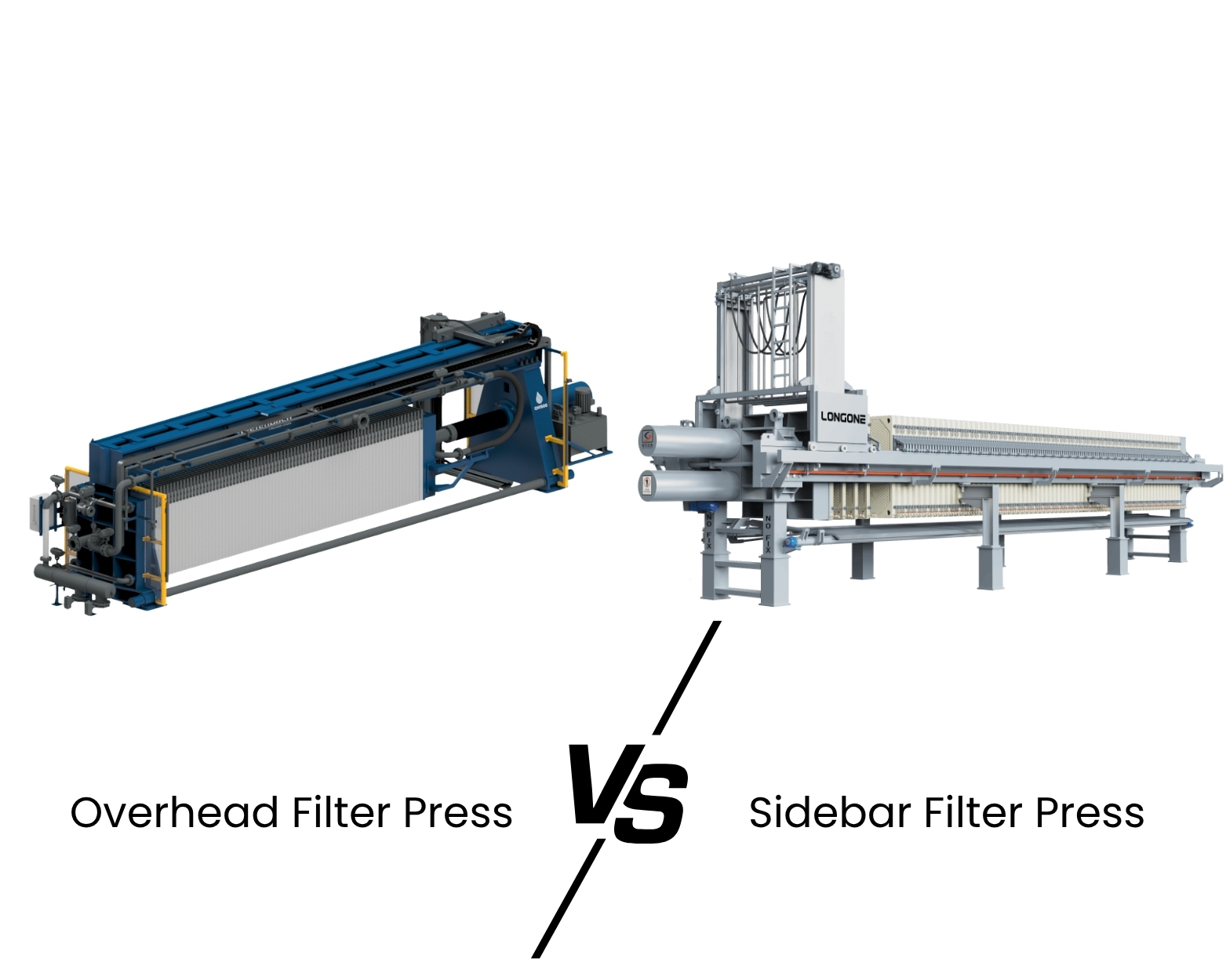
What Is the Difference Between Overhead and Sidebar Filter Presses?
The main difference is where the plate pack is carried.
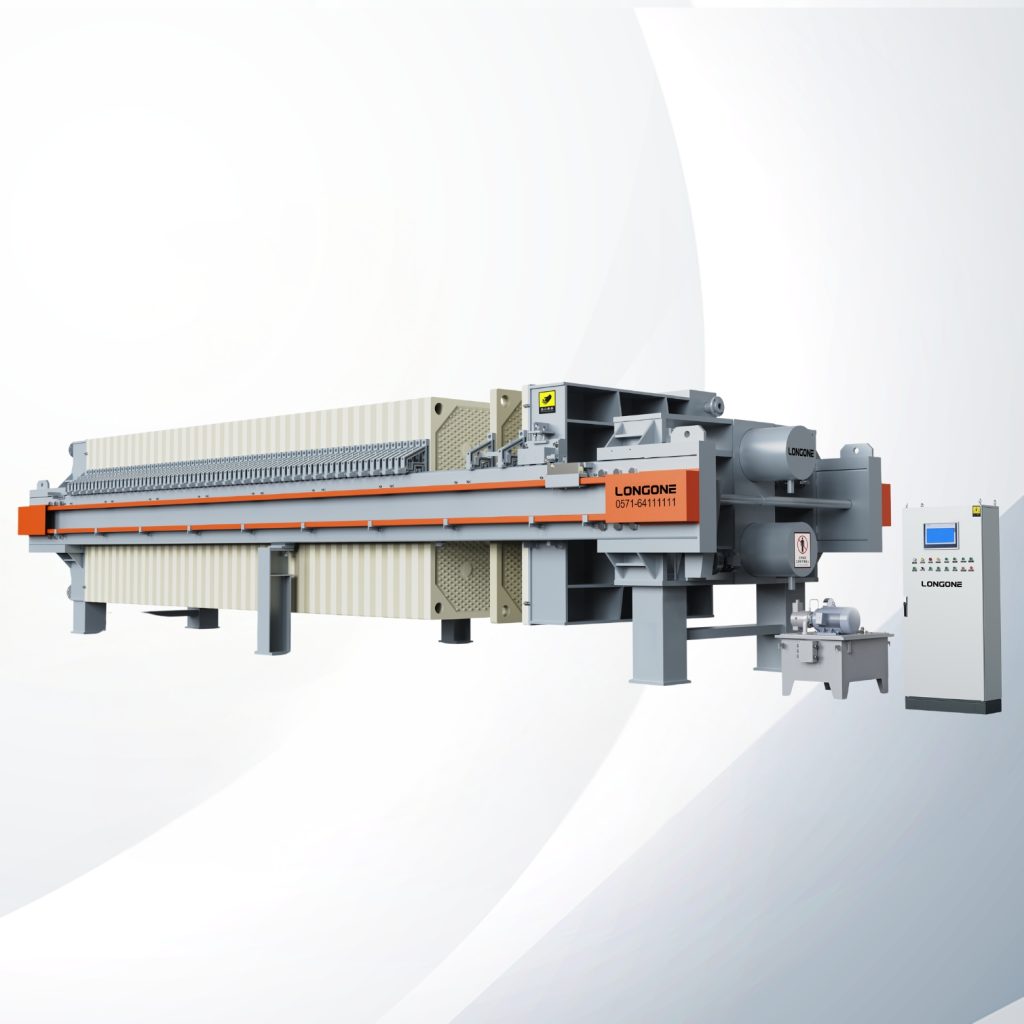
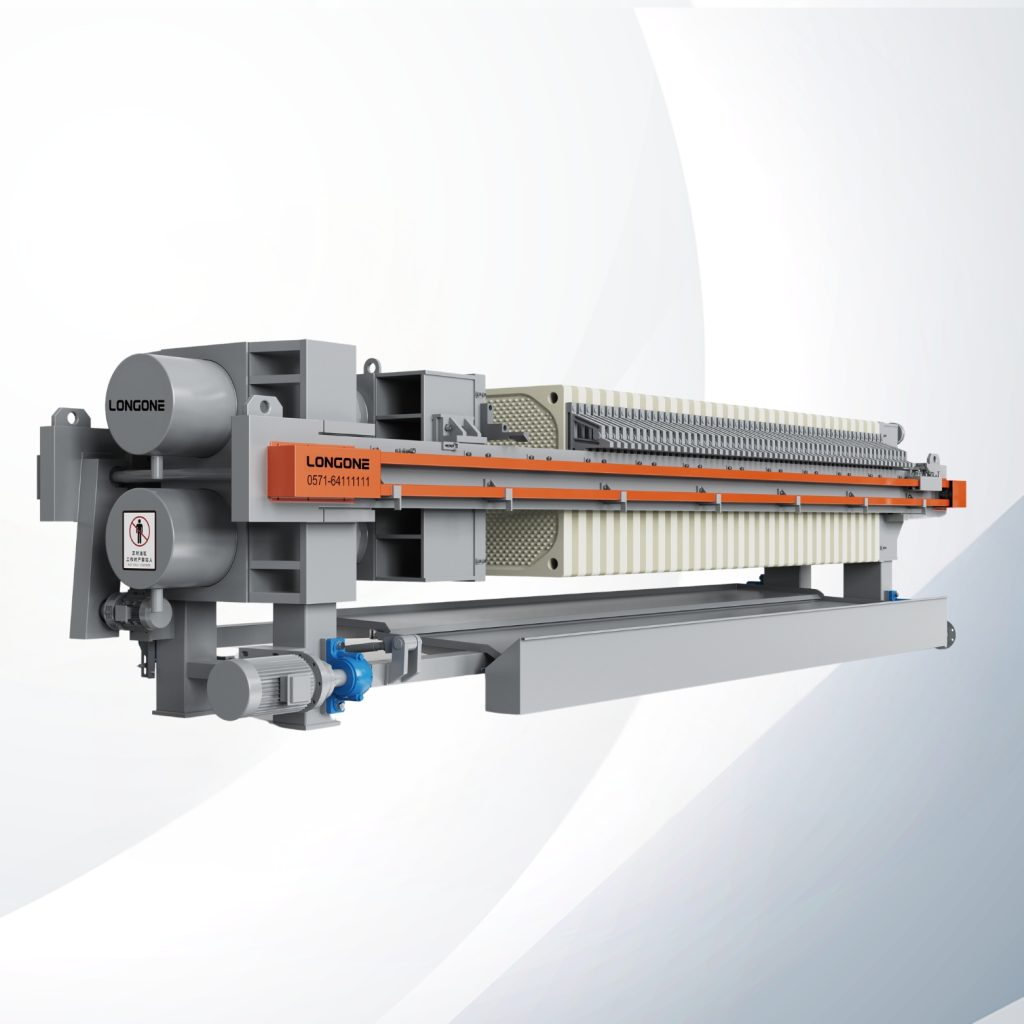
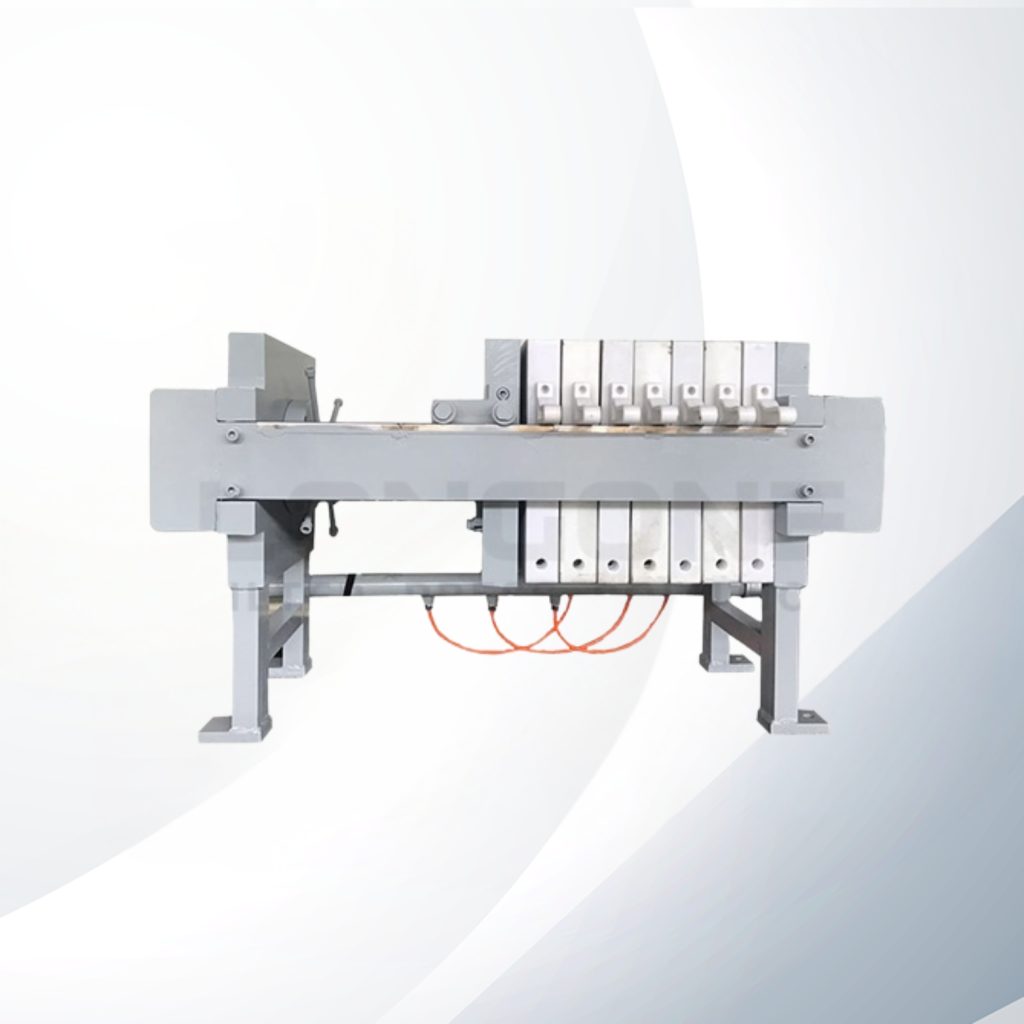
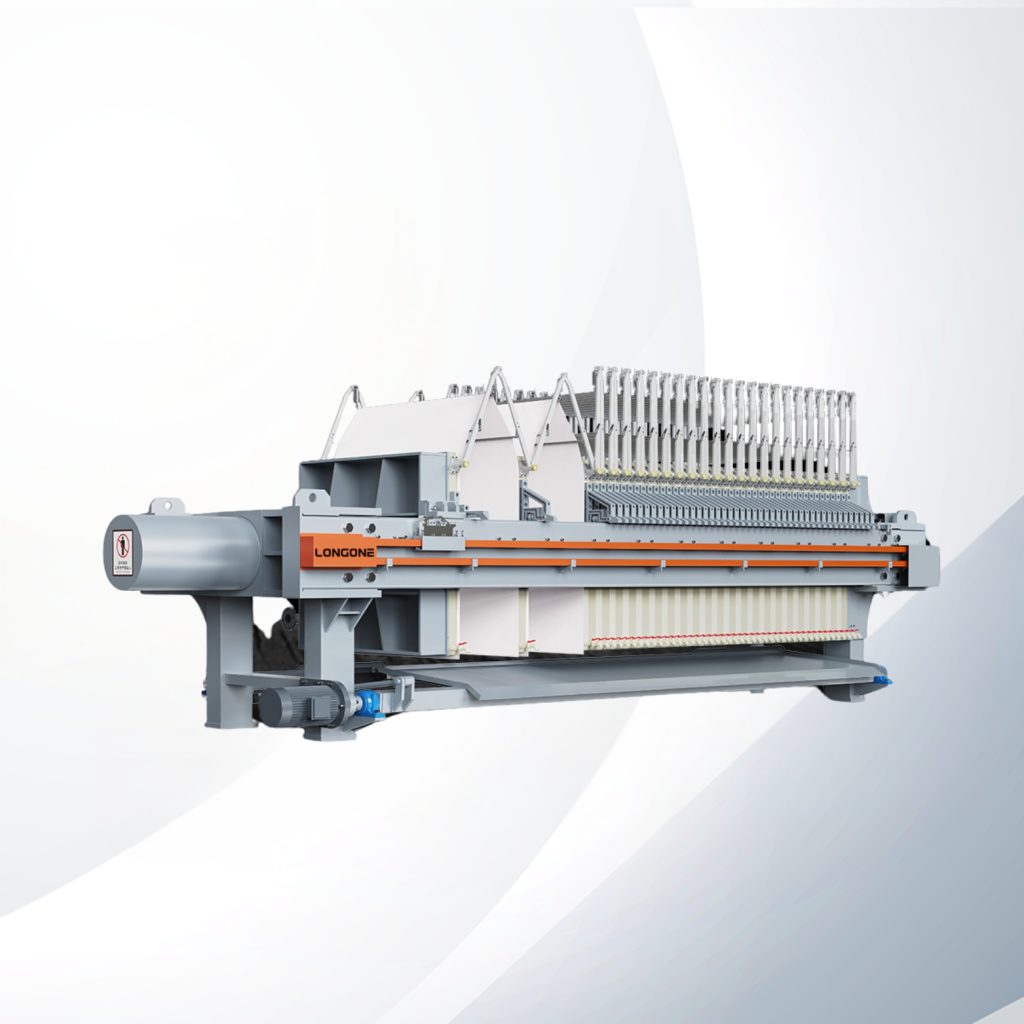
- Sidebar filter press: Each filter plate has two handles (lugs). These handles rest on two parallel side beams that run along the length of the machine. The plates slide along these beams when the press opens and closes.
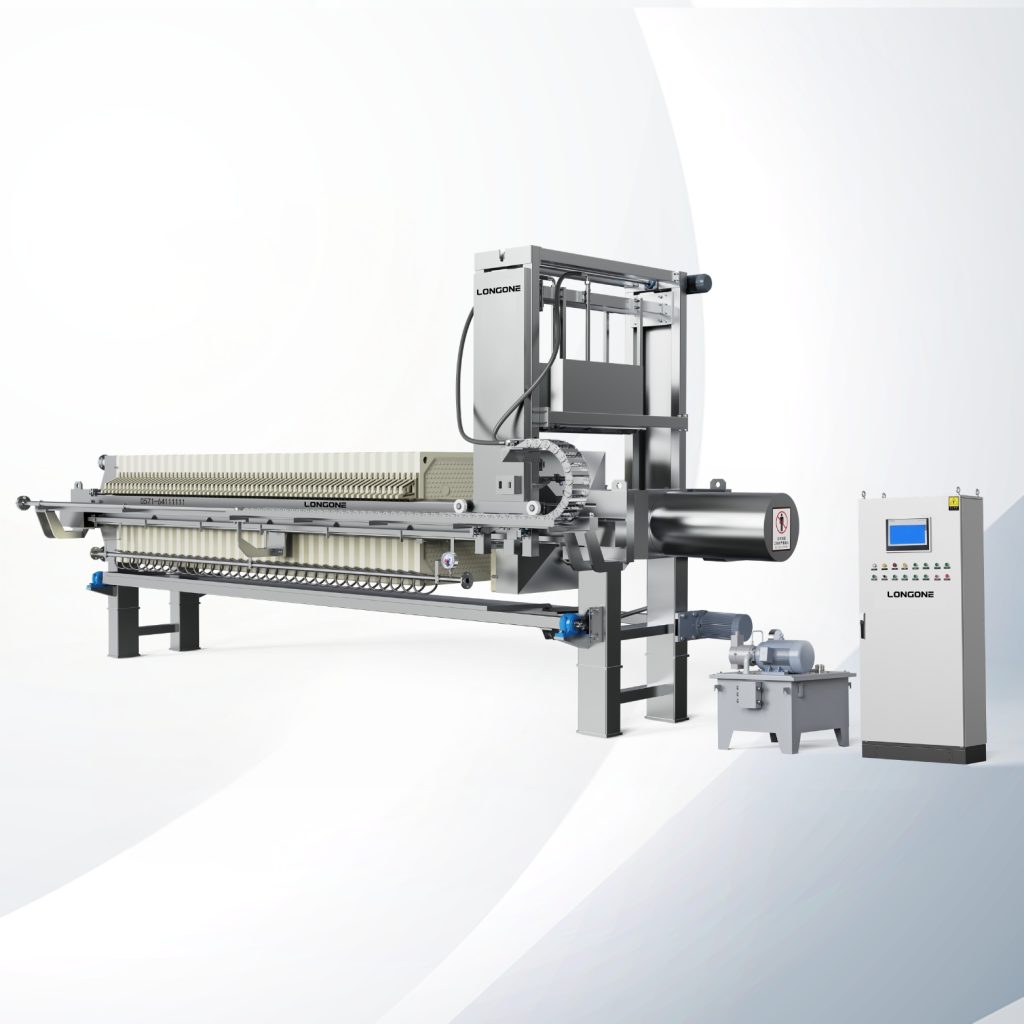
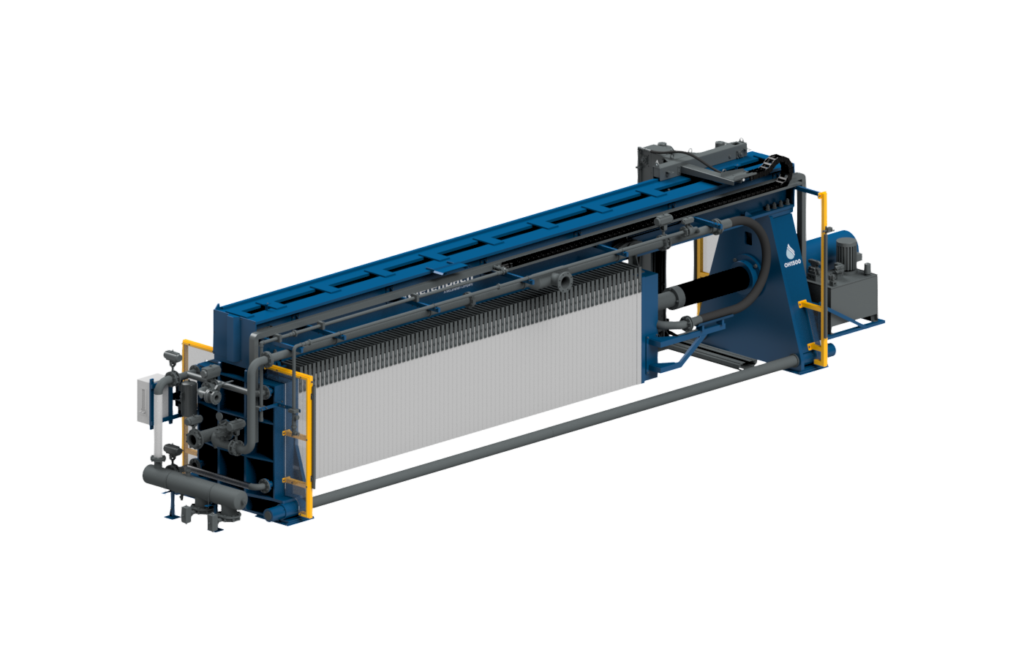
- Overhead filter press: The plates are suspended from one or two beams mounted above the plate pack. The plates hang and move along these upper beams, so the area beneath the pack is open.
Both designs use the same filtration principle. Slurry is pumped into the chambers between plates, liquid passes through the filter cloth, and solids build up into a cake. The hydraulic system closes the pack, and the plates are opened for discharge at the end of the cycle. The frame does not change the filtration physics. It changes how the machine is built, accessed, and maintained.
The sidebar design is by far the more common of the two. Overhead presses are usually found in larger, heavily automated installations.
How a Sidebar Filter Press Works: Design, Plate Sizes, and Best-Fit Applications
In a sidebar design, the weight of the plate pack is carried by the side beams. The head and tail stock at each end hold the beams in alignment, and the hydraulic cylinder pushes the follower plate to compress the pack.
Structural Characteristics
The frame is relatively simple and compact. Fewer structural elements are needed above the plates, so the overall machine is lighter and requires less building height. This is why sidebar presses are usually less expensive to manufacture, ship, and install.
Because plate handles slide on the side beams, the contact surface matters. Wear-resistant beam caps or stainless steel liners protect the beam and extend the life of the frame. Good machining and alignment of the beam surface keeps plates moving smoothly and prevents uneven pack closure.
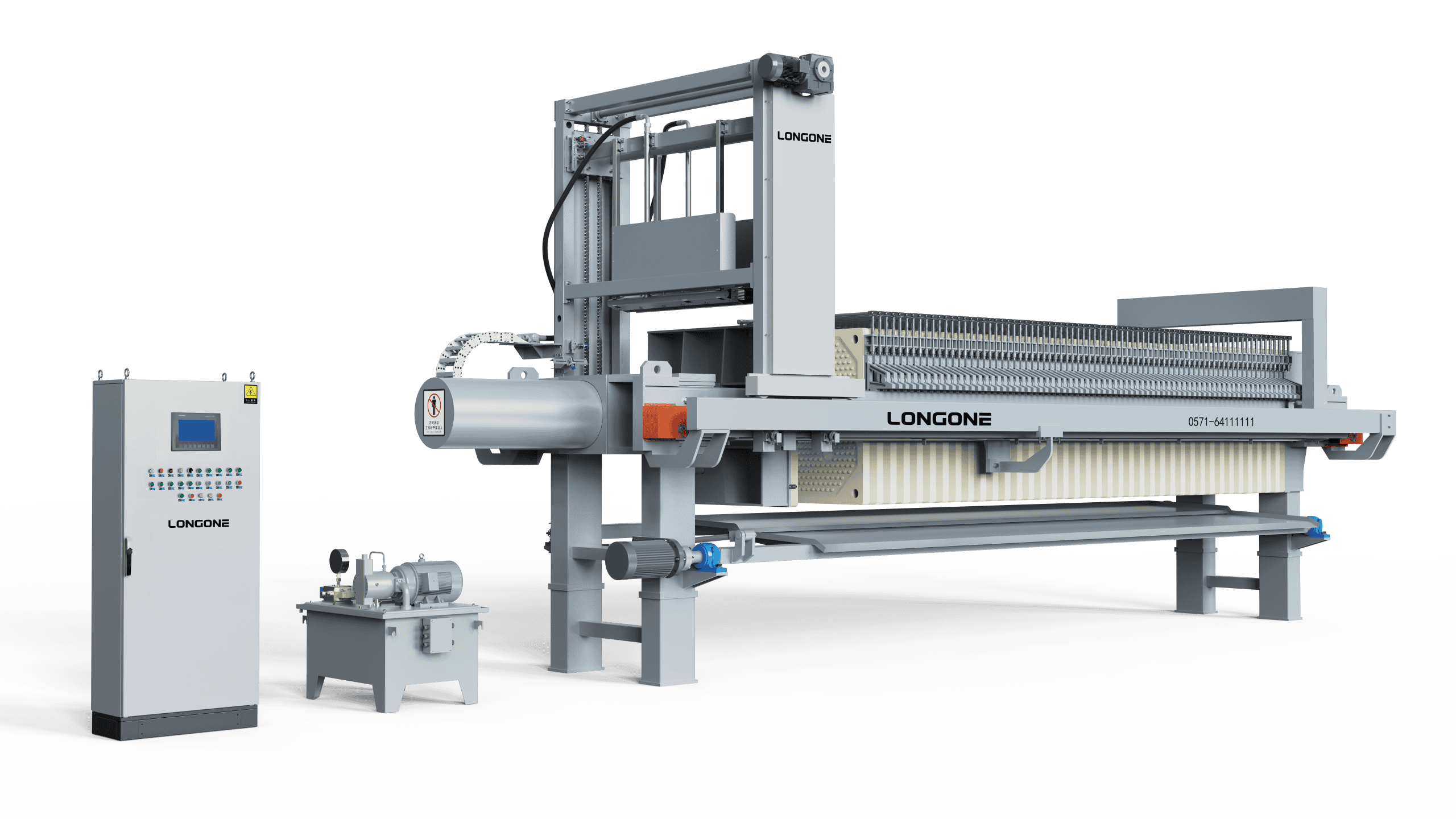
Plate Size Range
Sidebar presses are built across a very wide size range, from small laboratory and pilot units to large production machines with plates of around 2000 mm. The design is particularly dominant in small and mid-size equipment, where the simplicity and lower cost deliver the most value.
Strengths
- Lower upfront cost: A simpler, lighter frame generally means a lower purchase price.
- Lower headroom requirement: The press fits in buildings with limited ceiling height.
- Easy side access: Operators can reach the plate pack, cloths, and plate shifter from the side.
- Flexible configuration: The same frame style works for manual, semi-automatic, and fully automatic operation.
- Wide availability: It is the standard choice across most industries, so spare parts, plates, and cloths are easy to source.
Typical Applications
Sidebar filter presses are used in municipal and industrial wastewater treatment, chemical processing, food and beverage production, ceramics, pharmaceuticals, and mining operations of many sizes. For most dewatering duties, a properly specified sidebar press delivers everything the process needs.
How an Overhead Filter Press Works: Structure, Automation, and Key Advantages
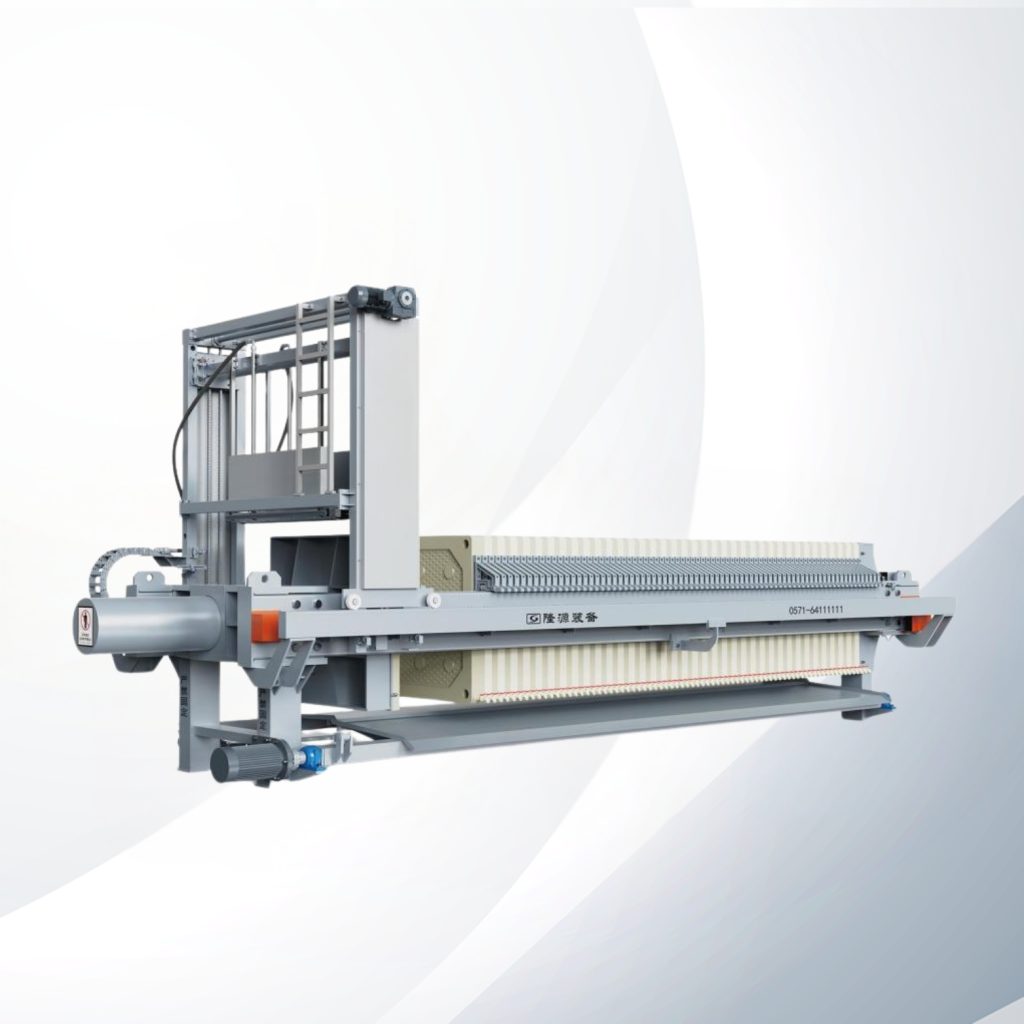
In an overhead design, the plates are carried from beams above the pack. The plates hang and move along these upper beams, while the hydraulic system closes the pack. The space under the plates is left clear.
Structural Characteristics
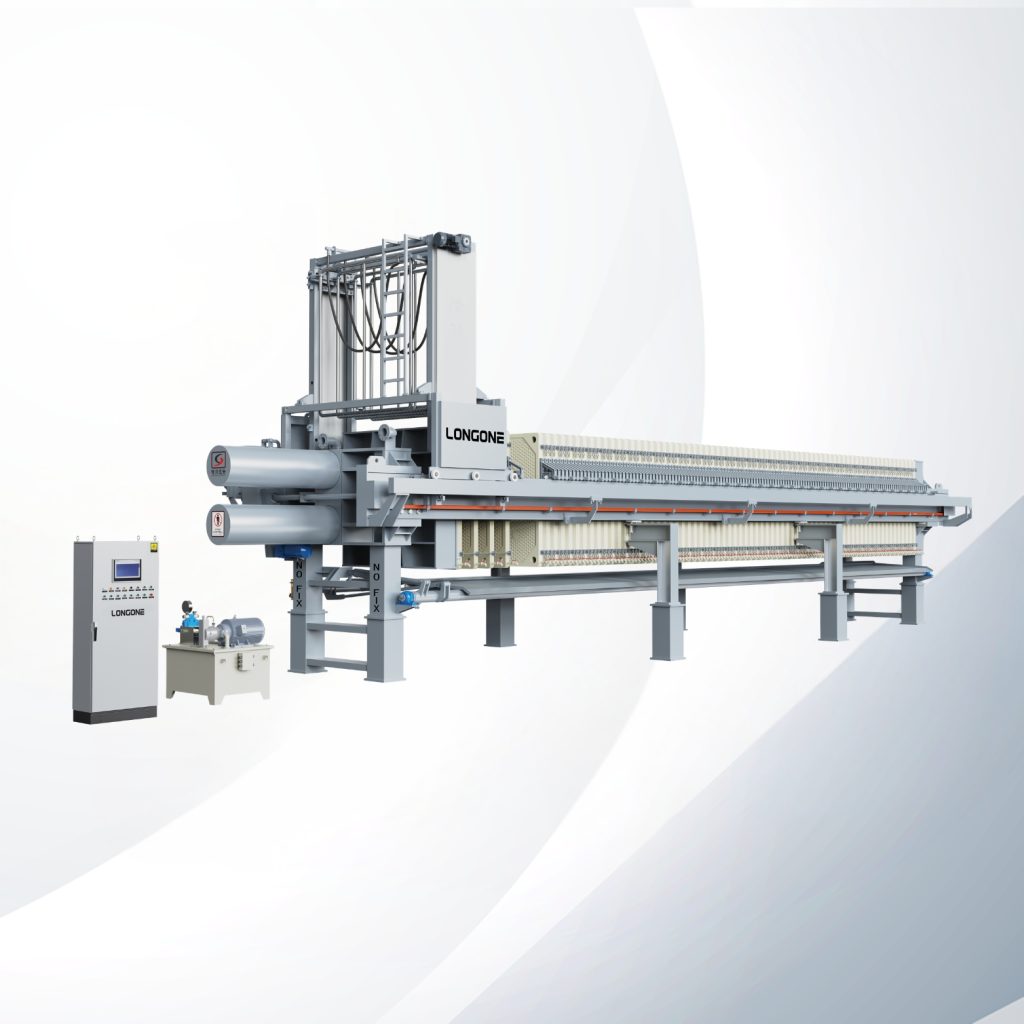
Overhead presses need a sturdier upper structure to carry the full weight of the plate pack. Most designs are intended for large plates, commonly in the 1200 to 2000 mm range, where plate weight becomes significant. These machines are typically built for full automation.
Strengths
- Open space below the pack: Cake can drop freely into a hopper, bunker, or conveyor with no side beams in the way.
- Protected moving parts: Plate shifting mechanisms and other moving components can be positioned away from falling cake, abrasive slurry, and corrosive splashes.
- Access to plate faces: Plates hang freely, which makes inspection and cloth handling easier on heavy plates.
- Suited to heavy duty: The design is common in high-throughput mining, mineral processing, and large chemical plants.
Trade-Offs
- Higher upfront cost: The structure is heavier and more complex.
- More headroom needed: The building must have enough height, and often a stronger supporting structure.
- Less relevant for small machines: For small and mid-size presses, the extra structure rarely delivers a return.
Overhead Filter Press vs Sidebar Filter Press: Side-by-Side Comparison
| Criterion | Sidebar Filter Press | Overhead Filter Press |
|---|---|---|
| Plate support | Plate handles rest on two side beams | Plates hang from beams above the pack |
| Typical plate size range | Very wide, from small lab units to about 2000 mm | Mainly large plates, commonly 1200 to 2000 mm |
| Market prevalence | Most common design | Less common, used in large-scale installations |
| Automation level | Manual, semi-automatic, or fully automatic | Typically fully automatic |
| Cake discharge access | Cake drops between side beams; hopper or conveyor placed below | Fully open space below the pack |
| Moving part protection | Good, with proper design and beam caps | Excellent, mechanisms located away from slurry |
| Building height requirement | Lower | Higher |
| Upfront cost | Lower | Higher |
| Best-fit industries | Wastewater, chemicals, food, ceramics, general mining | Large mining, mineral processing, high-throughput chemical |
Neither design is universally better. The right column depends on the scale and demands of your process.
How to Choose: Plate Size, Slurry Type, Space, and Budget
Use these five questions to narrow the decision.
1. How large is the plate you need?
If your capacity requirement can be met with plates up to roughly 1500 mm, a sidebar press is usually the efficient answer. As plate size and plate weight rise toward the top of the range, overhead suspension becomes more attractive because of handling and access advantages.
2. How abrasive or corrosive is your slurry?
Highly abrasive mineral slurries and corrosive chemical streams are hard on exposed mechanisms. If these conditions are severe and continuous, protecting moving parts becomes a stronger reason to consider overhead. For moderate conditions, a sidebar press with wear caps, protective covers, and suitable materials performs reliably.
3. How often will the press cycle?
High-frequency cycling magnifies every small inefficiency in cake discharge and cloth handling. If the press runs many cycles per day around the clock, automation level and discharge access matter more than purchase price. If it runs a few cycles per day, a simpler sidebar frame is usually sufficient.
4. What does your site allow?
Check ceiling height, floor loading, and the building structure early. Overhead presses need more headroom and a stronger structure. Sidebar presses are easier to install in existing buildings and tight retrofits.
5. What is your budget, including lifetime cost?
Purchase price is only one part of the picture. Consider spare plates and cloths, energy use, labor, downtime, and expected service life. A frame that matches your duty cycle gives the lowest cost per ton of dry solids. Over-specifying wastes capital, and under-specifying costs more in downtime.
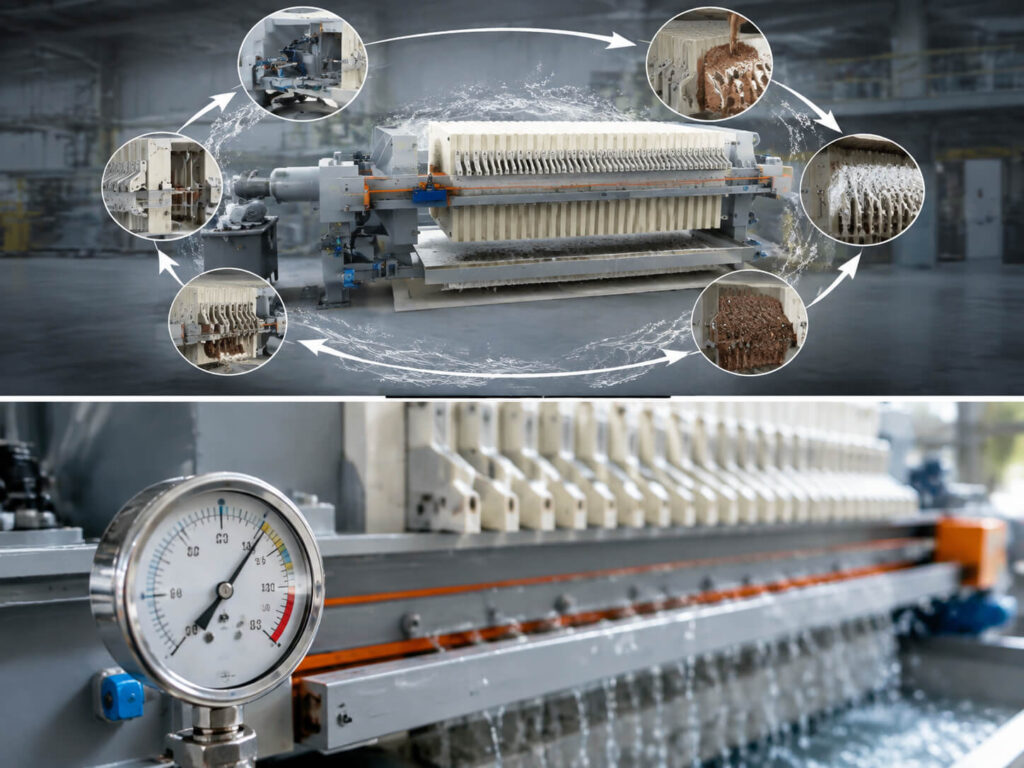
Maintenance and Total Cost of Ownership: Rails, Cloths, and Moving Parts
The frame influences where maintenance effort goes.
Sidebar presses
- Side beam wear: Plate handles slide on the beams every cycle. Inspect beam caps or liners regularly and replace them before the base beam is damaged.
- Alignment: Keep the beams straight and level so plates close evenly. Poor alignment causes leakage and uneven cake.
- Cake on rails: Spilled cake and slurry on the beams should be cleaned off to prevent corrosion and plate sticking.
- Cloth changes: Plan access routes and tools so cloth replacement is quick, since this is the most frequent consumable task.
Overhead presses
- Upper beam and suspension: Check the upper beams, hangers, and plate guides for wear and alignment.
- Structural inspection: The upper structure carries the entire plate load, so it deserves scheduled inspection.
- Specialized service: Large automated overhead machines may call for more specialized service support.
For both designs
- Keep the hydraulic system clean, leak-free, and properly pressurized.
- Wash cloths on a schedule to prevent blinding.
- Inspect plate sealing surfaces for damage that can cause leakage.
- Keep a spare set of plates and cloths for critical processes.
Published comparisons disagree on which design costs more to maintain, and that is understandable. Maintenance cost depends far more on slurry, duty cycle, plate material, and how well the press is specified than on frame type alone.
Choosing the Right Design for Your Process
Overhead and sidebar filter presses solve the same separation problem with different structural approaches. Sidebar presses offer simplicity, flexibility, and lower cost across a very wide size range. Overhead presses offer open discharge access and protected mechanisms for the largest, most intensive duties. For most dewatering projects, the sidebar design is the practical and economical choice, and for extreme-scale operations, overhead deserves a serious look.
Frequently Asked Questions
What is the main difference between an overhead and a sidebar filter press?
The difference is how the filter plates are supported. In a sidebar press, the plate handles rest on two side beams. In an overhead press, the plates hang from beams above the pack.
Which type of filter press is more common?
The sidebar filter press is the more common design by a wide margin. It covers everything from small laboratory units to large production machines and is the standard in most industries.
When should I consider an overhead filter press?
Consider overhead when you need very large plates, high-throughput automated operation, an open discharge area below the pack, and protection for moving parts against abrasive or corrosive slurry, and when your site has the headroom and budget to support it.
Is an overhead filter press always fully automatic?
Overhead presses are typically built for full automation, especially in large sizes, but automation level depends on the manufacturer and configuration. It is best confirmed in the specification.
Can a sidebar filter press handle high-capacity applications?
Yes. Sidebar presses are available with large plates and large filtration areas, and they serve many demanding wastewater, chemical, and mining applications. The deciding factors are your plate size, slurry, cycle frequency, and site conditions.
How do I know which frame design suits my project?
Share your slurry type, solids concentration, daily volume, required cake dryness, and available space with a filter press manufacturer. A good supplier will recommend the design that fits the process instead of the one that is simply on offer.