Oil looks simple to filter until you try it. It is viscous, it often carries fine solids, and in many plants it is hot, flammable, or both. A filter press for oil is one of the most dependable ways to separate those solids and recover clean oil, but only when the machine is matched to the oil.
This guide explains how an oil filter press works, where it is used, and what to check before you buy.
What Is a Filter Press for Oil and How Does It Work?
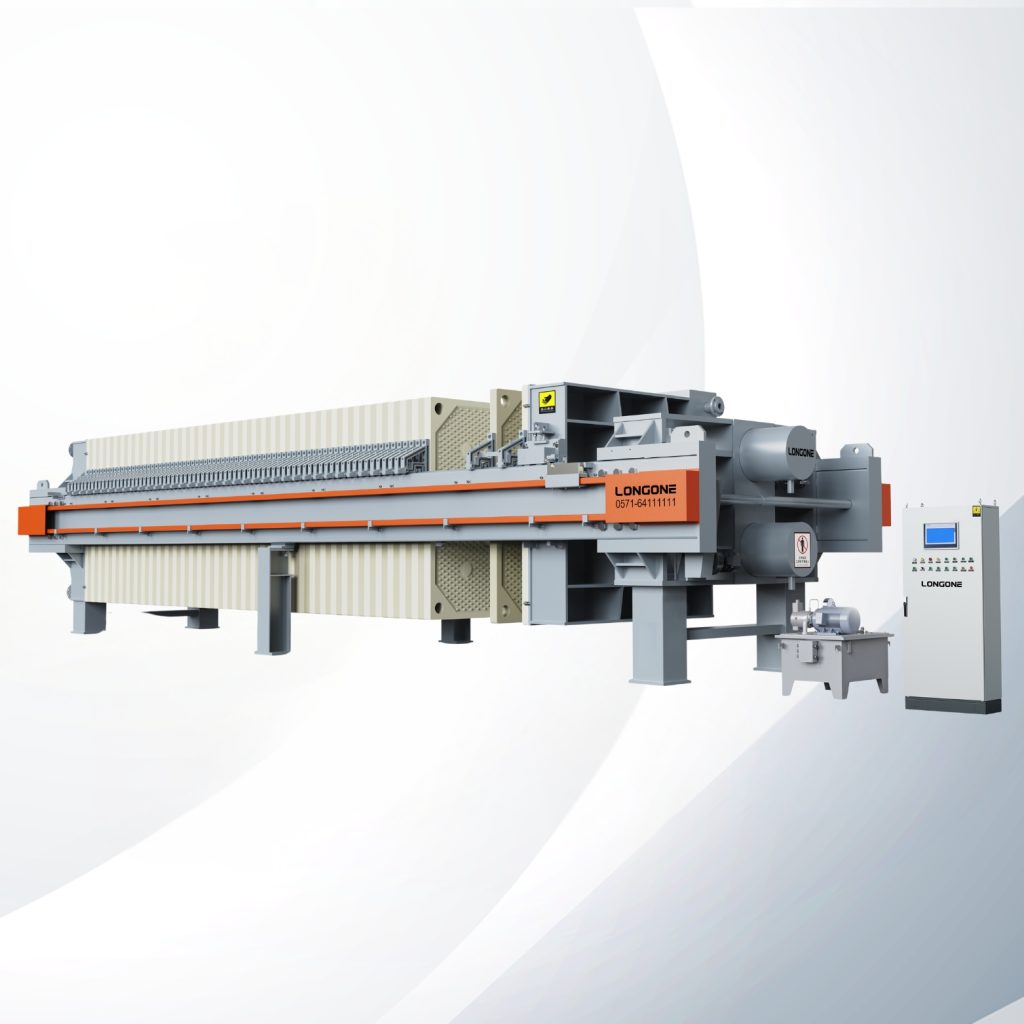
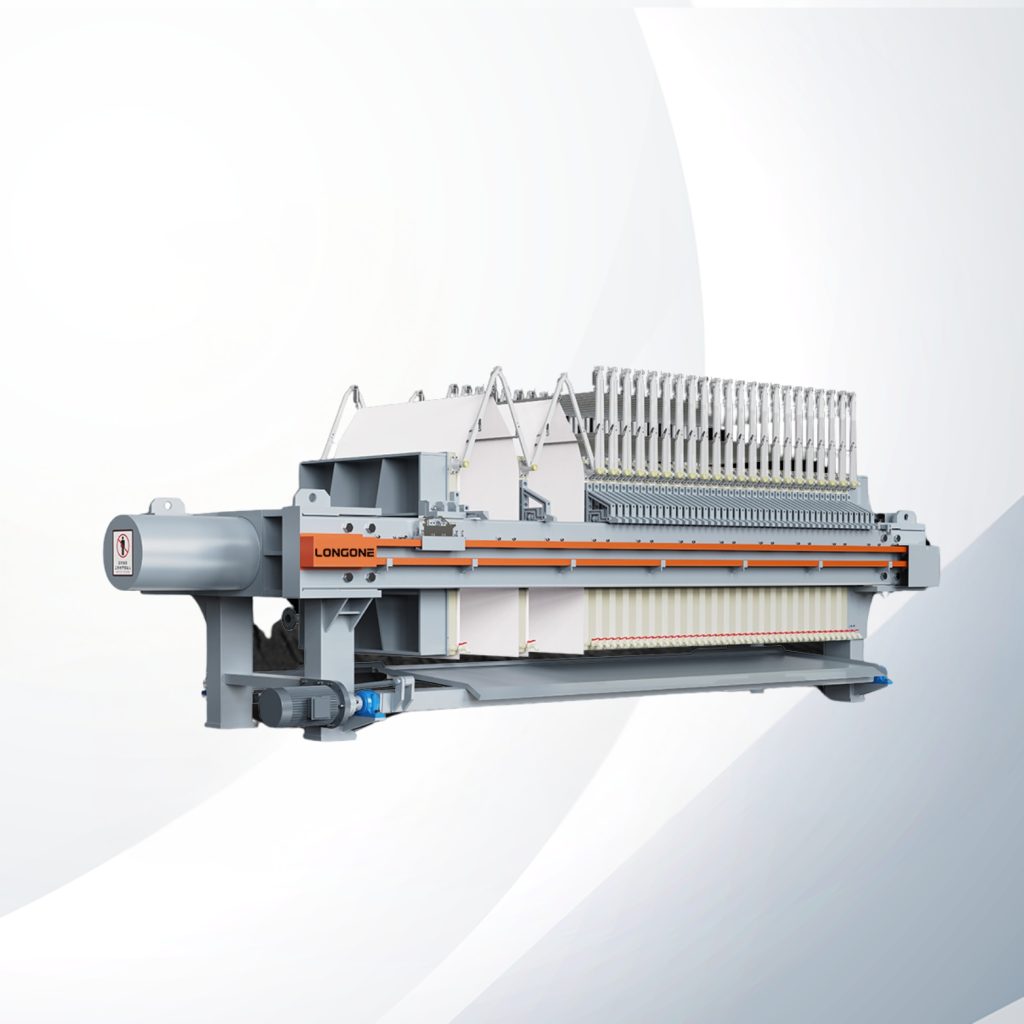
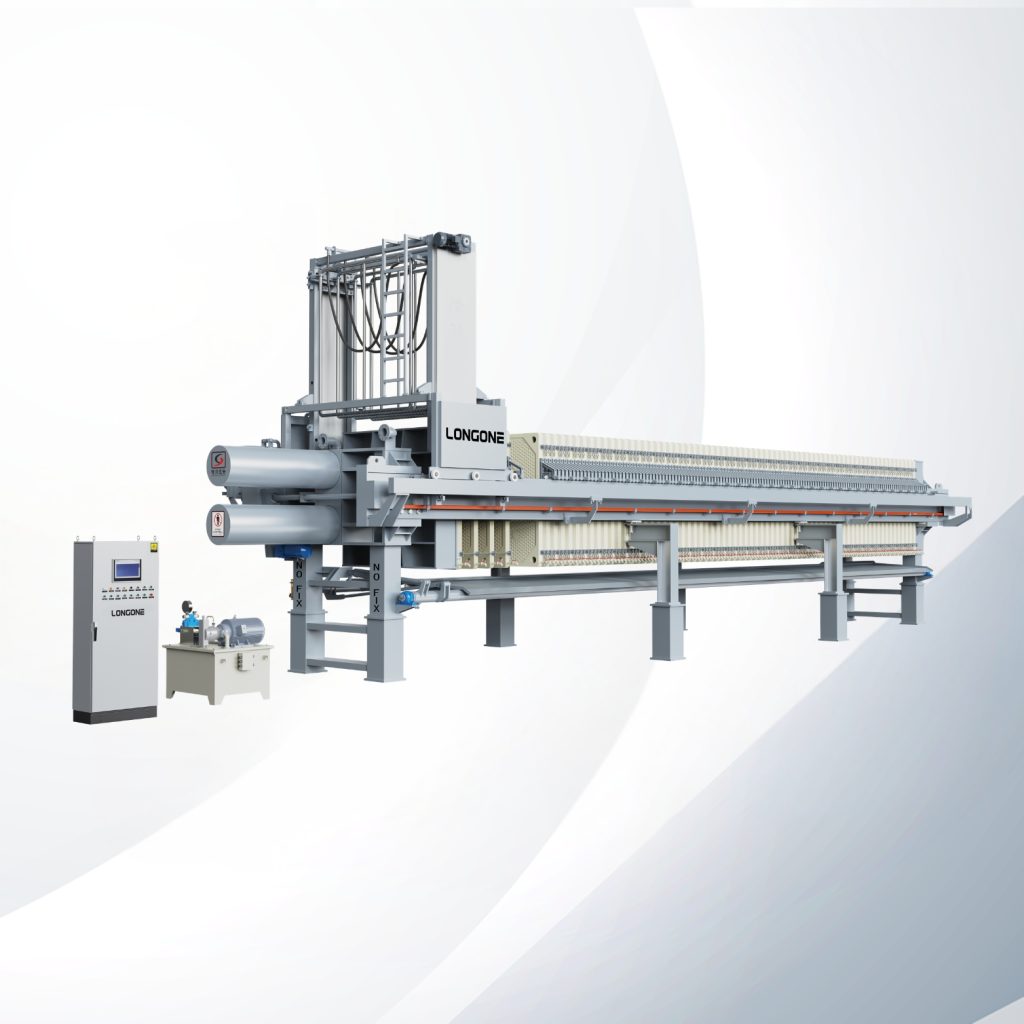
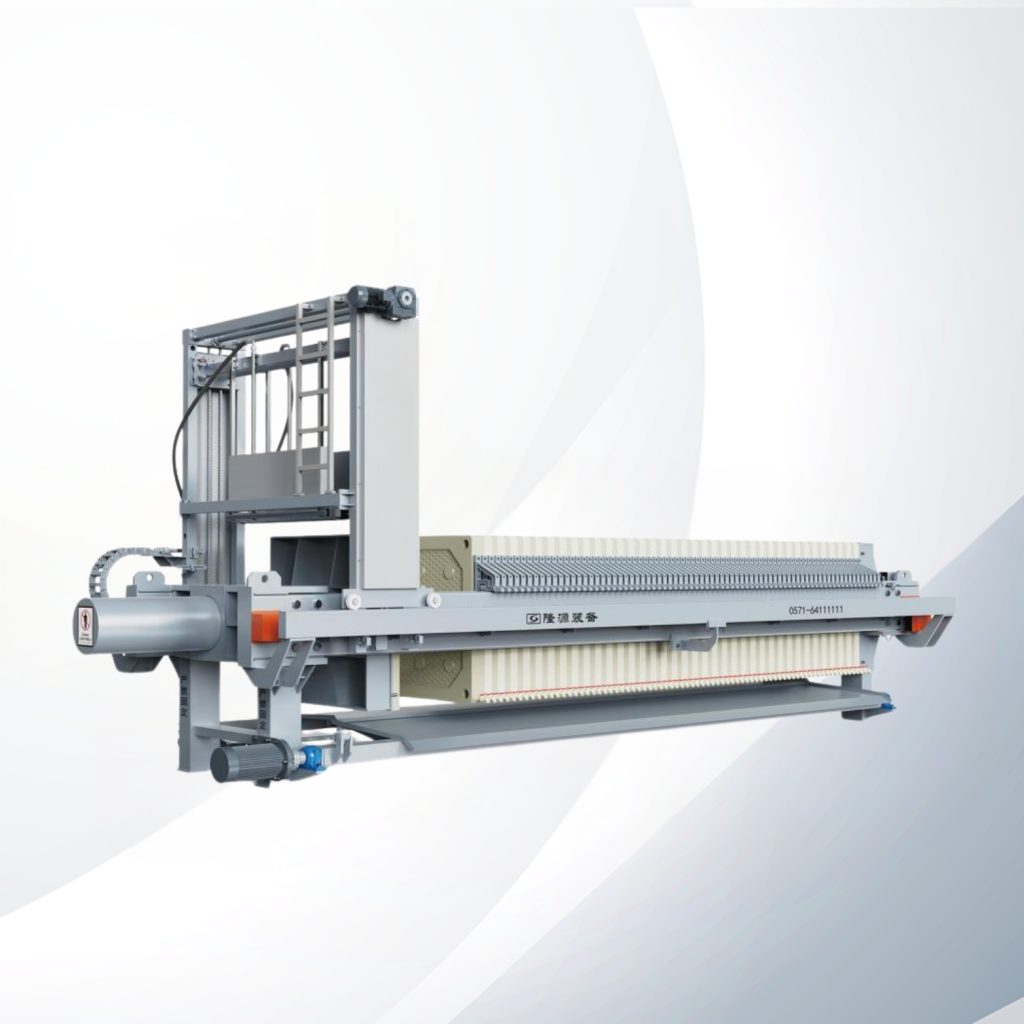
A filter press for oil is a batch filtration machine that uses pressure to push oil through filter media while the solids stay behind. In most oil applications, the machine is a plate-and-frame or chamber-type filter press.
The working cycle is straightforward:
- Closing: A hydraulic or manual pressing system holds the filter plates tightly together to form sealed chambers.
- Feeding: A pump sends the oil, which carries suspended solids, into the chambers.
- Filtration: The solids are caught by the filter cloth or filter paper and build up as a cake. Clarified oil passes through the media and leaves the press through the outlet.
- Discharge: When the chambers are full or the flow slows down, the press is opened and the cake is removed.
Compared with other separation methods, a filter press for oil offers a few clear advantages. It can handle high solids loads, produces a drier residue, and gives a high recovery of oil that would otherwise be lost in the waste. It is also mechanically simple, so operators learn it quickly and maintenance stays manageable.
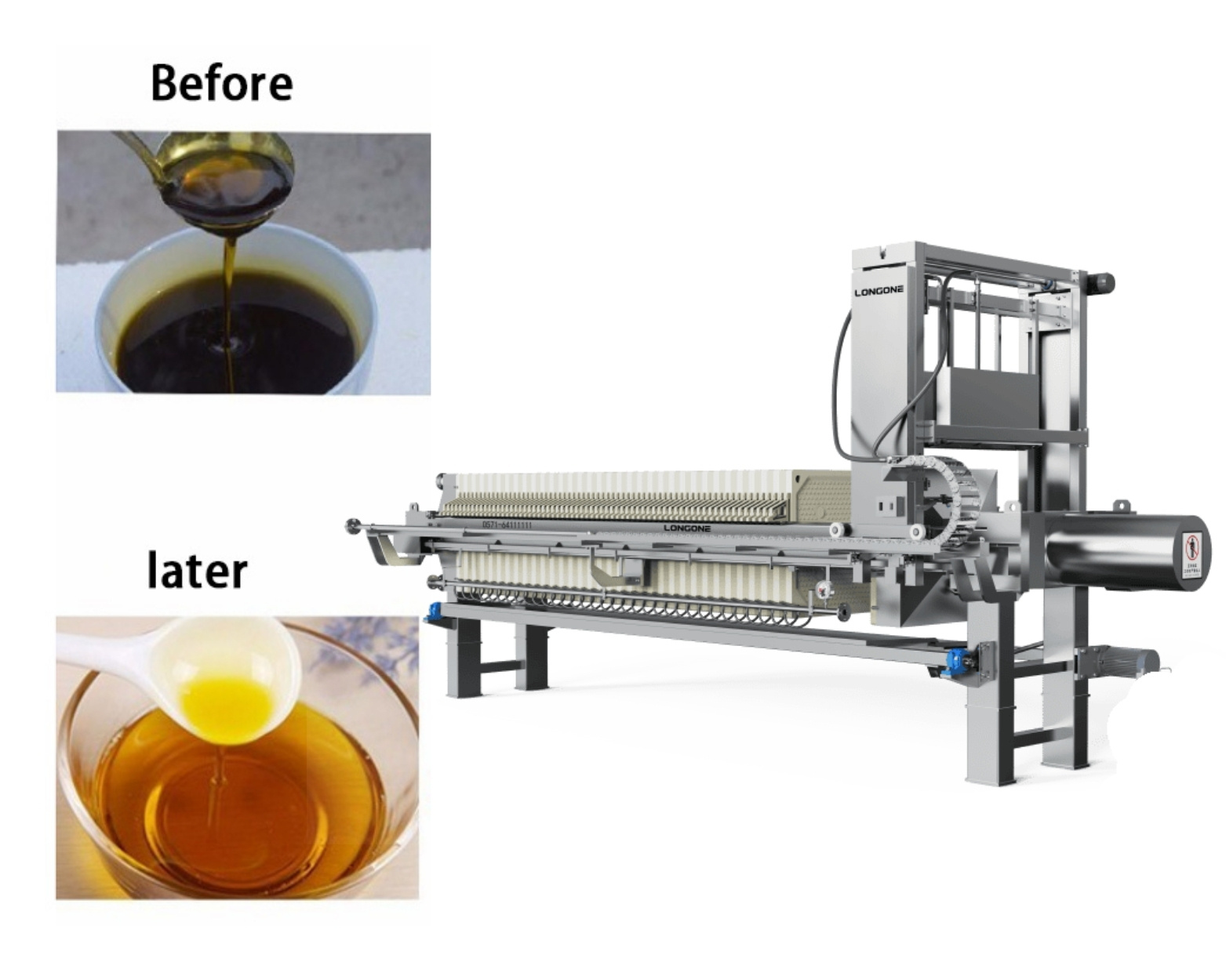
Oil Filter Press Applications: Edible Oil, Waste Oil, and Oily Sludge
An oil filter press is used wherever solids must be removed from oil or oily liquids. The three most common areas are described below.
Edible oil processing. After pressing or refining, edible oils often need polishing to remove fine particles, residual meal, or bleaching earth. A filter press, often used with filter paper or a filter aid, delivers bright, clear oil and helps recover oil that stays in the cake.
Waste oil and used lubricating oil. Recycling and regeneration plants use oil filter presses to remove carbon, metal fines, and other contaminants before further treatment. Clean separation at this stage protects downstream equipment and improves product quality.
Oily sludge dewatering. Industrial processes create sludge that contains oil, water, and solids. A filter press reduces the volume of this sludge and makes it easier and cheaper to handle and dispose of.
| Application | Typical solids | Key point for the press |
|---|---|---|
| Edible oil polishing | Fine particles, bleaching earth | Fine media, clean operation, easy cake discharge |
| Waste oil regeneration | Carbon, metal fines, dirt | Heat tolerance, strong sealing |
| Oily sludge dewatering | Mixed oil, water, and solids | Robust plates, suitable pressure, effective cake release |
Common Types of Oil Filter Presses: Manual, Hydraulic Plate-and-Frame, and Fully Automatic
Not every oil operation needs the same machine. Oil filter presses are usually grouped by how they close the plates and how much of the cycle is automated. The three types below cover most of what buyers find on the market.
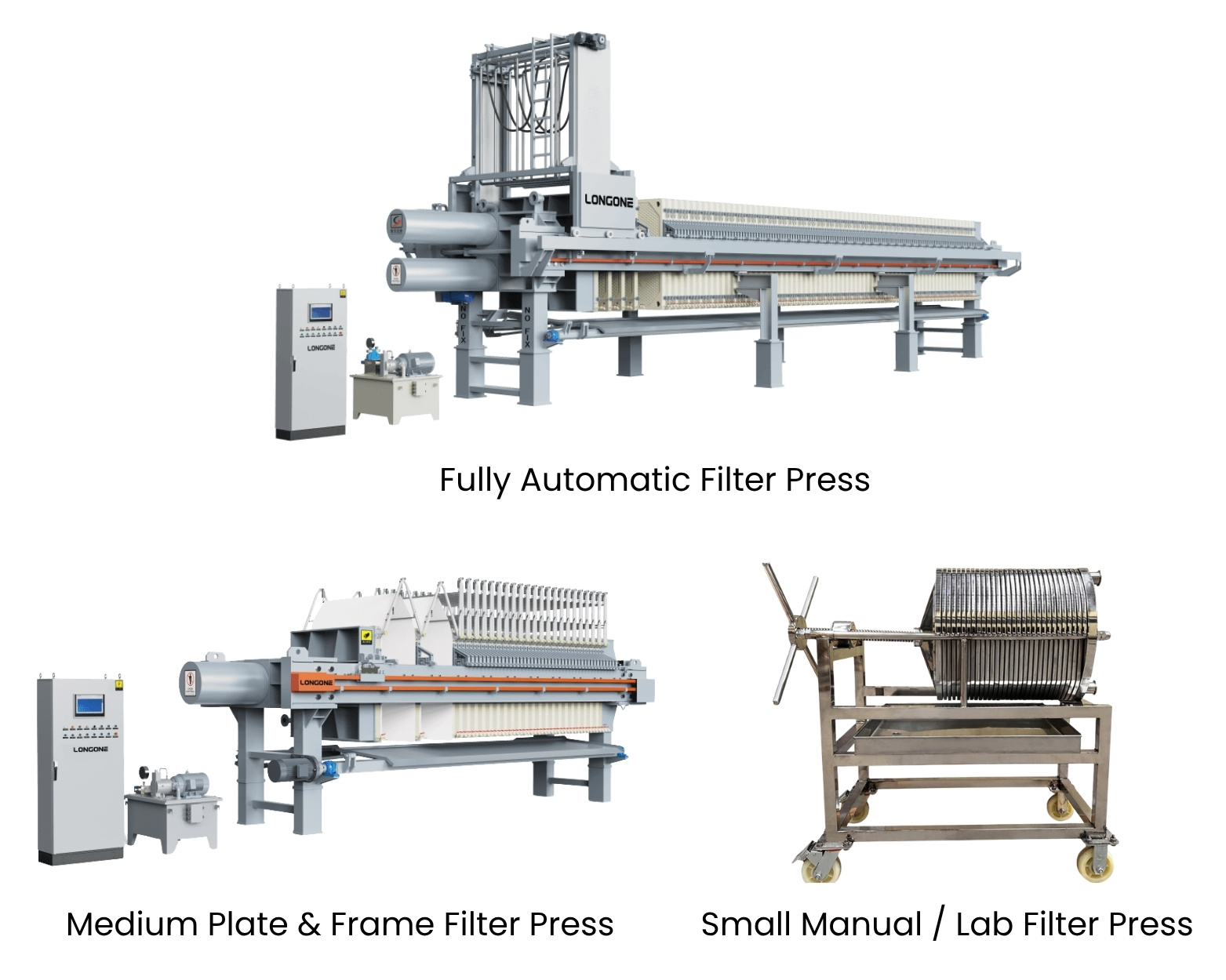
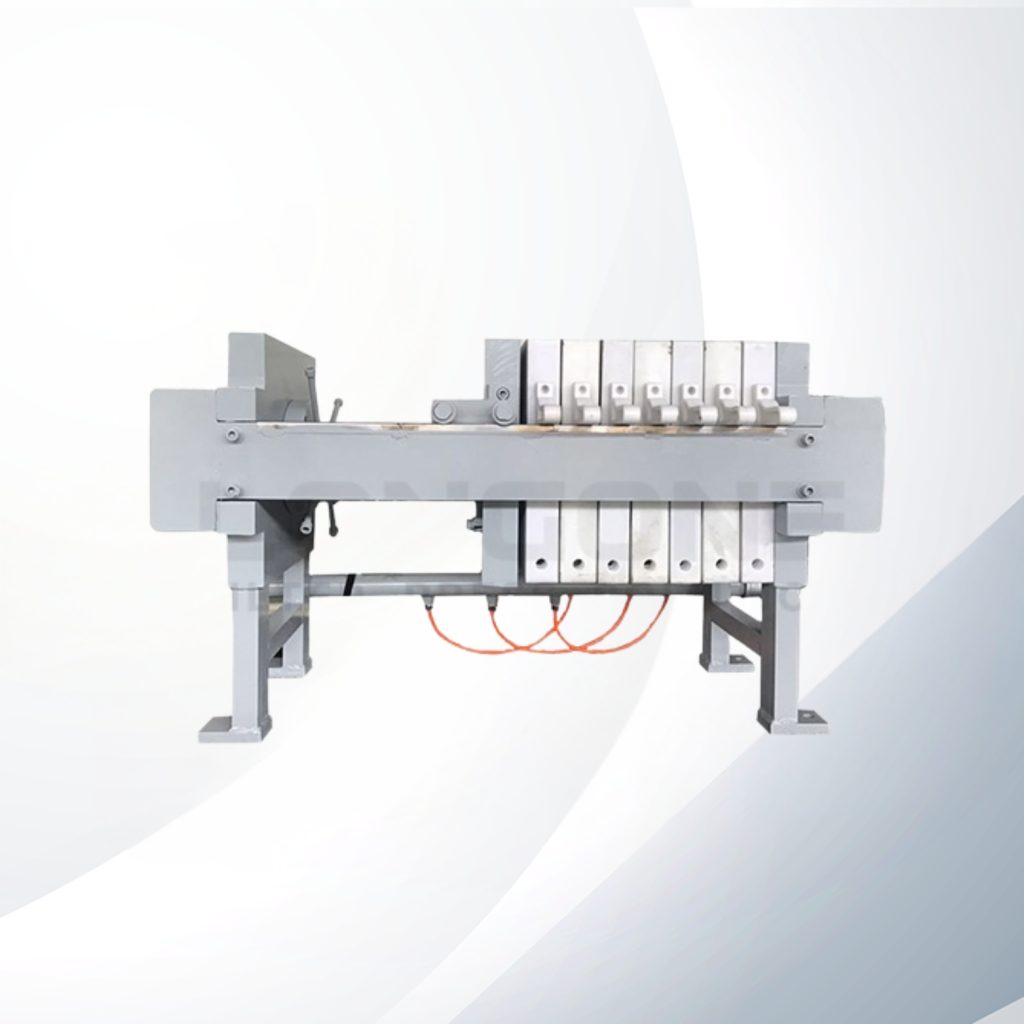
Manual and laboratory-type filter presses. These compact units close the plates with a manual jack or a screw rod. They suit small workshops, small oil mills, and laboratories that filter small batches or test a new oil before scaling up. Their strengths are a low purchase price, a simple structure, almost no maintenance, and easy movement from place to place. The trade-off is that pressing force depends on the operator, and output is limited, so they are not designed for continuous production.
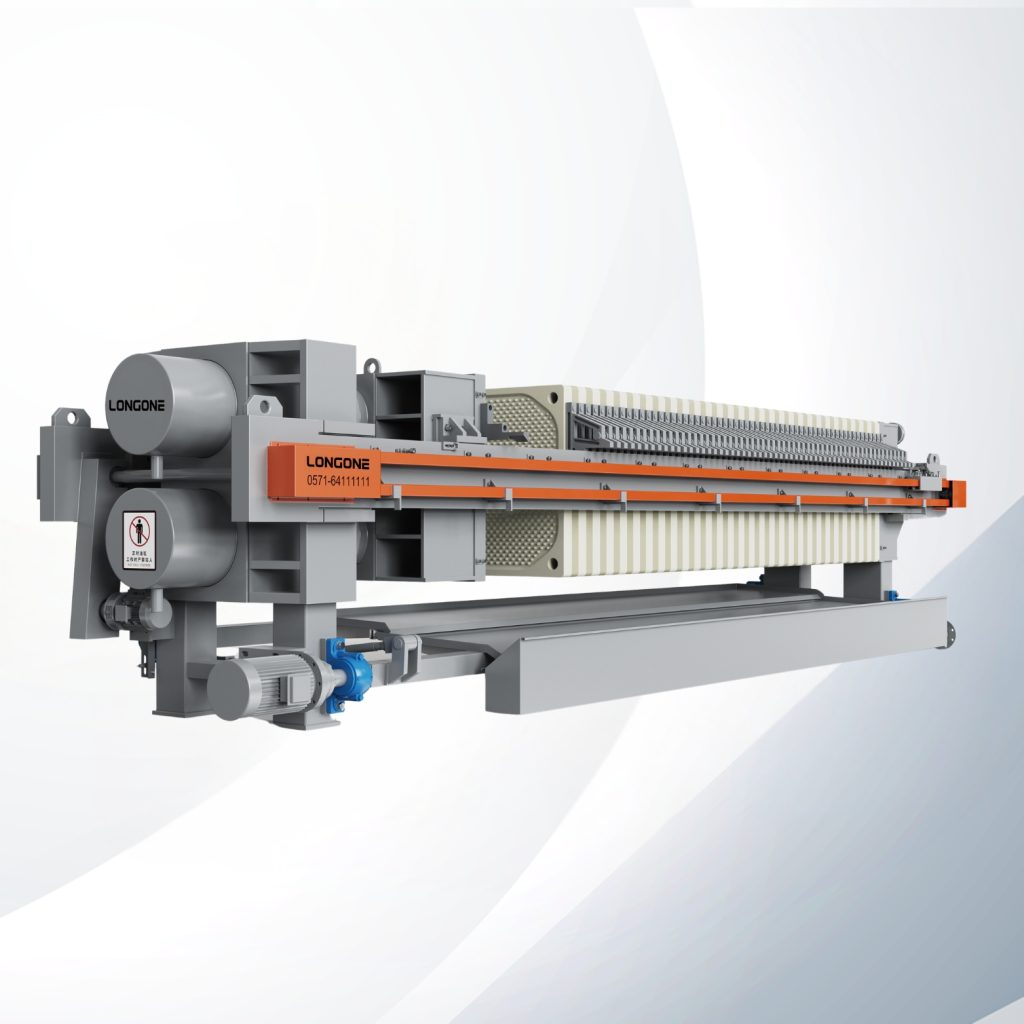
Medium-sized hydraulic plate-and-frame presses. These machines use an electric hydraulic system to close the plates and keep the pressure steady automatically. They are a common choice for small and medium oil plants and vegetable oil refining lines. Because the hydraulic system maintains consistent pressing force, the sealing is reliable and oil leakage is much less likely. Cake oil content can be kept low, and the operator needs far less physical effort than with a manual press.
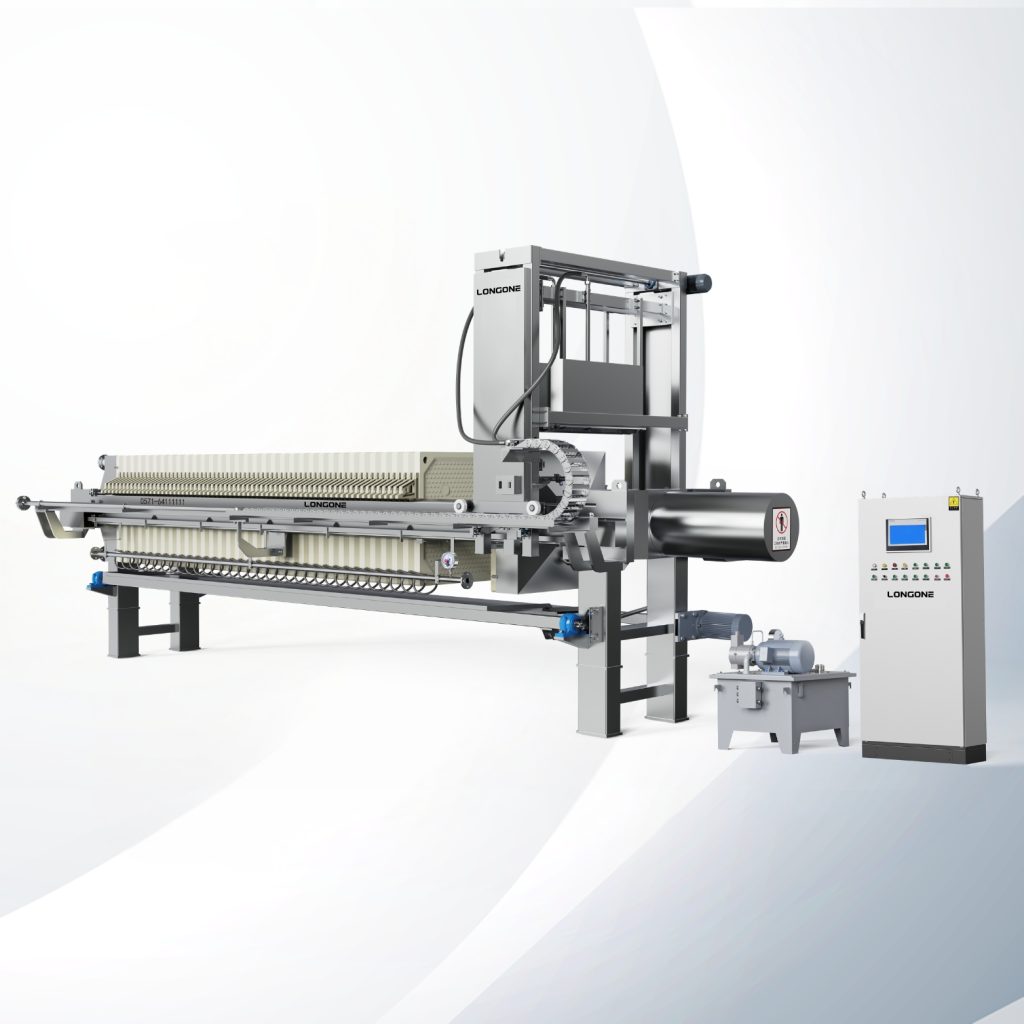
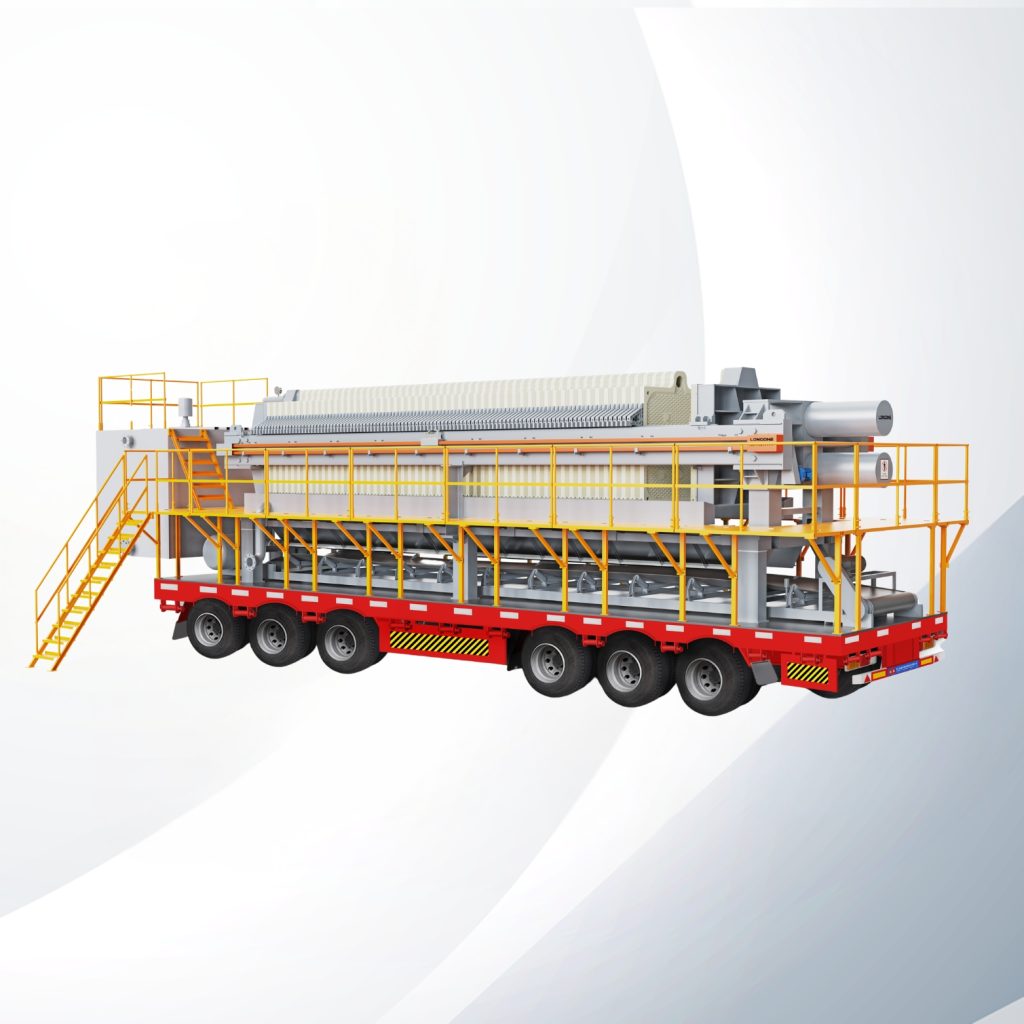
Fully automatic chamber and diaphragm filter presses. These are built for large industrial oil and fat workshops. A programmed control system shifts the plates automatically, and many models include automatic cloth washing. Diaphragm (membrane) plates add a second squeeze after filtration, which pushes more liquid out of the cake. Filtration area can be very large, with some machines exceeding 40 m², so this type delivers the highest efficiency and the lowest labor demand. It also has the highest investment cost.
| Press type | Typical scale | Closing method | Main advantages |
|---|---|---|---|
| Manual / laboratory type | Small workshops, oil shops, laboratories | Manual jack or screw rod | Very low cost, simple structure, low maintenance, easy to move |
| Medium hydraulic plate-and-frame | Small and medium oil plants, vegetable oil refining lines | Electric hydraulic closing with automatic pressure holding | Reliable sealing, low oil leakage, low cake oil content, less operator effort |
| Fully automatic chamber / diaphragm | Large industrial oil and fat workshops | Automated closing with programmed plate shifting | Large filtration area (up to 40 m² or more), automatic cloth washing, diaphragm second squeeze, high efficiency |
Market prices vary widely by size, materials, and configuration. As a rough guide, manual and laboratory units sit at the low end, medium hydraulic presses in the middle, and large automatic systems at the top. Treat any price range as a reference only, because plate material, filtration area, and automation level change the final quote.
When choosing among these types, think about your daily volume and your labor. A small operation that filters a few batches a week rarely needs automatic plate shifting, while a plant that runs several cycles every day will usually recover the extra investment through lower labor cost and shorter cycle times. If you are unsure which category fits, send us your oil type, daily volume, and working temperature, and we will suggest a suitable configuration.
Choosing Filter Plate Materials for Oil Filtration: PP, Cast Iron, and Stainless Steel
The filter plate is the heart of the press, and as a plate manufacturer we can say that material choice is the decision buyers most often get wrong with oil. The main factors are temperature, chemical compatibility, and pressure.
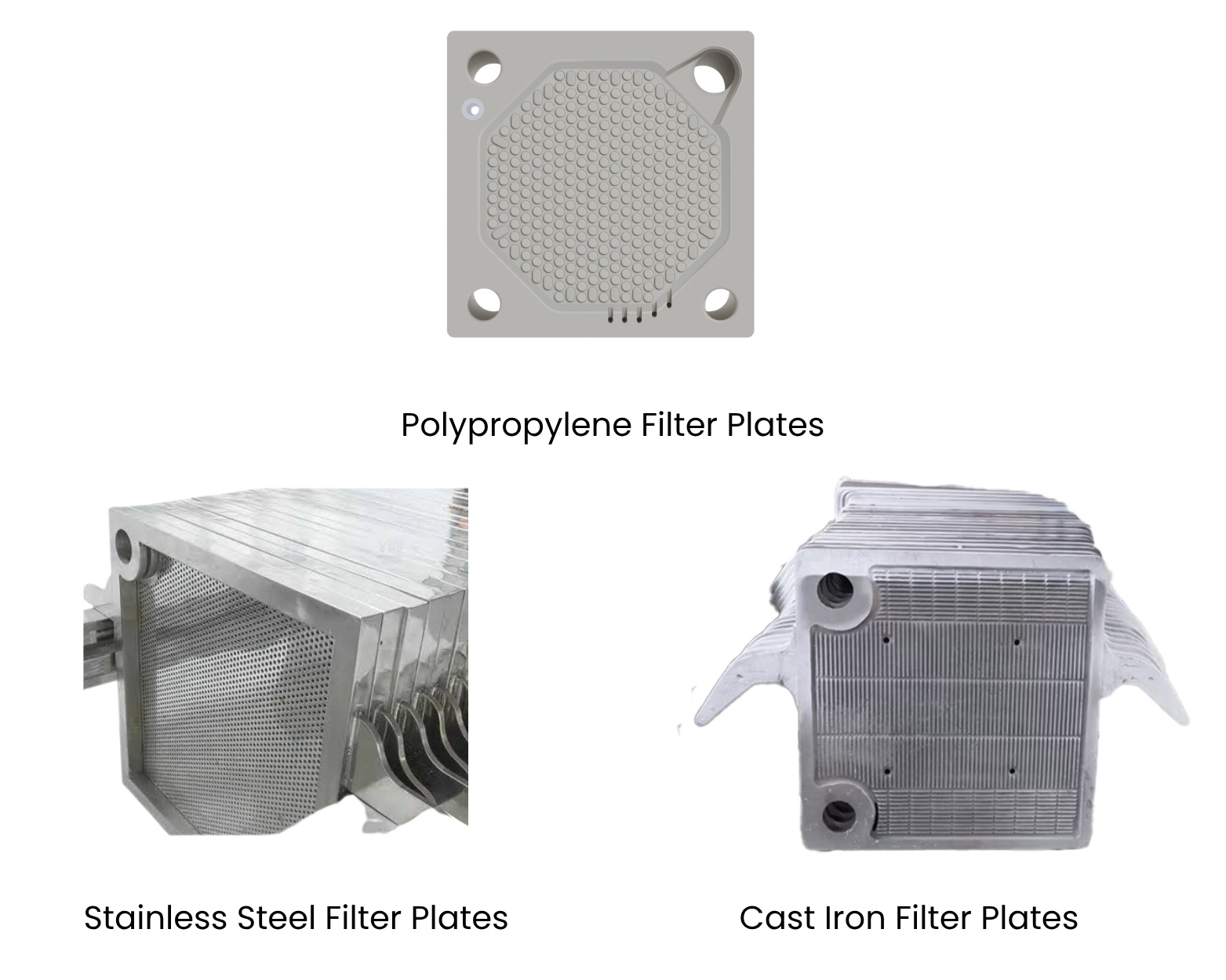
Polypropylene (PP) plates are light, corrosion resistant, and cost effective. They suit many oil applications at moderate temperatures. Standard PP has a temperature limit, and heat-resistant PP grades extend that limit.
Cast iron plates handle higher temperatures and pressures and are common in demanding oil processing conditions. They are heavier and require attention to corrosion protection.
Stainless steel plates are chosen where hygiene, corrosion resistance, and heat tolerance all matter, for example in food-grade oil processing.
| Plate material | General strengths | Typical use |
|---|---|---|
| Polypropylene (PP) | Light, corrosion resistant, economical | Moderate-temperature oil filtration, oily sludge |
| Heat-resistant PP | Higher temperature tolerance than standard PP | Warmed oil where standard PP is not suitable |
| Cast iron | High temperature and pressure capability | Hot oil, heavy-duty industrial use |
| Stainless steel | Hygienic, corrosion resistant, heat tolerant | Food-grade and edible oil processing |
Temperature limits vary by grade and design, so please confirm the exact working range with us before choosing a plate. If your oil is heated to improve flow, tell us the real operating temperature, not the average.
Plate sealing also deserves attention. Oil finds every weak point, and a poorly sealed plate leads to leaks, product loss, and cleanup. We design our plates with sealing performance in mind so that the press stays tight over many cycles.
Filter Cloth, Filter Paper, and Filter Aids for Oil Filtration
Even the best plates cannot compensate for the wrong filter media. The media decides how clear the oil is, how fast the press runs, and how often you replace parts.
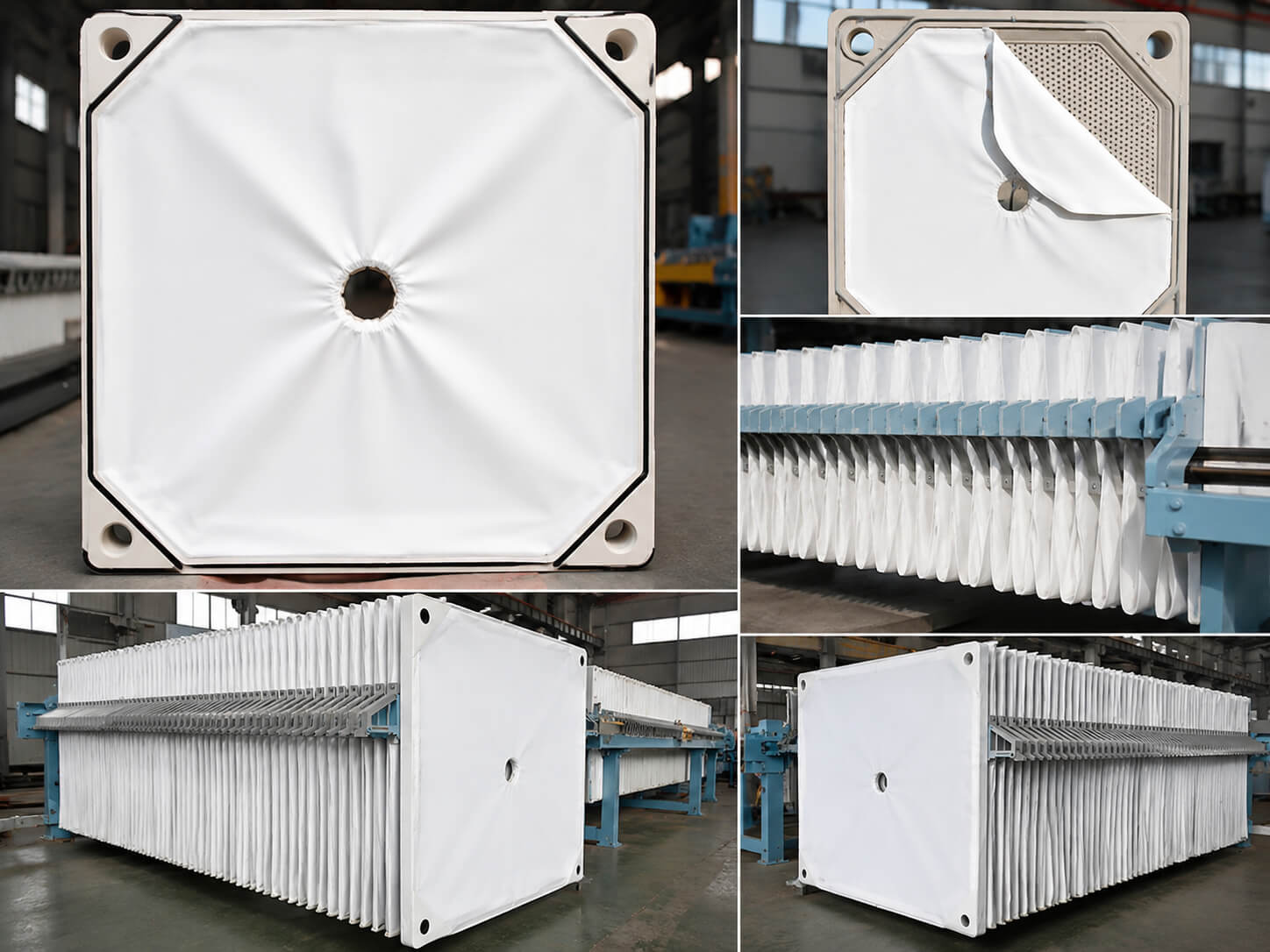
Filter cloth is durable and reusable, and it suits most oil and sludge applications. The weave and material should match the particle size and the chemical nature of the oil.
Filter paper is often used for edible oil polishing, where very fine particles must be removed and a high level of clarity is expected.
Filter aids, such as diatomaceous earth or similar materials, are added to build a porous layer on the media. This layer captures fine particles and keeps the media from blinding too quickly.
Two mistakes are common. If the media is too tight, the press slows down and the cycle becomes uneconomical. If it is too open, fines pass through and the oil stays cloudy. The right choice comes from the particle size and the oil properties, which is why we recommend trial data or a supplier consultation before settling on a media.
How to Select an Oil Filter Press: Viscosity, Temperature, Filtration Area, and Automation
When customers ask us for a filter press for oil, we start with questions rather than a price. These are the points that determine the right machine:
- Oil type and viscosity: Thicker oil flows slowly and often needs heating, which affects plate material and cycle time.
- Operating temperature: This sets the plate material and the sealing design.
- Solids content and particle size: These determine the media, the chamber volume, and the cake handling.
- Daily volume: Throughput helps define the filtration area and the number of plates.
- Pressure requirement: Feed pressure and pressing force must suit the plates and the frame.
- Automation level: The choice ranges from manual operation to semi-automatic and fully automatic plate shifting. It depends on labor cost, production hours, and how often the press is opened.
- Safety conditions: If the oil is flammable, the pump and electrical components must suit the site.
Filtration area matters, but it is only one number on the list. A large press with the wrong plate material or media will still perform poorly. A smaller, well-matched press often delivers better results and lower running cost.
Operation, Maintenance, and Safety Tips for Oil Filter Press Systems
A good oil filter press can run for many years if it is operated and maintained properly. Here are the practical points we share with our customers.
Operation
- Raise feed pressure gradually instead of starting at full pressure. This helps form an even cake and protects the media.
- Do not overfill the chambers, and stop the cycle when the flow slows to the point where it is no longer economical.
- Make sure the plates are properly aligned and fully closed before feeding.
Maintenance
- Clean the filter media regularly. Residue left in the cloth reduces flow and shortens its life.
- Inspect the plate sealing surfaces and the plate edges for wear or damage, and replace damaged plates promptly.
- Check the hydraulic or manual pressing system and keep moving parts lubricated.
Safety
- Oil can be flammable, so use suitable equipment for hazardous areas and keep ignition sources away.
- Provide good ventilation around the press.
- Use drip trays or containment to manage leaks and spills, and train operators on how to open the press safely.
Following these habits reduces downtime, protects your oil recovery, and keeps the working area clean and safe.
Conclusion
The right oil filter press is not defined by filtration area alone. It depends on your oil type, operating temperature, and solids content, and on how well the plates, filter media, automation level, and safety features fit that process. A well-matched press saves oil, shortens cycle times, and lowers maintenance costs over its working life.
As a filter press manufacturer producing both filter plates and complete machines, LONGONE can help you choose a configuration that fits your actual conditions. If you are considering a filter press for oil, send us your oil type, temperature, and solids content, and our team will recommend a suitable solution.
Contact LONGONE today to discuss your oil filtration project.
FAQ
Can a filter press be used for edible oil?
Yes. Filter presses are widely used to polish edible oils and to recover oil from residues. Food-grade materials and suitable filter media should be selected for this use.
What temperature can PP filter plates handle?
It depends on the grade. Standard PP has a lower limit than heat-resistant PP, and metal plates handle higher temperatures. Please confirm the exact limit with the manufacturer for your working temperature.
Do I need filter paper or filter cloth for oil?
Filter cloth suits many general applications, while filter paper is often used when very fine particles must be removed for high clarity. The choice depends on your oil and quality target.
How often should the filter media be replaced?
There is no single interval. It depends on the oil, the solids, the cleaning routine, and the operating conditions. Regular inspection will show when flow drops or the media is damaged.