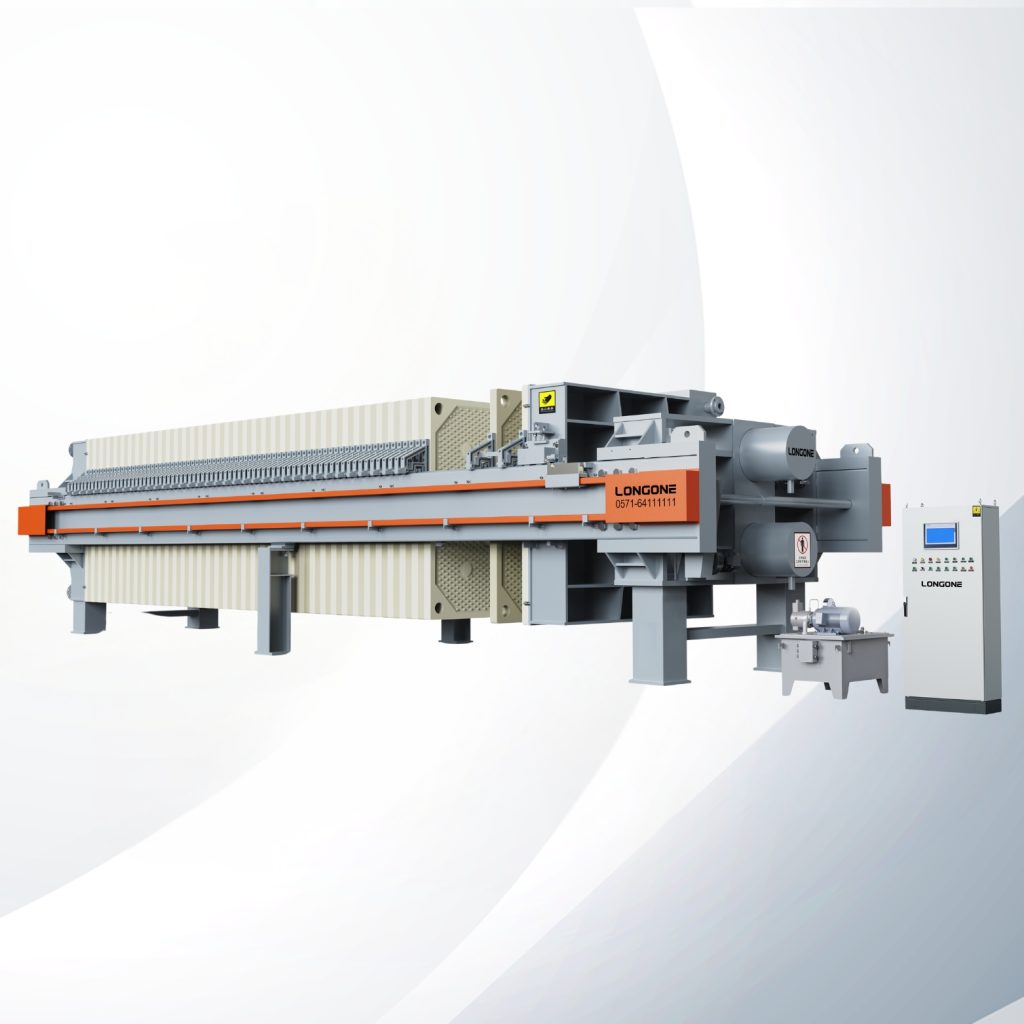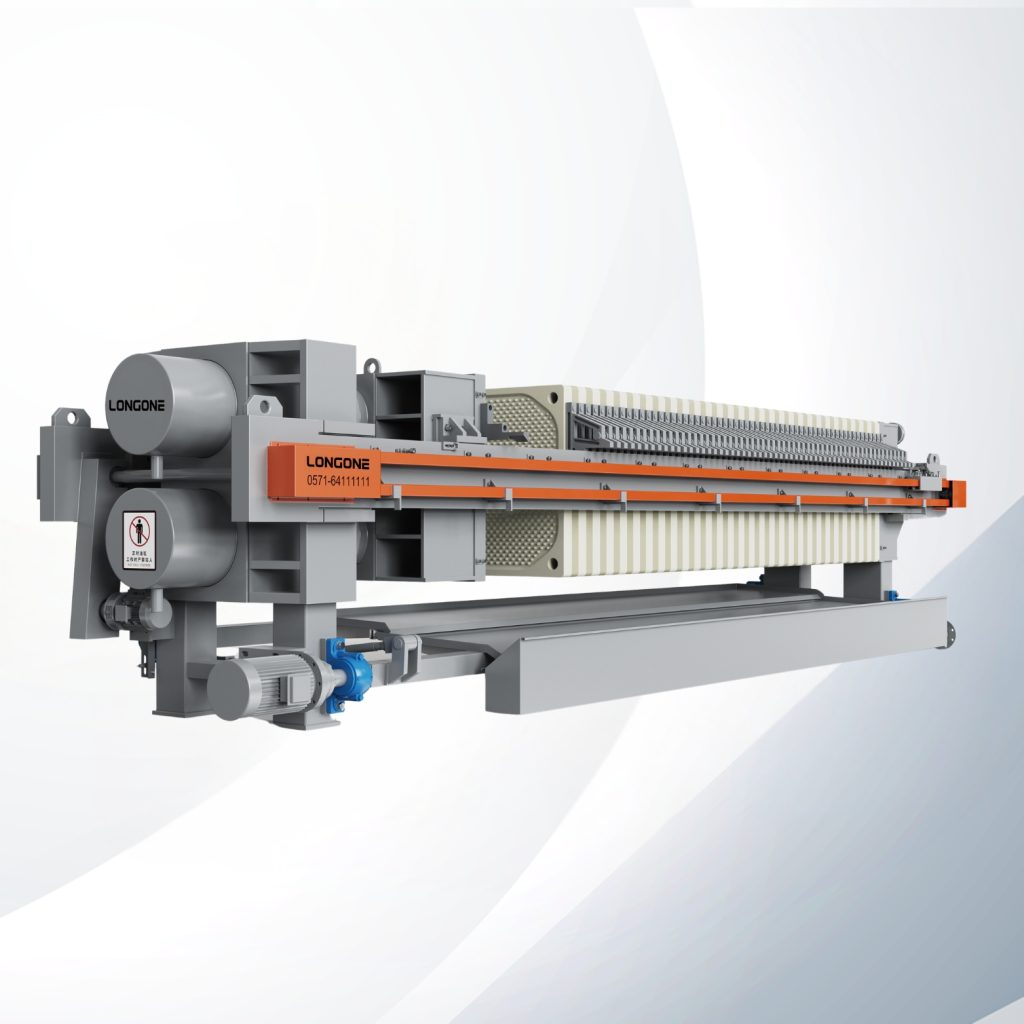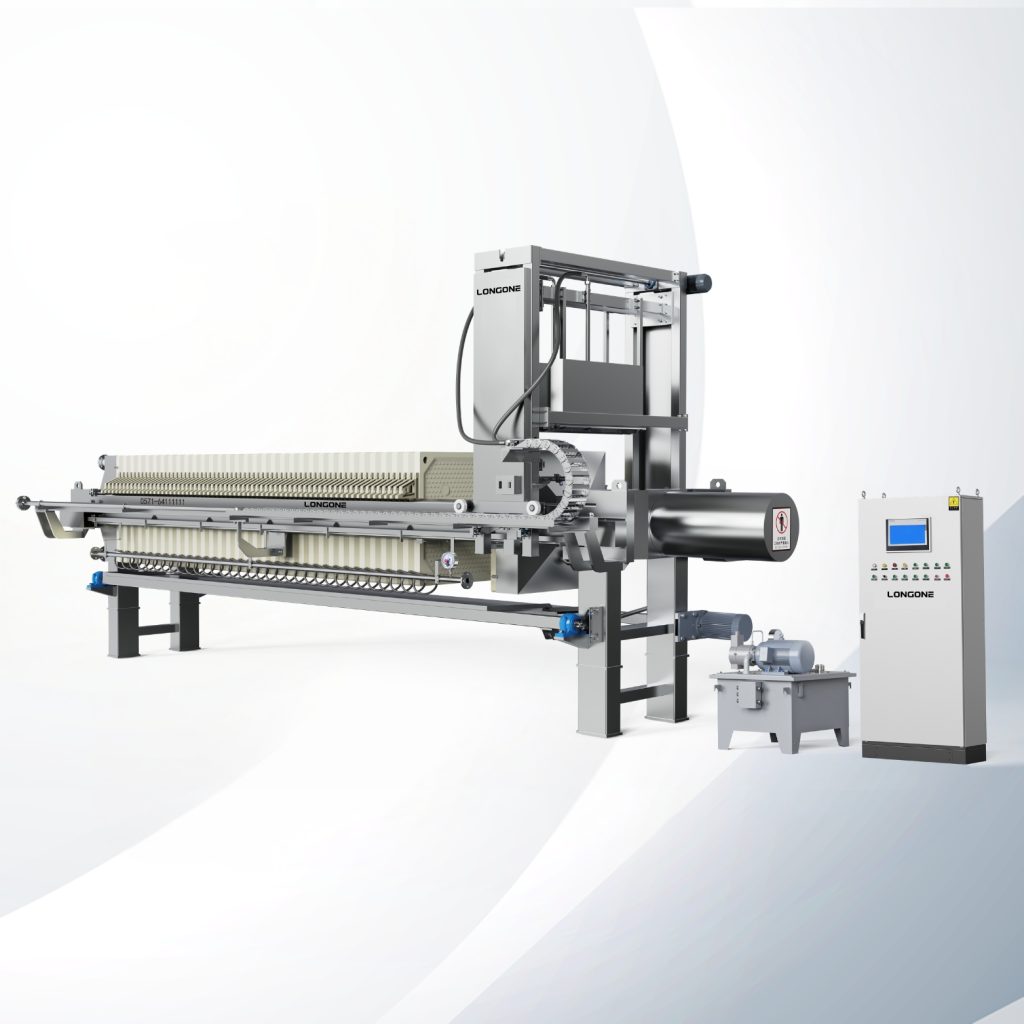
Buying a full-size filter press without testing your slurry first is one of the most expensive guesses in solid-liquid separation. A lab scale filter press removes much of that guesswork. It lets you run real filtration trials with a small sample, under conditions close to production, and turn the results into a sound equipment specification.
This guide explains what a lab scale filter press is, what it can and cannot tell you, and how to choose and use one. It is written from the perspective of a filter press plate manufacturer, because plate design, plate material, and filter cloth decide whether your test data can be trusted.
What Is a Lab Scale Filter Press and How Does It Work?
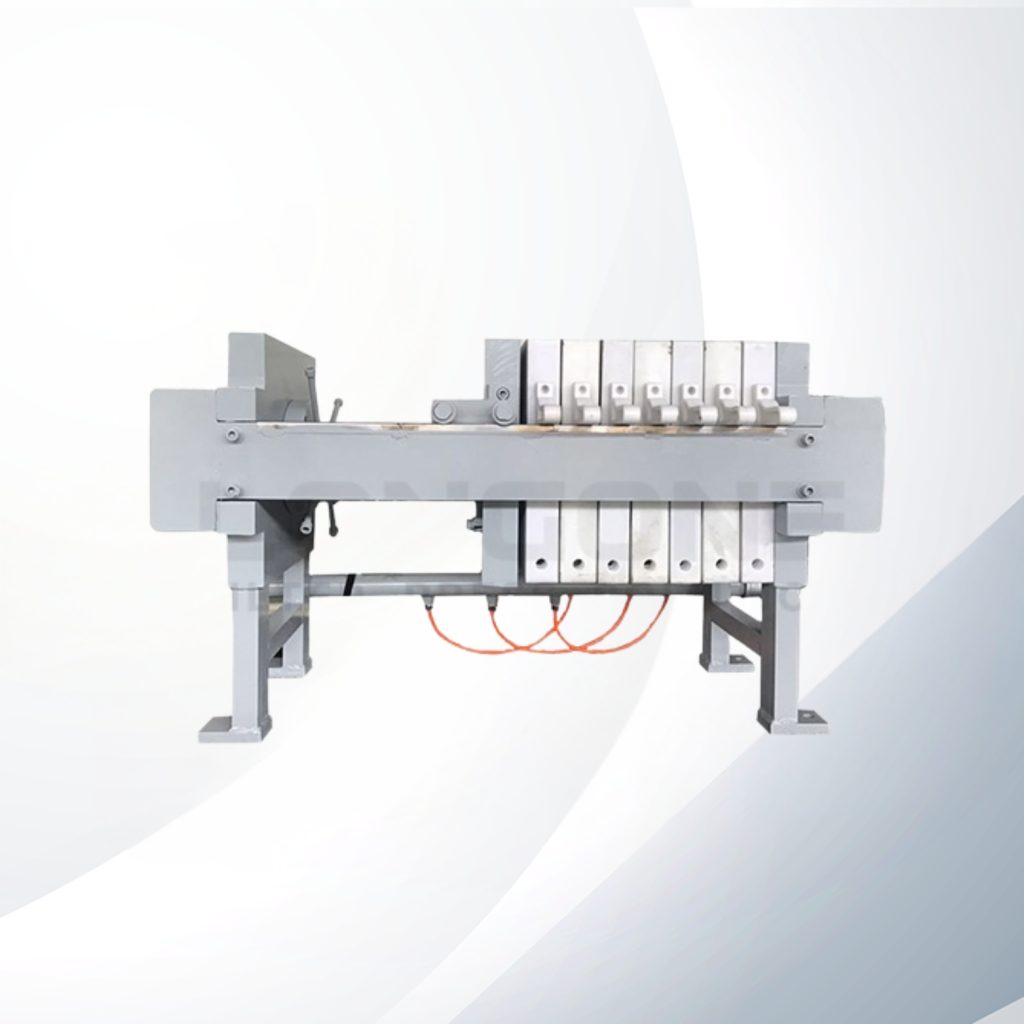
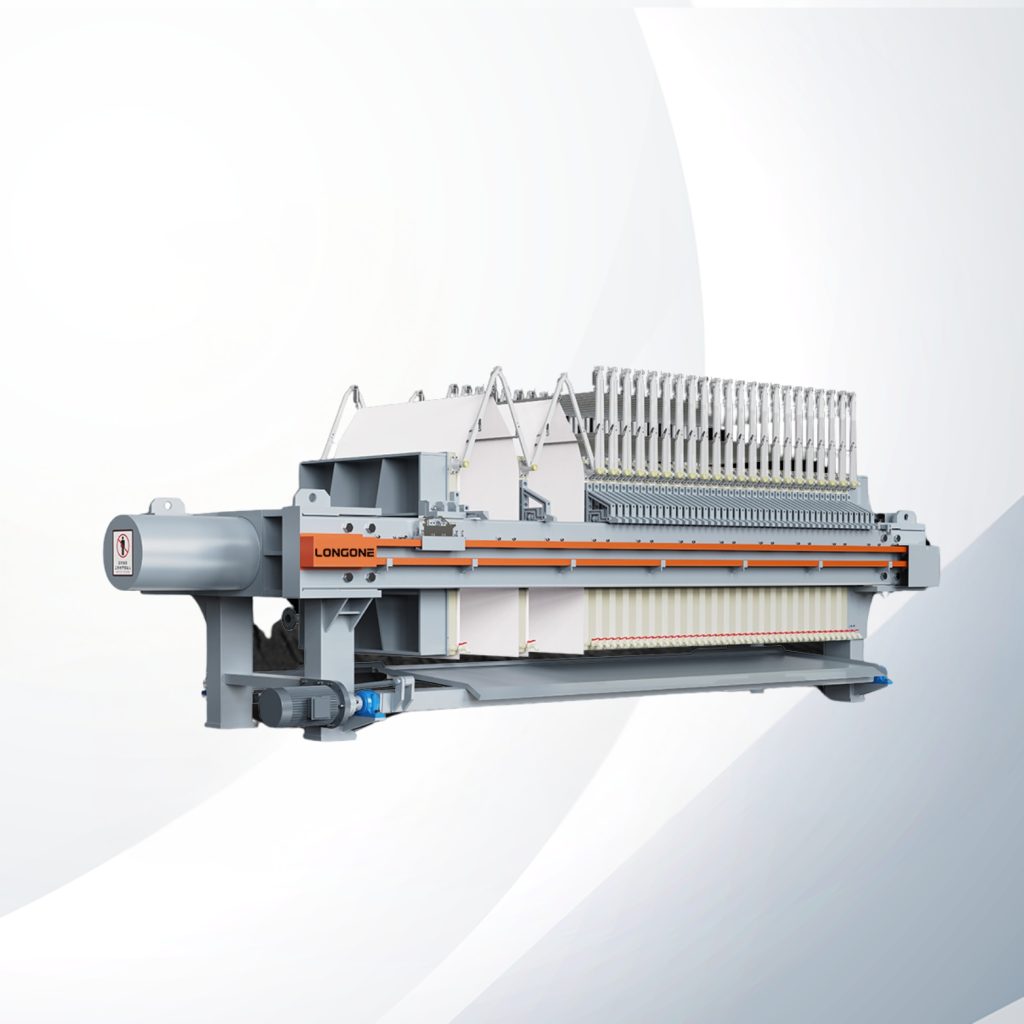
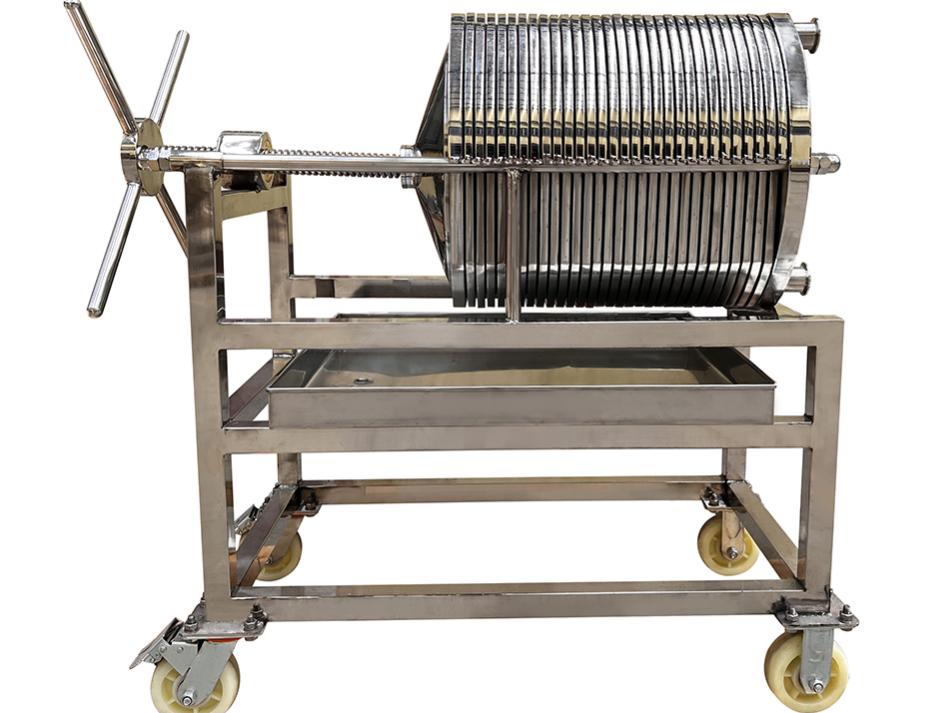
A lab scale filter press is a compact version of a chamber or membrane filter press, built for small sample volumes. It is used in laboratories, R&D departments, and very small production runs.
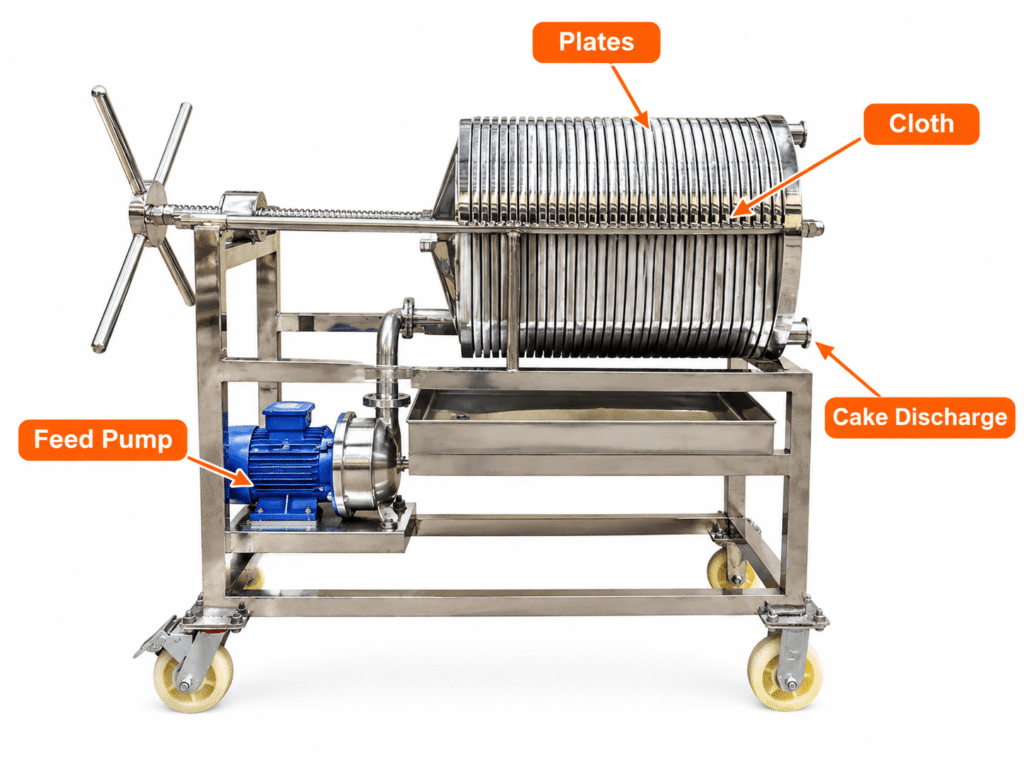
The working principle is the same as in a full-size machine:
- Feeding. A pump pushes slurry into the chambers formed between filter plates.
- Filtration. Liquid passes through the filter cloth and leaves through the plate drainage channels, while solids stay behind.
- Cake formation. Solids build up inside each chamber until it is full.
- Optional steps. Depending on the design, the cake can be washed, blown with air, or squeezed with a membrane to reduce moisture further.
- Discharge. The plates are opened and the cake is removed for measurement.
Lab units come in several forms. Some are small bench-top presses with a handful of plates, driven by compressed air or even manual force. Others are more complete test stations with a feed tank, pump, valves, and pressure control. The right form depends on how closely you need to reproduce your production process.
Typical users include wastewater and sludge treatment, mining and mineral processing, chemical and pigment production, food and beverage, and companies developing new materials.
Why Test at Lab Scale Before Investing in an Industrial Filter Press
Slurries behave differently from what their description suggests. Two suspensions with similar solids content can filter at very different rates and produce very different cakes. Particle size distribution, compressibility, chemical composition, and viscosity all play a role.
A lab scale filter press helps you in four ways:
- Reduce technical risk. You find out early if a slurry blinds the cloth, forms a sticky cake, or resists dewatering.
- Avoid oversizing or undersizing. Filtration data supports a realistic estimate of filter area, chamber volume, and cycle time.
- Compare options. You can try different cloths, cake thicknesses, and pressures on the same sample.
- Support the purchase decision. Test results give procurement and management a factual basis for the investment.
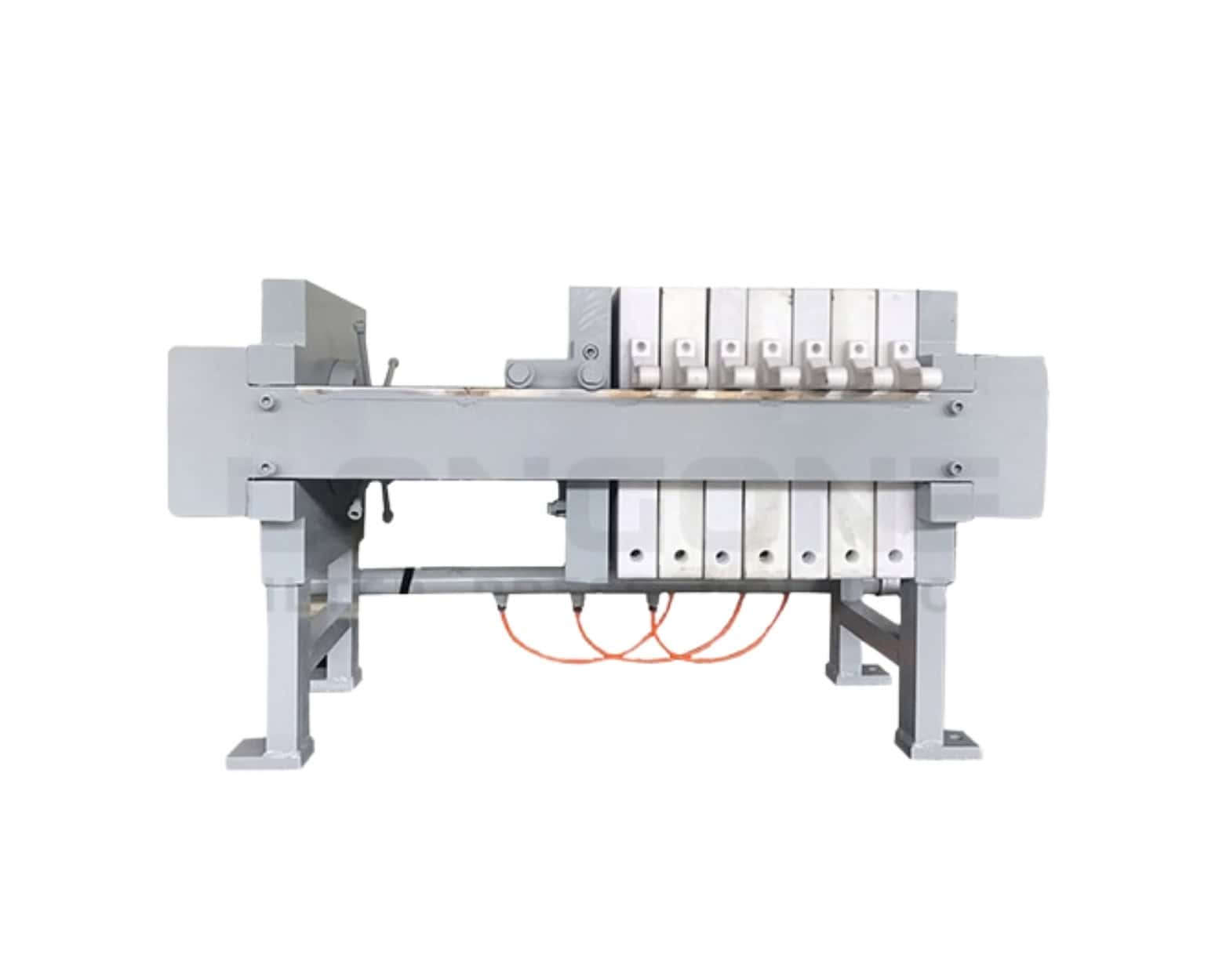
Many buyers first try a Buchner funnel or a vacuum filter. These are useful for a rough check, but they do not reproduce the pressure, cake thickness, or drainage geometry of a chamber filter press. A lab scale filter press closes that gap.
Key Process Parameters a Lab Filter Press Can Tell You
A well-run trial gives you practical numbers, not just a yes-or-no answer. The most useful ones are:
- Filtration rate. How quickly filtrate is produced at a given pressure, and how that rate drops as the cake builds up.
- Cake formation behavior. How fast the cake grows, whether it is uniform, and whether it cracks or stays soft.
- Cake moisture (dry solids content). The main indicator of dewatering performance, measured after drying a cake sample.
- Filtrate clarity. Whether solids pass through the cloth, which points to a cloth or pre-coat issue.
- Cloth selection. Which cloth gives the best balance of clear filtrate, good release, and resistance to blinding.
- Chamber thickness. How cake thickness affects cycle time and final moisture.
- Effect of washing. Whether cake washing removes soluble impurities efficiently and how much wash liquid it needs.
- Effect of membrane squeezing. Whether an extra squeeze stage gives enough moisture reduction to justify a membrane plate setup.
- Overall cycle performance. The full sequence of feeding, filtering, washing, squeezing, and discharge.
These results help you specify plates, cloth, and auxiliary systems for the production machine, rather than choosing by catalog description alone.
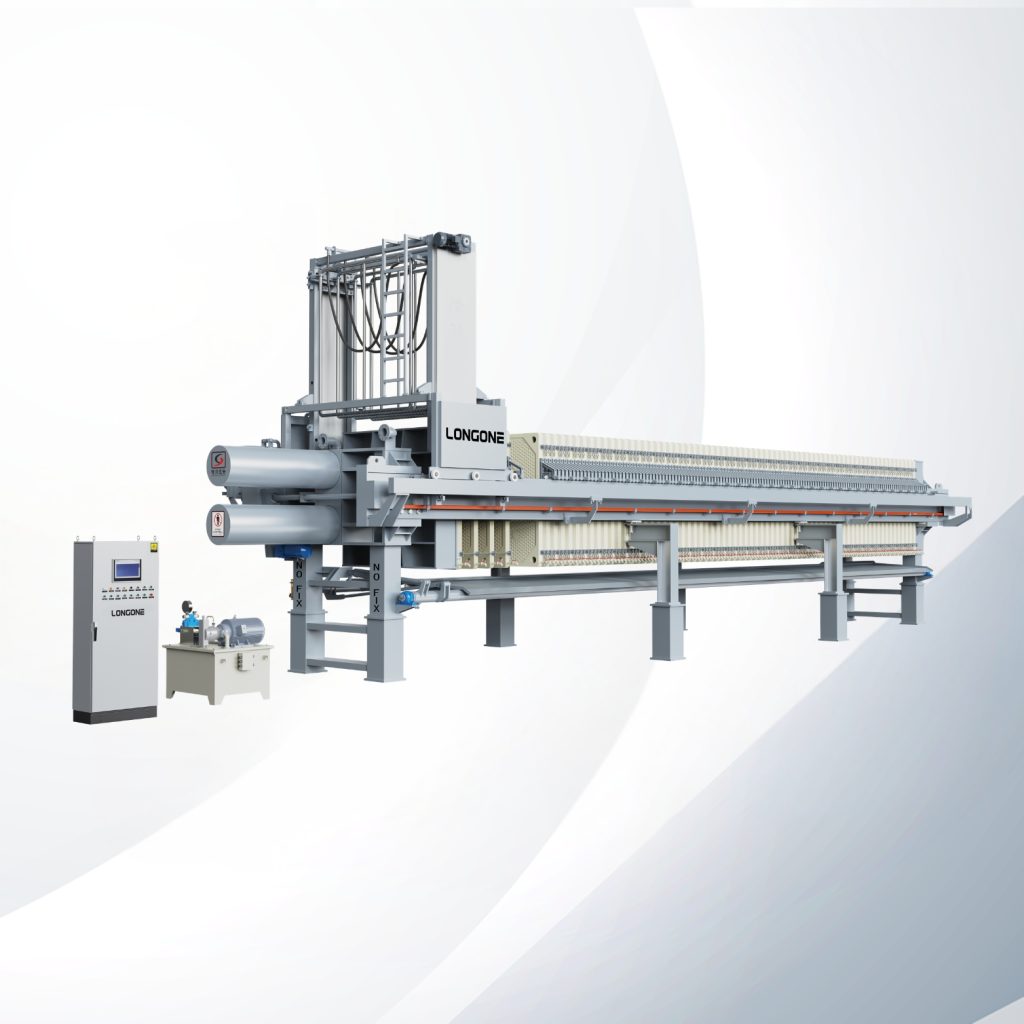
Lab, Pilot, and Industrial Filter Press: What Scales Up and What Doesn’t
Scale-up is where many projects go wrong. Some results carry over reliably. Others do not.
| Aspect | Lab Scale | Pilot Scale | Industrial Scale |
|---|---|---|---|
| Main purpose | Feasibility and parameter screening | Process validation and scale-up study | Continuous production |
| Sample volume | Very small | Moderate | Large |
| Plate count | Few plates | Several plates | Many plates |
| Automation | Manual or basic | Partly or fully equipped | Usually automated |
| Typical output | Filtration behavior, cloth and pressure choice | Cycle time, cake moisture, wash and squeeze data | Daily throughput |
What usually scales well:
- Cake moisture at the same pressure, cake thickness, and cloth
- Cloth performance and cake release behavior
- The effect of washing and squeezing
- Filtrate quality
What needs care:
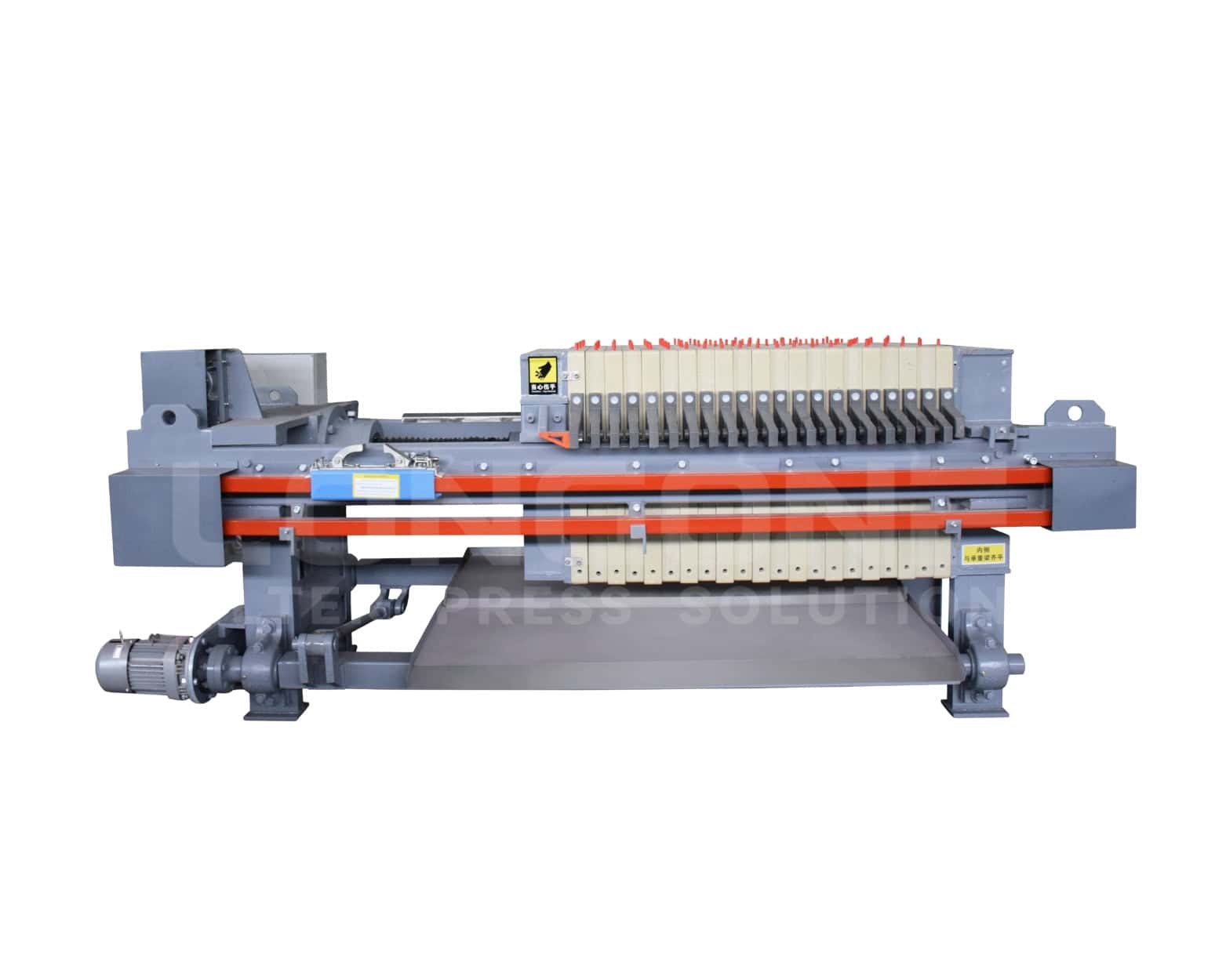
- Cycle time. Feed pump capacity and piping in a full plant differ from a lab setup, so total cycle time must be calculated, not copied.
- Feed conditions. Lab samples may be fresher or better mixed than real production slurry.
- Plate and cloth details. If the lab plate has a different surface pattern, material, or chamber depth than the production plate, the data may not transfer.
- Slurry variation. One sample is a snapshot. Production slurry changes from batch to batch.
The rule is simple: the closer your lab conditions are to production conditions, the more useful the data. Lab data should guide sizing, but a sensible safety margin is still needed.
How to Choose a Lab Scale Filter Press: Plates, Cloth, Pressure, and Capacity
Use this checklist to compare units and define your needs.
Selection checklist
- Sample volume available. Make sure the unit works with the amount of slurry you can realistically provide.
- Plate material. Choose a material compatible with your slurry temperature and chemistry, such as polypropylene for many applications.
- Plate design and chamber depth. Match the production plate as closely as possible, or ask whether a configurable chamber is available.
- Plate type. Decide whether you need a standard recessed chamber or a membrane setup to test squeezing.
- Number of plates. More plates give a larger filter volume and a more representative test, but need more sample.
- Filter cloth options. Check that you can easily change cloth types and test several materials.
- Operating pressure range. Confirm the unit can reach the pressures you expect in production, including any squeeze or air-blow stages.
- Drive method. Compressed air, manual, or electric, depending on where you will test.
- Auxiliary equipment. Feed tank, pump, valves, pressure control, and wash lines determine how independent the test station is.
- Cleaning and maintenance. Slurries that settle can block lines, so easy flushing and disassembly matter.
- Portability. If you plan to test at different sites, check size and weight.
- Scale-up support. Ask if the supplier can help translate results into a full-size specification.
A useful question to ask any supplier is whether the lab plates and cloth are the same type that would be used on the industrial machine. If they are, your test results become much more meaningful.
Running a Filtration Trial: Step-by-Step Workflow and Common Mistakes
A structured trial gives cleaner data and saves time.
Step-by-step workflow
- Define the goal. Decide what you need to learn: target cake moisture, cloth choice, or the value of a squeeze stage.
- Collect a representative sample. Take slurry from the real process, not a laboratory recreation, and record its solids content, temperature, and pH.
- Prepare the press. Fit the chosen cloth, close the plates, and check that piping and connections are clean and tight.
- Start at low pressure. Feed slowly at first so the cloth can build an initial cake layer, then raise pressure in steps.
- Record data. Log filtrate volume against time, pressure, and any visible changes in filtrate clarity.
- Finish the cycle. Fill the chamber, then apply washing, air blow, or squeezing if part of the test.
- Open and inspect. Check cake thickness, uniformity, and release from the cloth.
- Measure the cake. Weigh a wet sample, dry it, and calculate moisture and dry solids content.
- Repeat with variations. Change one variable at a time, such as cloth, pressure, or chamber thickness.
- Clean thoroughly. Flush lines and wash cloth and plates, especially if the slurry settles quickly.
Common mistakes to avoid
- Testing only one sample when the process slurry varies.
- Changing several variables at once, which makes results hard to interpret.
- Using a cloth or plate that will not be used in production.
- Ignoring filtrate clarity and looking only at cake dryness.
- Skipping repeat runs, so one unusual result is treated as typical.
- Poor cleaning between tests, which contaminates the next run.
- Assuming lab cycle time equals production cycle time.
Turn Trial Results into the Right Filter Press
A lab scale filter press is a low-risk, low-cost way to learn how your slurry really behaves, before you commit to an industrial machine. The value of the test depends on how closely it matches production conditions, especially plate design, plate material, and filter cloth.
As a manufacturer of filter press plates that also supplies complete filter presses, we can help you connect trial results to a practical plate and cloth specification. If you are planning a filtration test or a scale-up project, contact our team with your slurry details, and we will suggest a suitable direction.