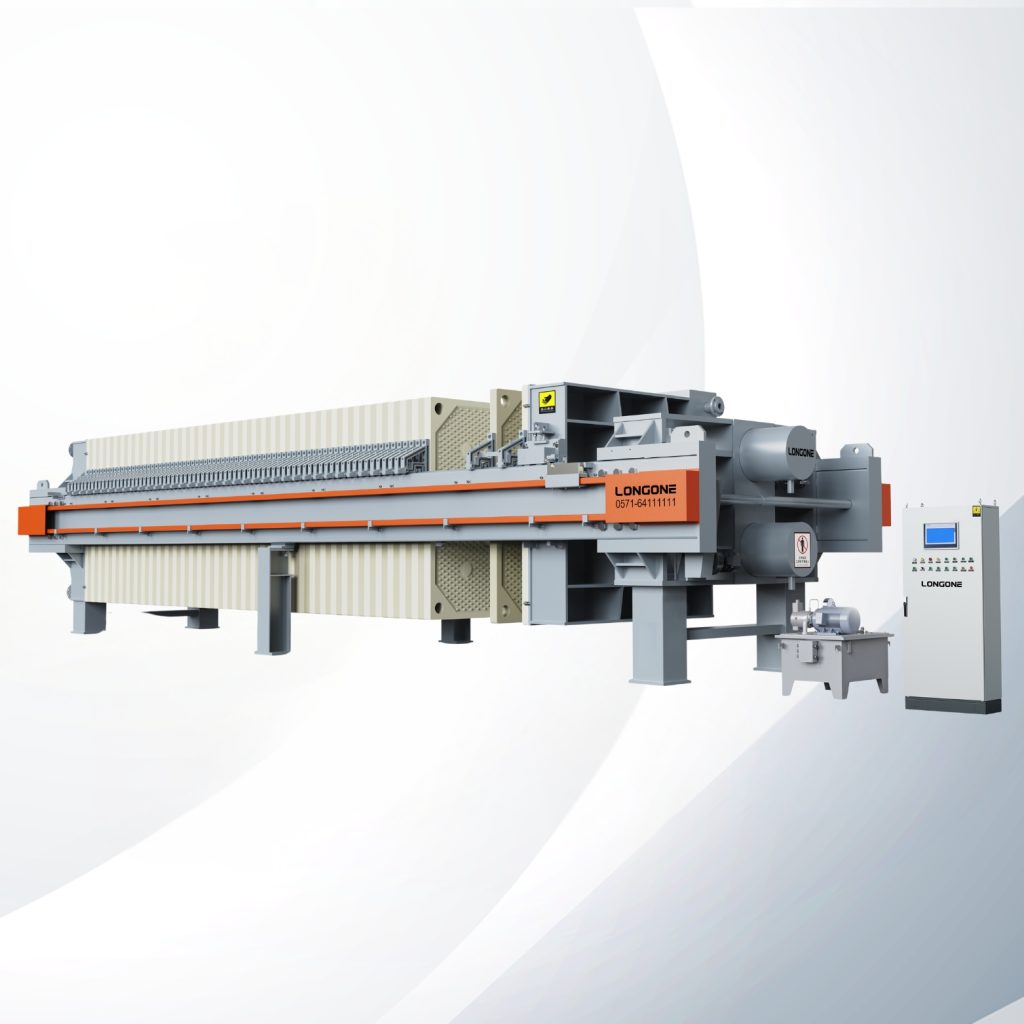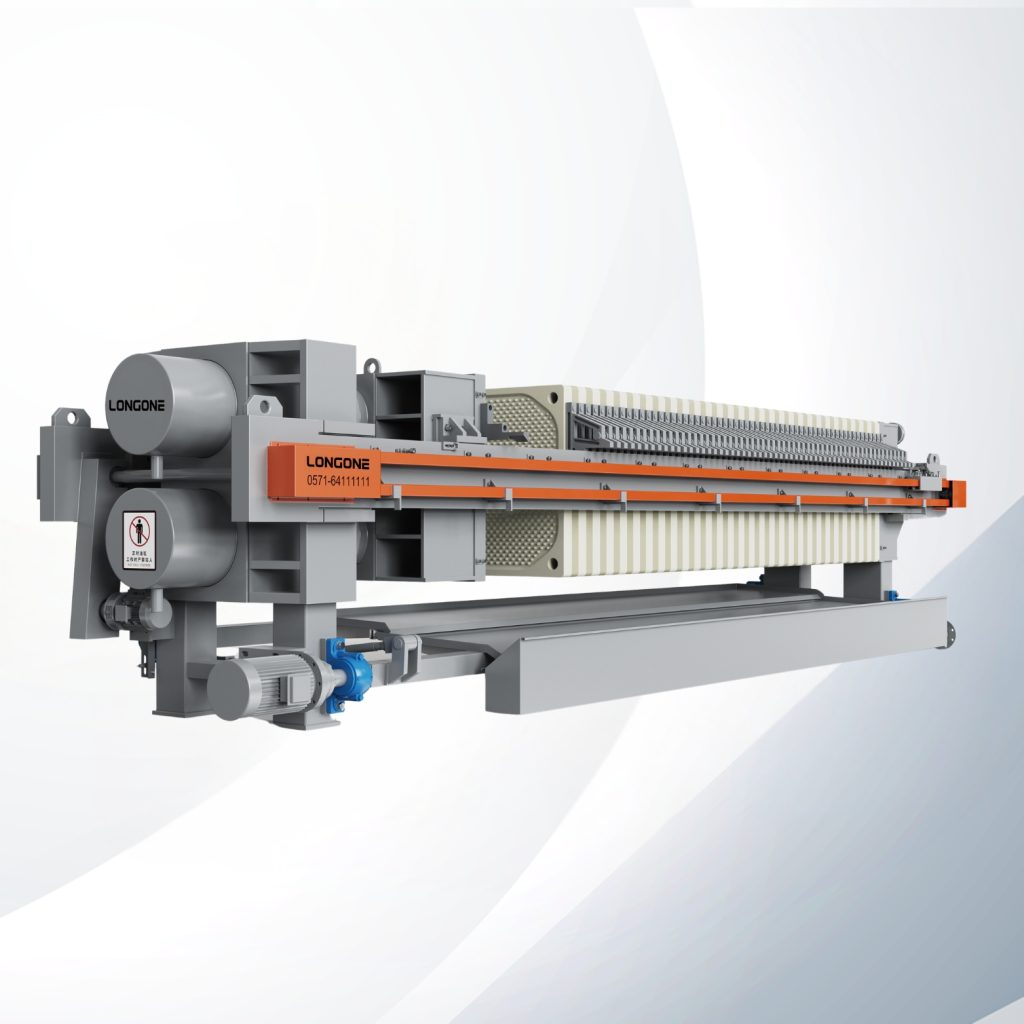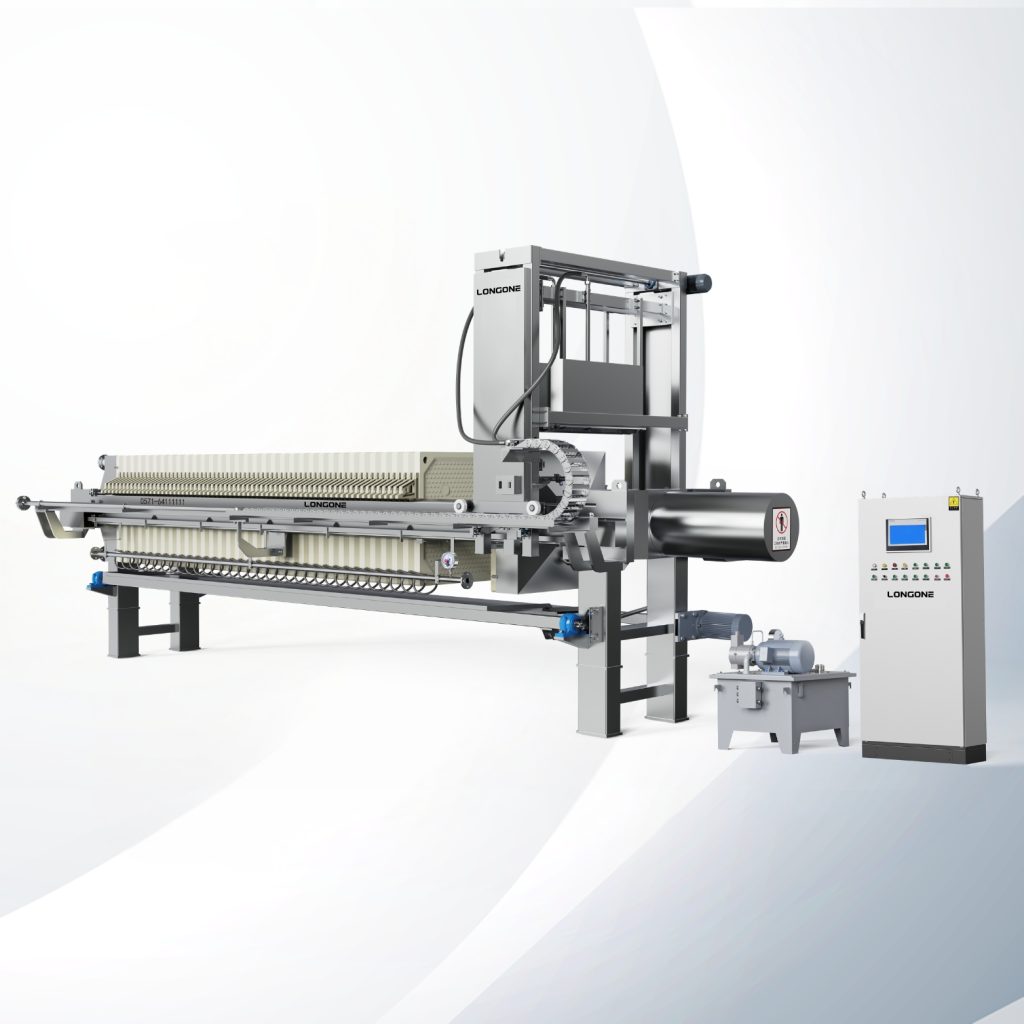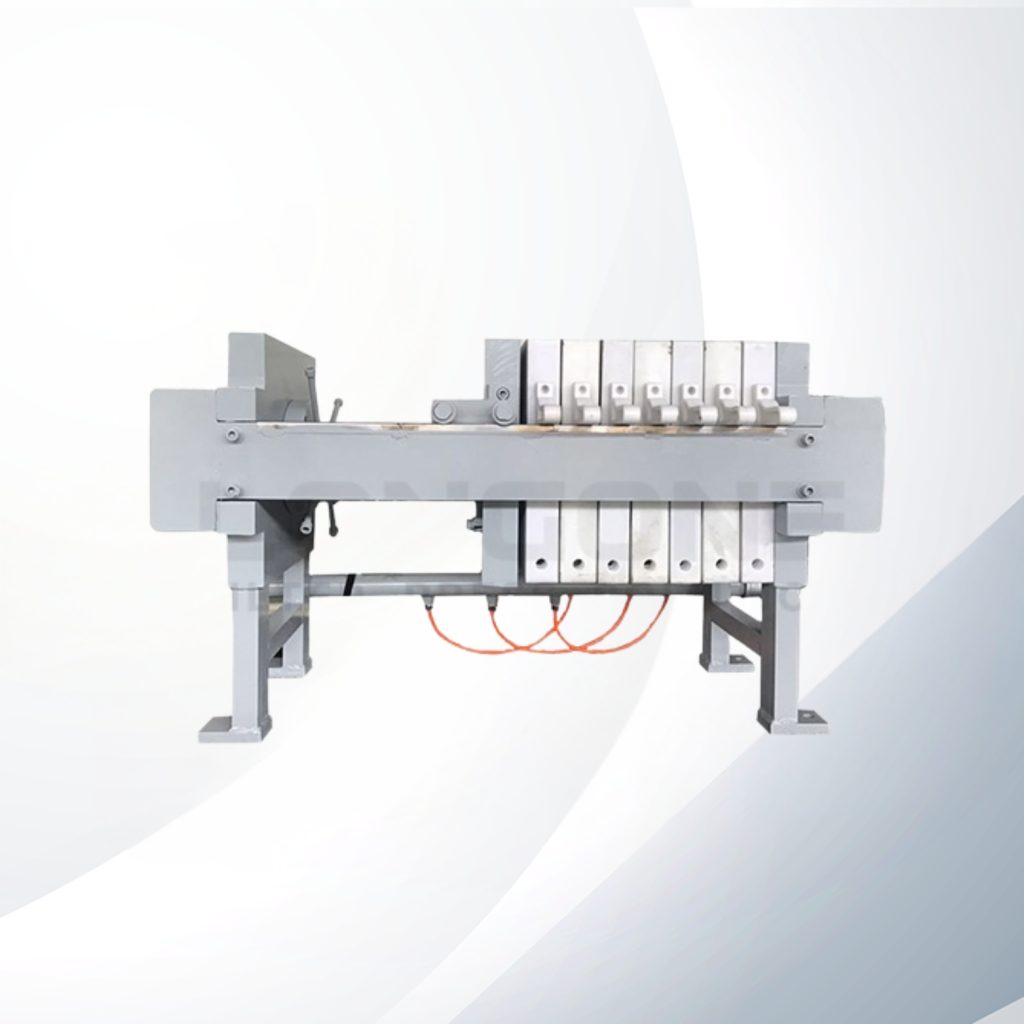
Industrial filter presses are among the most widely used pieces of equipment for solid-liquid separation, appearing in mining operations, chemical plants, wastewater treatment facilities, and food and beverage processing lines around the world. Yet most buying guides describe filter presses purely from the outside — frame size, hydraulic pressure, automation level — without explaining what actually determines how well a press performs over its working life.
As a manufacturer that produces filter press plates and builds complete filter press systems, we see the equipment from a different angle. The plate, not the frame or the hydraulic cylinder, is where filtration actually happens. It is also usually the first component to wear out, underperform, or cause unplanned downtime. This guide walks through how filter presses work, the components that matter most, the main plate types, where they’re used, and how to choose the right configuration — starting from the part that does the filtering, not the part that squeezes it shut.
What Is an Industrial Filter Press and How Does It Work
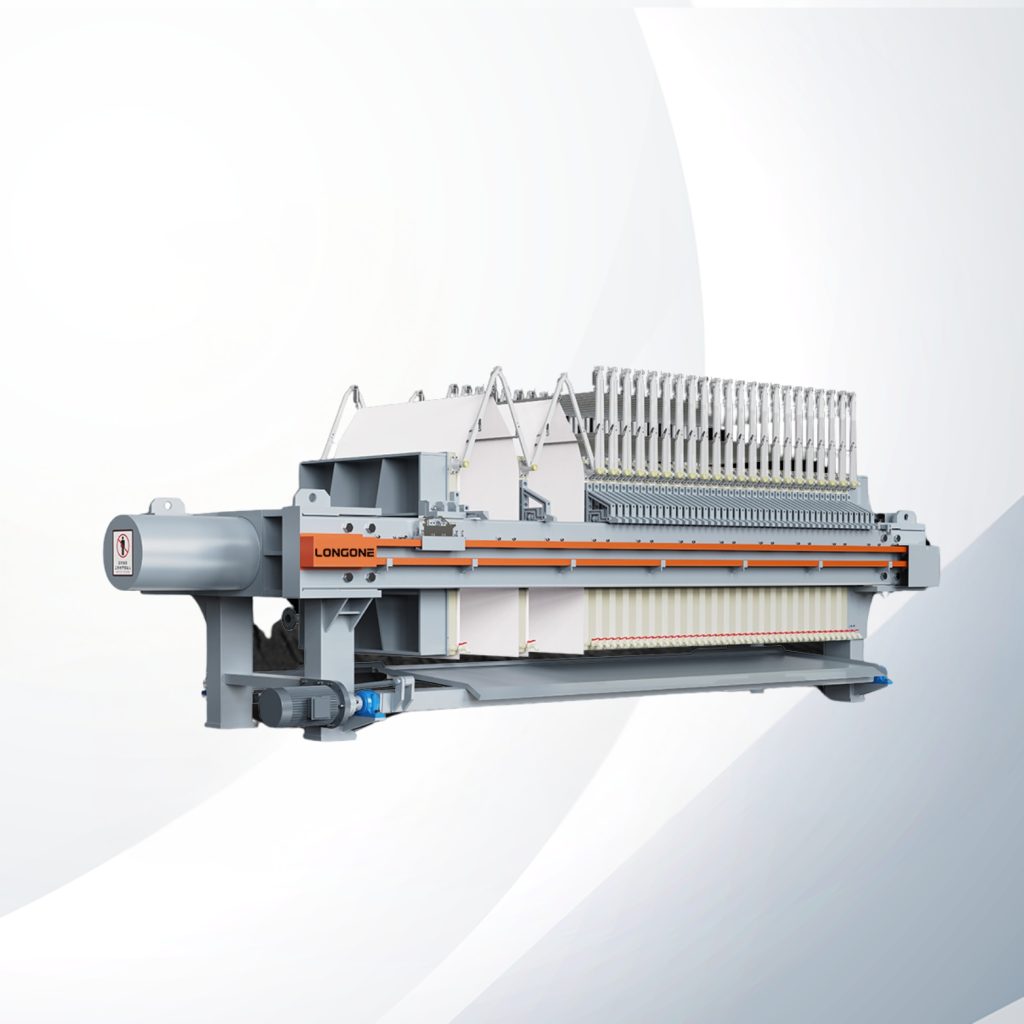
A filter press is a piece of equipment used to separate solids from liquids in a slurry through pressure filtration. Slurry — a mixture of liquid and suspended solid particles — is pumped into the press under pressure. As it passes through filter cloths mounted on a stack of plates, the liquid (filtrate) passes through the cloth while solid particles are trapped and gradually build up into a compact layer known as filter cake.
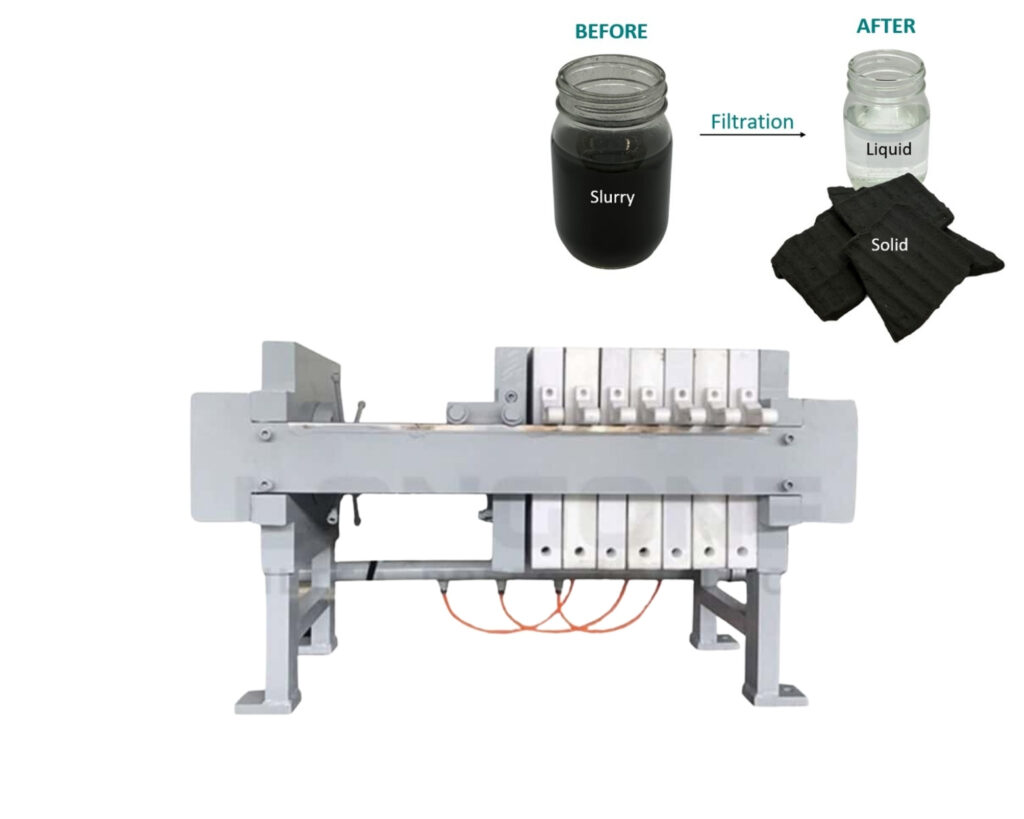
The basic operating cycle follows four stages:
- Filling – Slurry is pumped into the closed press and distributed across the plate stack through feed ports.
- Filtration – As pressure builds, filtrate is forced through the filter cloth and drained away, while solids accumulate on the cloth surface inside each chamber.
- Cake formation and discharge – Once the chambers are full of solid material, the filtration cycle ends. The press opens, the plates separate, and the solid cake drops or is manually/automatically removed.
- Cloth cleaning and reset – Filter cloths are cleaned (often via automatic cloth washers on larger systems), and the press closes for the next cycle.
This cycle can run manually, semi-automatically, or fully automatically depending on plant throughput requirements. What doesn’t change across automation levels is the underlying mechanism: pressure differential across a filter medium, supported by a rigid plate structure. That structural role is why plate design and material selection deserve more attention than they typically get in generic buying guides.
Key Components: Frames, Filter Plates, and Filter Cloth
A filter press is built from a relatively small set of components, but their interaction determines almost everything about performance.
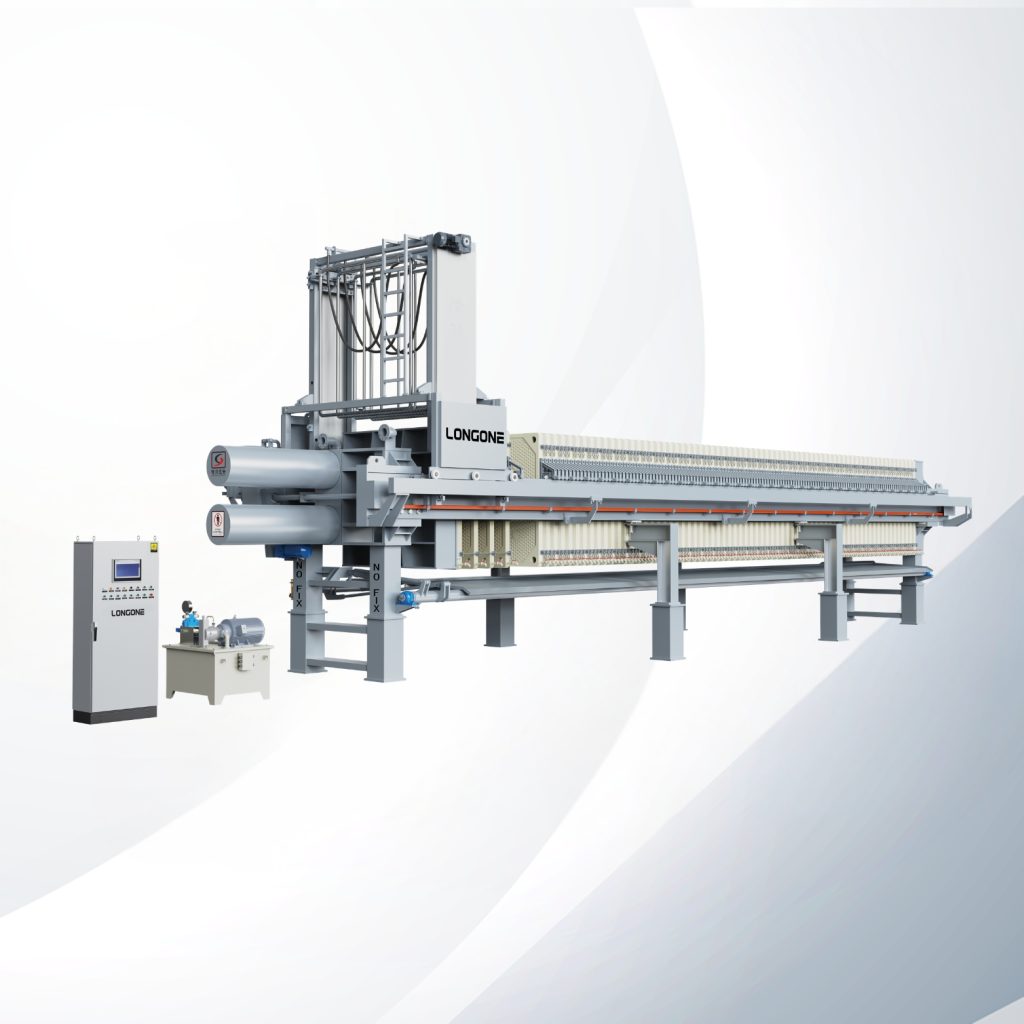
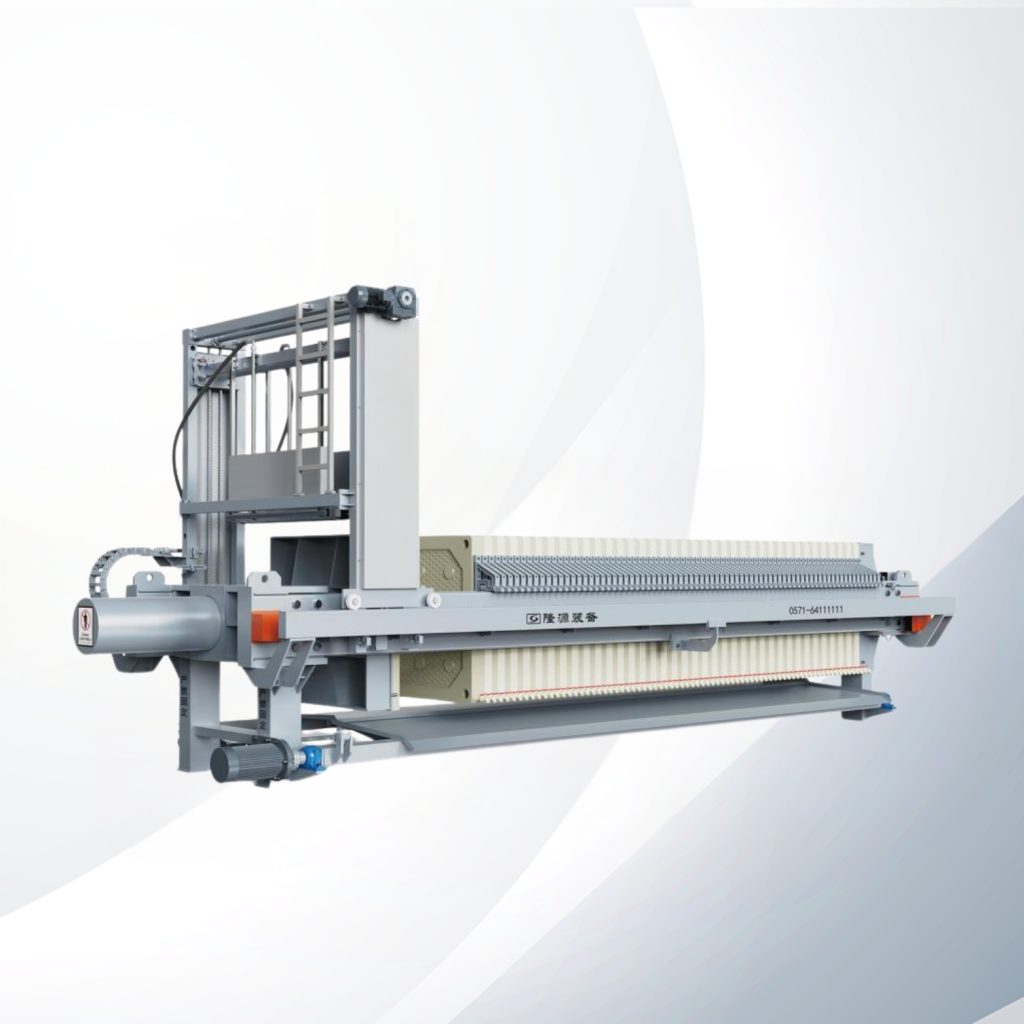
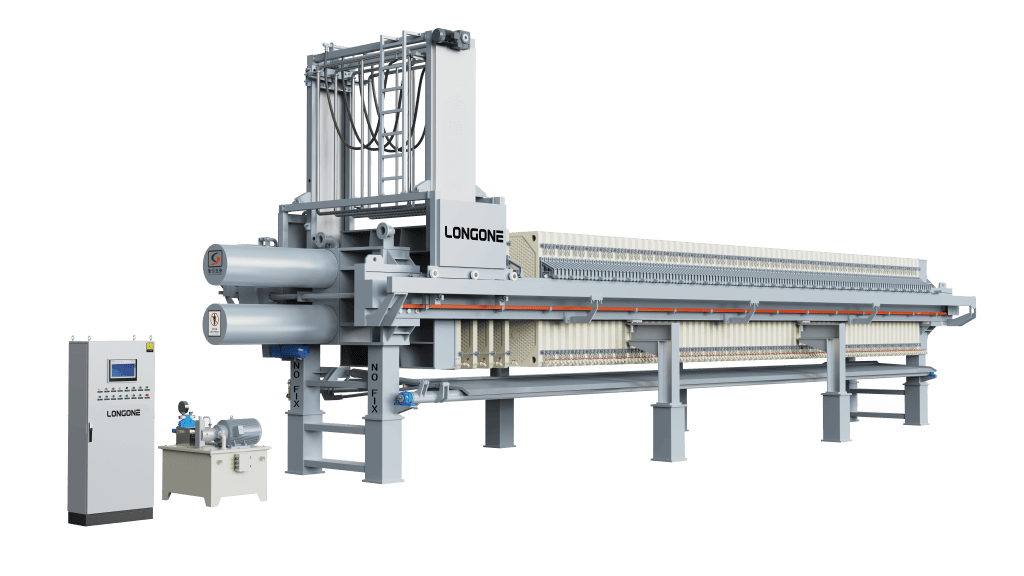
Frame. The frame holds the plate stack together and provides the closing force, either through a hydraulic cylinder or a mechanical screw mechanism on smaller units. Frame design (sidebar vs. overhead suspension) affects how easily plates can be inspected, replaced, or automated with a plate shifter, but it has little direct effect on filtration quality itself.
Filter plates. This is the working core of the press. Plates create the chambers where cake forms and provide the surface against which filter cloth is mounted. Plate material has a direct, measurable impact on service life and performance:
- Cast iron plates offer high mechanical strength and are still used in some heavy-duty legacy installations, but they are heavy, prone to corrosion in acidic or chemically aggressive slurries, and increasingly being phased out in favor of polymer alternatives.
- Polypropylene (PP) plates are corrosion-resistant, lightweight, and cost-effective, making them the standard choice across most industrial applications today, from chemical processing to food-grade filtration.
- Glass-fiber reinforced polypropylene plates add mechanical reinforcement to standard PP, allowing thinner plate walls and higher chamber volumes without sacrificing pressure resistance — useful for high-capacity systems where minimizing plate count and footprint matters.
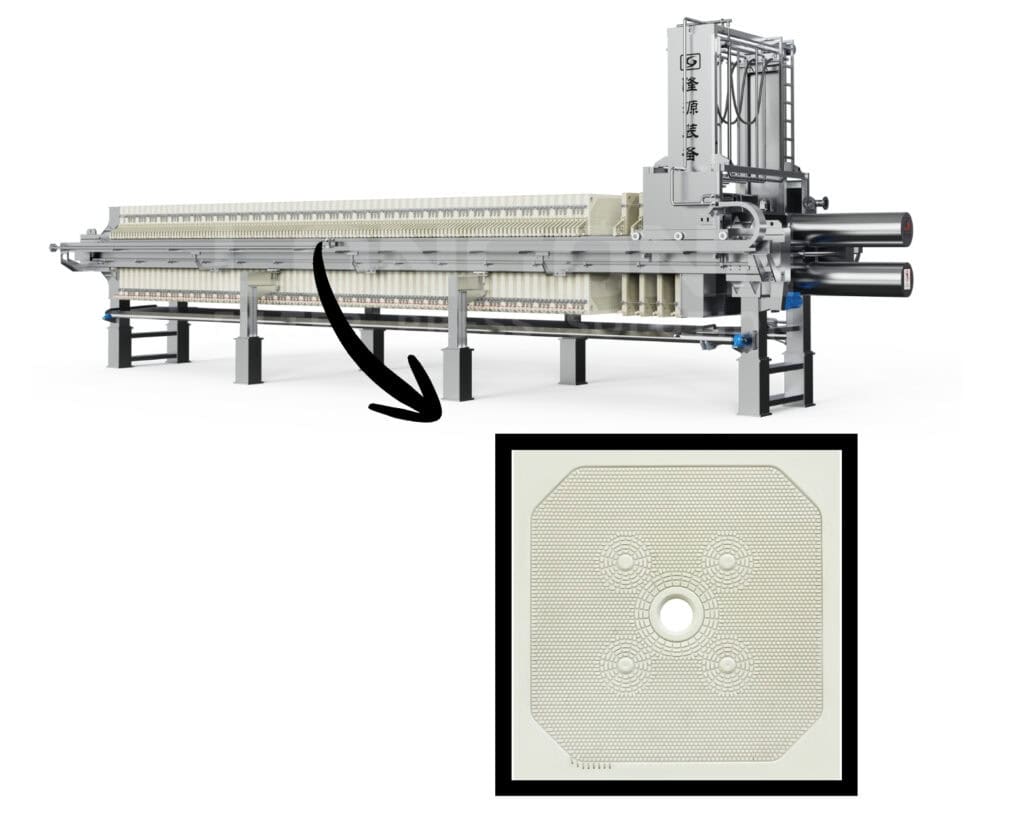
The choice between these materials is rarely just about upfront cost. A plate that deforms slightly under repeated pressure cycling will produce uneven cake thickness, cause filtrate leakage at the plate seal, and shorten filter cloth life — all of which increase operating cost far more than the price difference between plate grades.
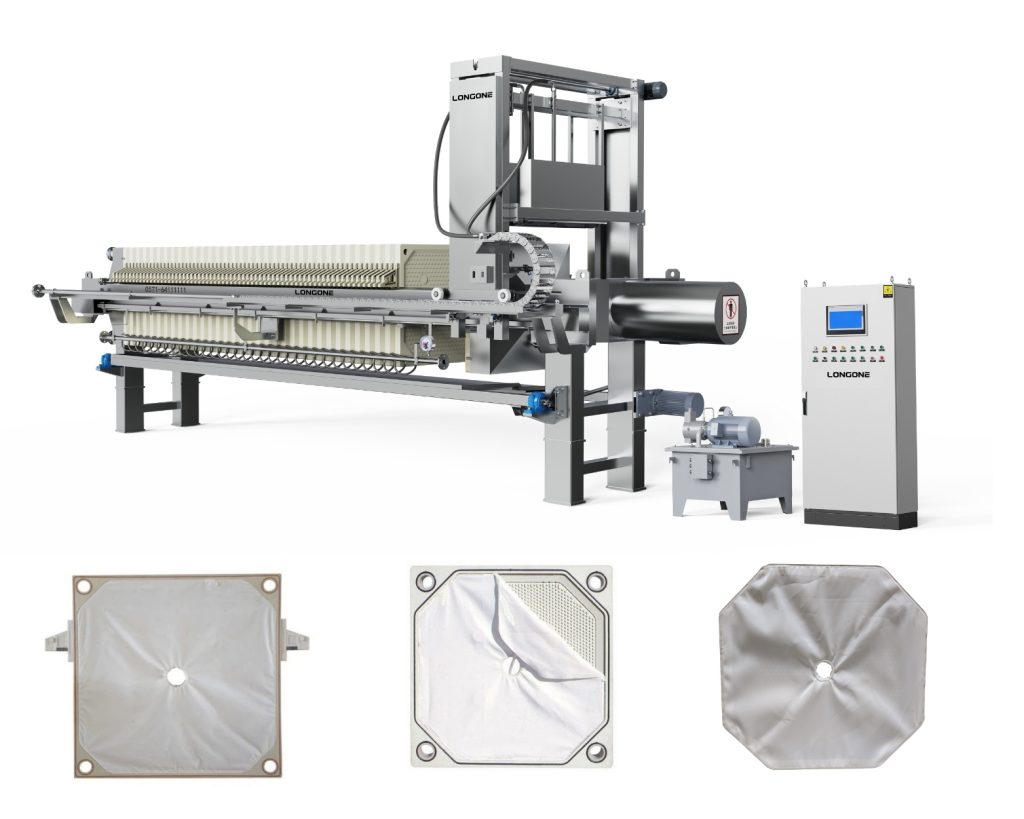
Filter cloth. Filter cloth is mounted over or bonded to each plate face and is the actual filtration medium — plates provide structure, but the cloth determines pore size, cake release behavior, and chemical compatibility with the slurry. A mismatch between cloth weave and plate surface finish is one of the most common — and most overlooked — causes of cloth blinding (premature clogging) and uneven cake formation, often misdiagnosed as a pump or pressure-setting problem.
Types of Filter Press Plates: Recessed Chamber, Plate and Frame, and Membrane
Filter presses are often categorized by frame type, but from a plate manufacturer’s perspective, the plate configuration is the more meaningful distinction, since it determines chamber volume, cake thickness, and washing capability.
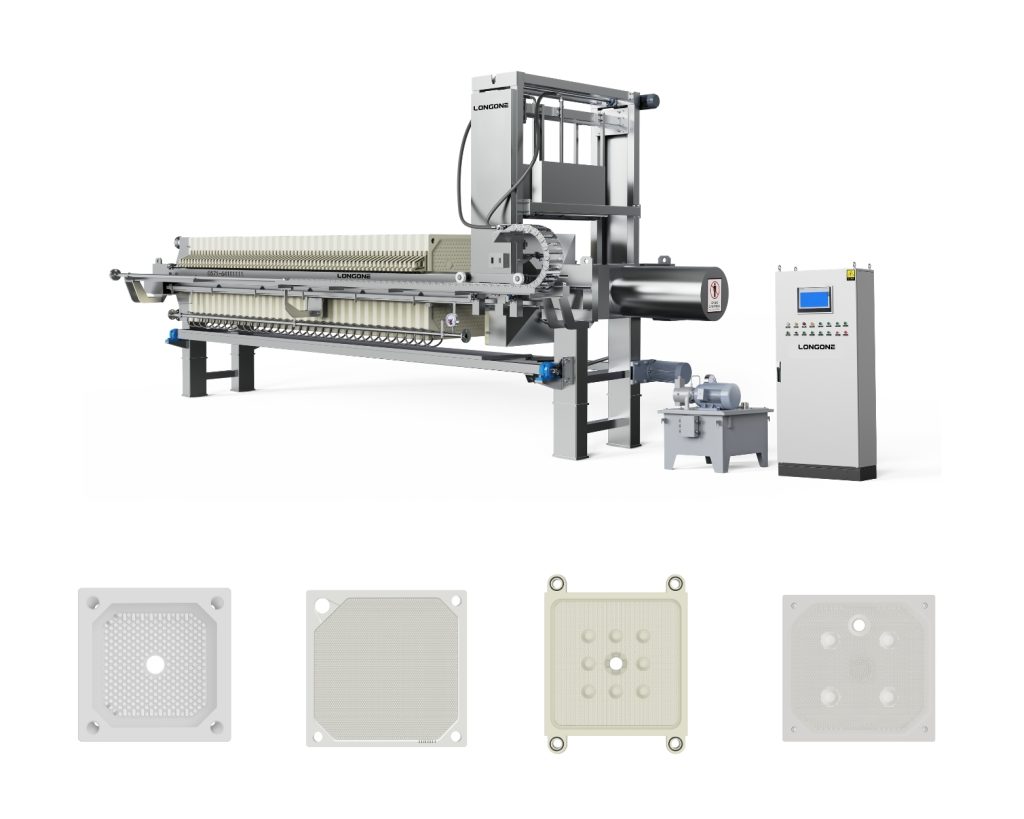
Recessed chamber plates are molded with a recessed face on each side, so that when two plates are clamped together, they form a self-contained chamber without a separate frame. This design handles higher solids loading with less operator intervention, which is why it dominates high-throughput applications like mining and municipal wastewater dewatering, where plants often run with minimal staff supervision per shift.
Plate and frame designs use flat plates alternated with hollow frames to create the filtration chamber. This older configuration allows for thorough cake washing and is still specified in applications requiring high product purity, such as certain pharmaceutical and specialty chemical processes, but it is more labor-intensive to operate and clean than recessed chamber systems.
Membrane plates incorporate a flexible membrane behind the filter cloth. After initial cake formation, the membrane is inflated with compressed air or water, mechanically squeezing additional liquid out of the cake. This produces a drier, more compact cake than recessed chamber plates alone and is increasingly specified where downstream disposal costs are driven by cake moisture content — since even a small reduction in residual moisture can meaningfully cut transport and landfill costs at scale.
Understanding which plate type fits your process is often more decisive for total cost of ownership than which press manufacturer or frame brand you choose.
Industrial Applications: Mining, Chemical, Wastewater, and Food Processing
Filter presses are used wherever a process generates a slurry that needs to be separated into a dry solid and a clarified liquid. The plate and cloth combination is typically customized per industry:
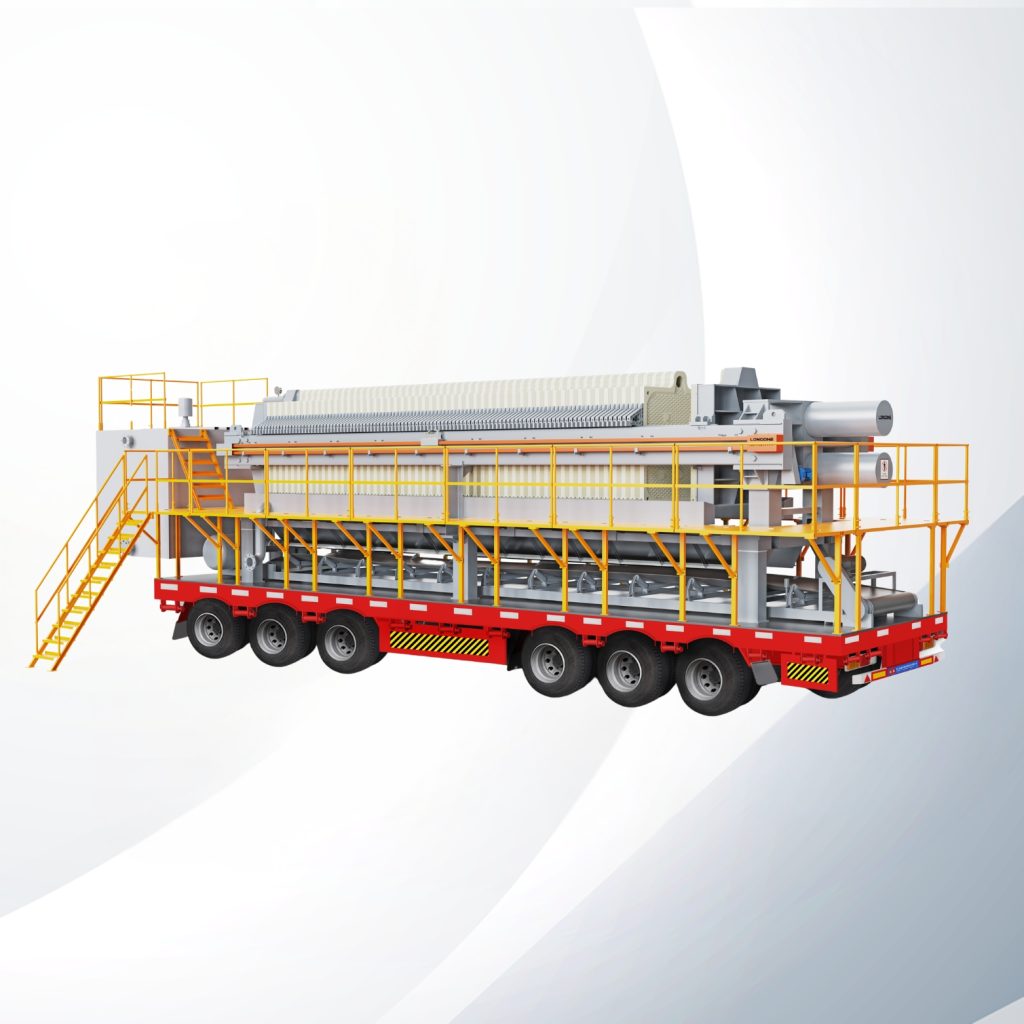
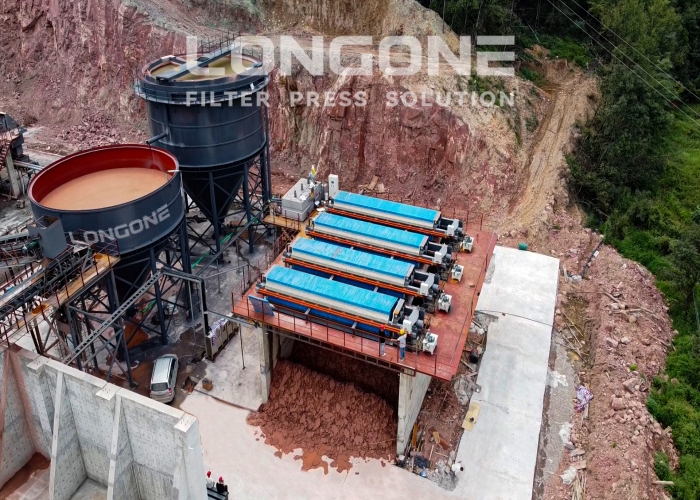
- Mining and mineral processing – Recessed chamber presses with high-abrasion-resistant PP plates dewater tailings and concentrate slurries, recovering process water for reuse and reducing tailings pond volume.
- Chemical manufacturing – Filter presses purify chemical intermediates and recover valuable solids, often requiring plates and cloths compatible with acidic, alkaline, or solvent-based slurries.
- Wastewater and municipal treatment – Automatic filter presses with membrane plates dewater sludge before disposal or incineration, where lower cake moisture directly reduces hauling and processing costs.
- Food and beverage – Smaller plate and frame or membrane presses clarify liquids such as fruit juice, wine, and edible oils, typically requiring FDA-compliant plate materials and cloth.
- Pharmaceutical processing – High-purity applications rely on plate and frame designs with rigorous cake washing capability to meet product quality standards.
Because plate material and configuration requirements vary so much by industry, the “right” filter press is rarely a single universal product — it’s a combination of frame, plate type, plate material, and cloth specification matched to the slurry characteristics.
How to Choose the Right Filter Press and Plate Material for Your Process
Selecting a filter press involves more variables than press size alone. Buyers should evaluate:
Slurry characteristics. Particle size, solids concentration, and chemical composition (pH, solvents, temperature) determine which plate material and cloth type will hold up over time without degrading or contaminating the process.
Required cake dryness. If downstream disposal costs are driven by moisture content, membrane plates may pay for themselves quickly despite a higher upfront cost than standard recessed chamber plates.
Throughput and automation needs. Manual plate shifting works for smaller, lower-frequency batch operations; automatic plate shifters, cloth washers, and PLC-based controls become cost-justified as cycle frequency and labor costs increase.
Plate and press compatibility with existing equipment. For plants replacing worn plates rather than an entire press, confirming exact plate dimensions, thickness, and sealing profile with the original press specification avoids costly fitting issues — a detail that’s easy to overlook when sourcing plates separately from the original press supplier.
Manufacturer experience and customization capability. Because so much of filter press performance depends on plate material and configuration matched to a specific slurry, working with a manufacturer capable of both standard and custom plate production — rather than only offering a fixed product line — gives more flexibility as process conditions change over time.
Maintenance Tips to Extend Filter Plate and Press Life
Because the plate and cloth interface bears the most operational stress in a filter press, most preventive maintenance should focus there rather than on the frame or hydraulic system alone.
- Inspect plates regularly for surface wear, warping, or seal groove damage, particularly on units running abrasive mining or mineral slurries, where plate face erosion is a leading cause of filtrate leakage.
- Clean filter cloths on a fixed schedule rather than only when performance drops, since gradual blinding is harder to notice day-to-day but steadily increases cycle time and energy use.
- Check hydraulic closing pressure periodically, since insufficient closing force allows slurry to bypass the seal between plates, while excessive pressure accelerates plate wear.
- Match replacement plates to the original specification exactly, including material grade and sealing profile, rather than substituting a close approximation — small dimensional mismatches are a common cause of leakage after plate replacement.
- Track cake output and cycle time trends over time rather than relying on visual inspection alone; a gradual increase in cycle time is often the earliest indicator of cloth blinding or plate wear before any visible damage appears.
Final Thoughts
Industrial filter presses are simple in principle — pressure filtration through a stack of plates — but performance in practice depends heavily on details that generic equipment overviews rarely cover: plate material selection, plate-cloth compatibility, and configuration matched to the specific slurry and disposal requirements of a given process. Approaching filter press selection and maintenance from the plate outward, rather than the frame inward, is generally the more reliable way to control long-term operating cost and avoid unplanned downtime.