
Filter Press in Chemical Industry: A Comprehensive Guide
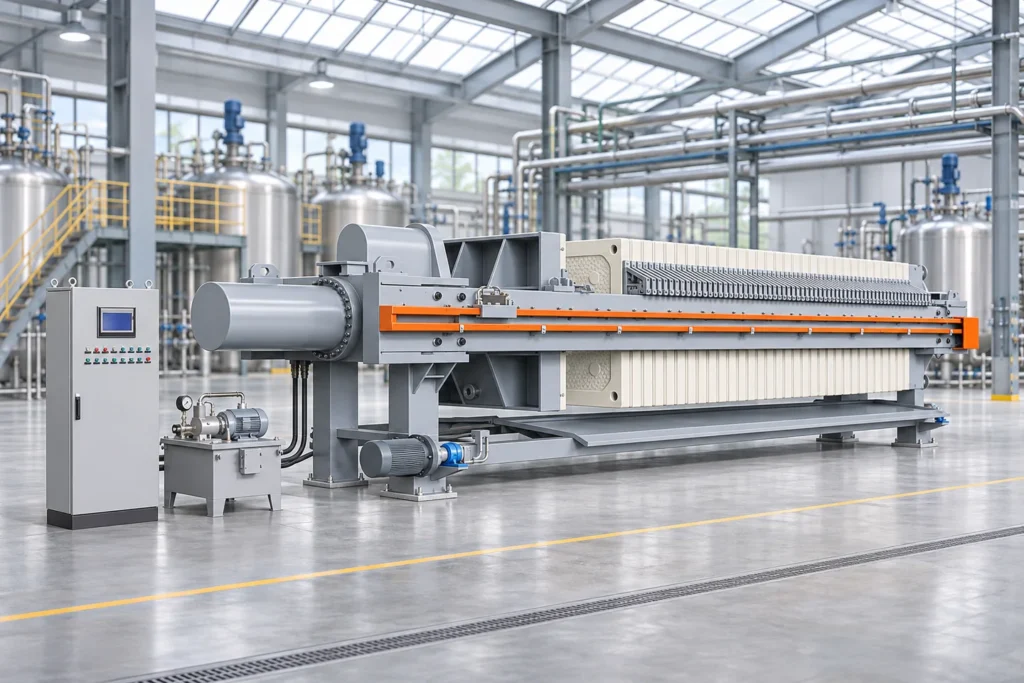
A Filter Press in Chemical Industry applications is often evaluated only as dewatering equipment, but that narrow view can create costly problems. If I select the wrong design, corrosive slurry, fine particles, or high temperatures can reduce performance quickly. The right solution improves chemical solid-liquid separation, product recovery, and long-term operating stability. A Filter Press […]
Filter Press in Pharmaceutical Industry: Applications, Design and Selection
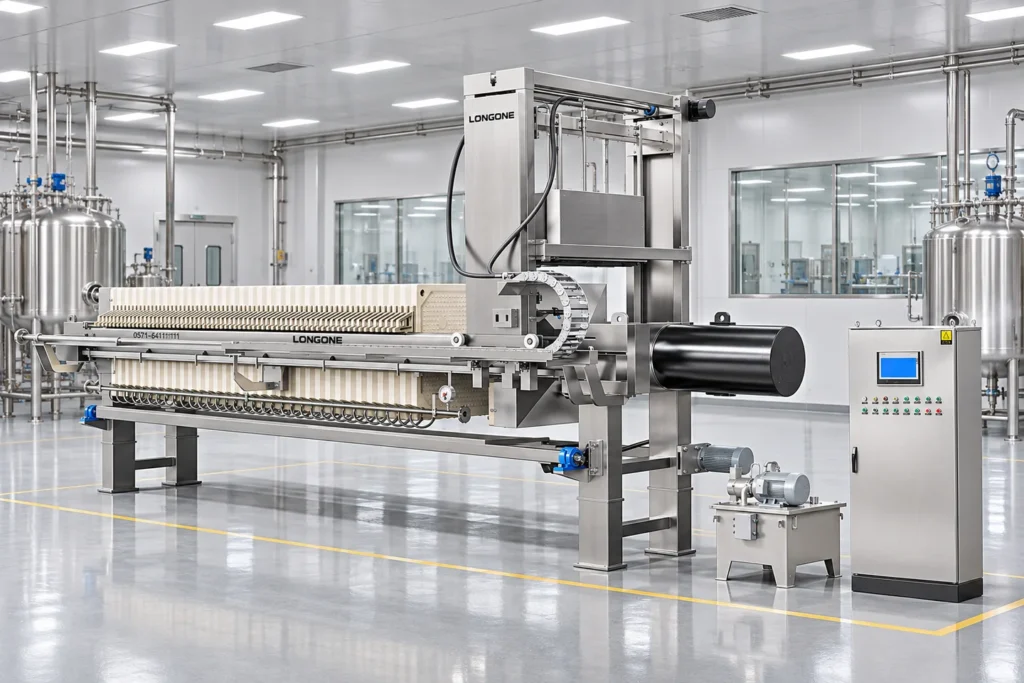
Choosing the wrong filtration equipment in a pharmaceutical plant is not just a capital cost problem — it is a product quality problem. Filter press selection in the pharmaceutical industry demands a different evaluation framework than mining or wastewater, where batch value is low and contamination tolerance is high. This guide explains how to match […]
Filter Press Diagram Explained: Components, Flow Path, and How to Read It
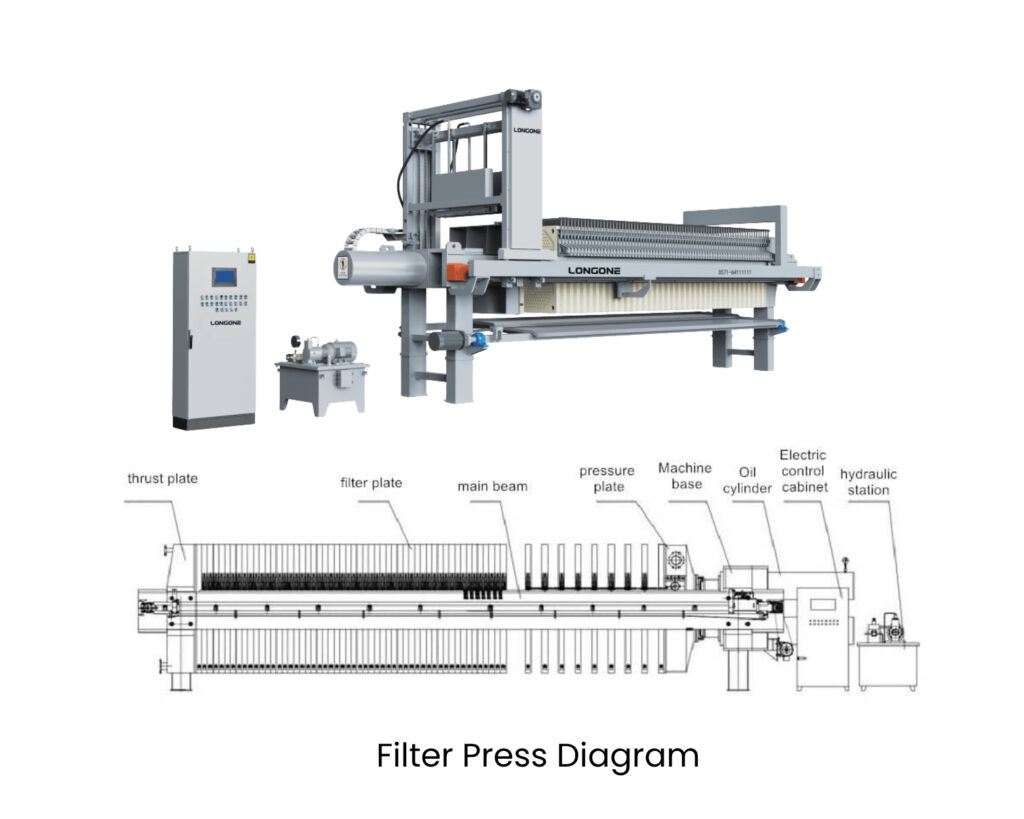
A filter press diagram is the single most useful document you can study before specifying, quoting, or troubleshooting a filter press — yet most diagrams circulating online strip away the details that actually matter to procurement teams and plant engineers. When feed port position, cloth fit, and closing pressure are simplified into a cartoon, buying […]
Filter Press Pressure: How to Set Clamping, Feed, and Squeeze Pressure Correctly
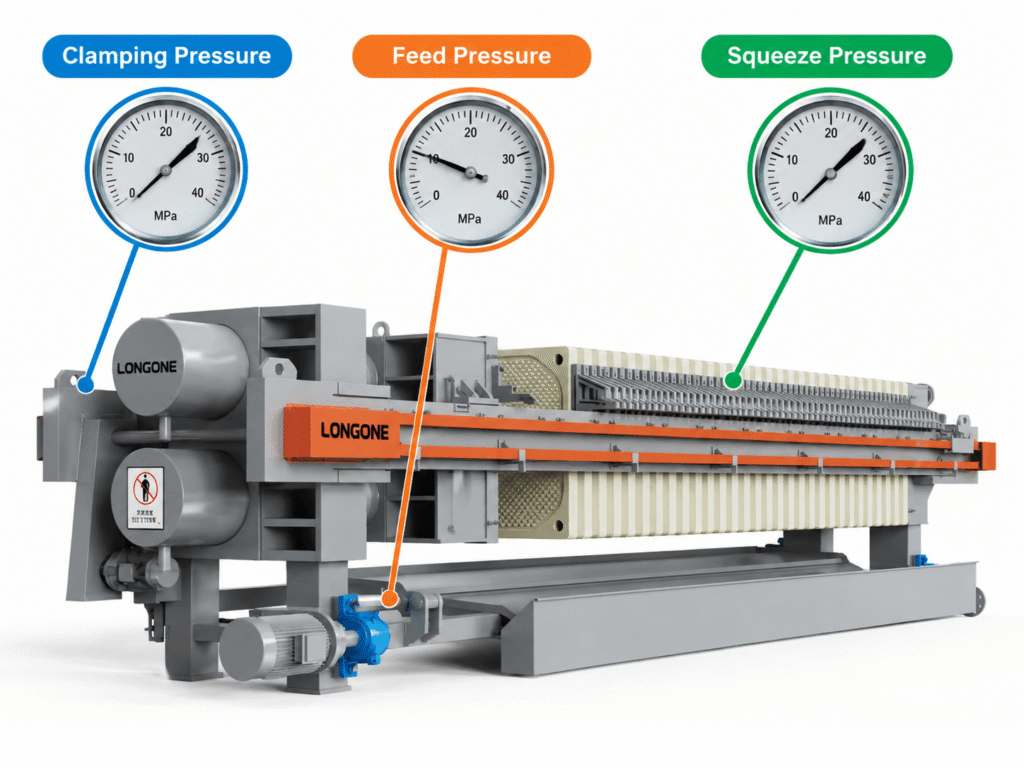
A plate pack starts spraying slurry from its edges ten minutes into the cycle. Or the pressure gauge climbs normally, then slowly falls during the hold stage. Operators usually reach for the feed pump setting first. In most cases, that is the wrong place to look. Filter press pressure is not one number. It is […]
Overhead vs Sidebar Filter Press: How to Choose the Right Frame Design
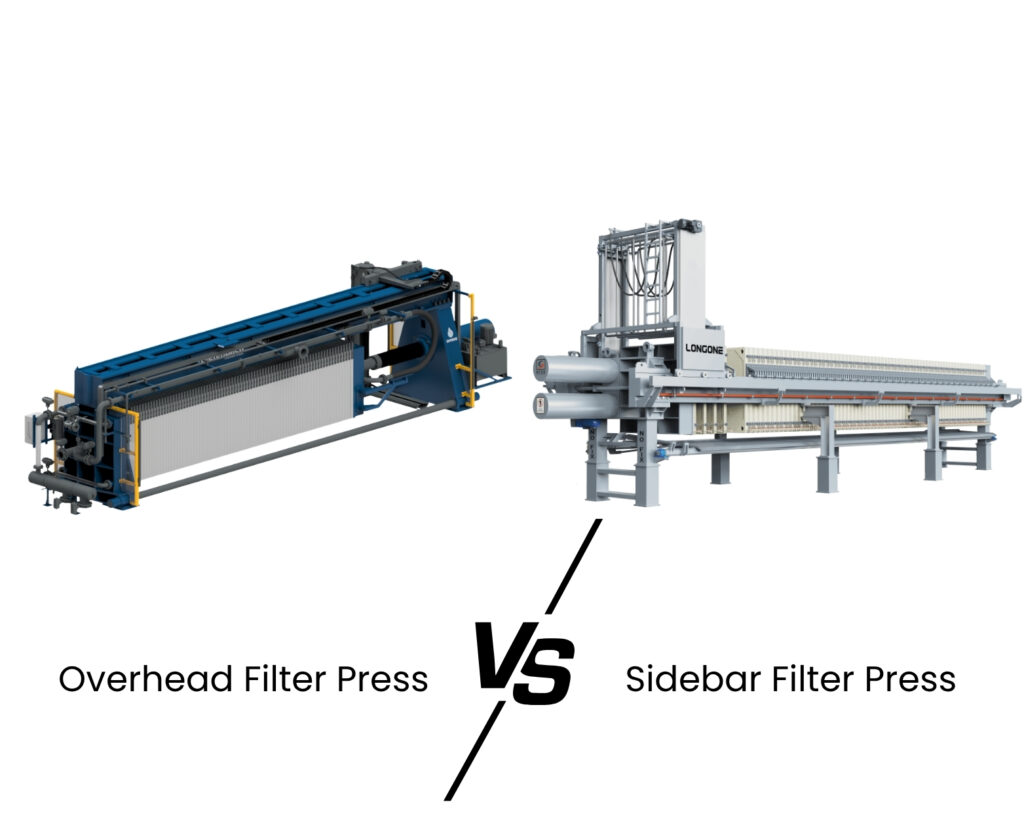
A filter press is a long-term asset. Once it is installed, its frame design shapes how fast you can discharge cake, how easily your team changes cloths, how much floor space and building height you need, and how much you spend on upkeep for the next 15 to 20 years. Yet frame type is often […]
Hydraulic Filter Press: How It Works, System Types, and How to Choose
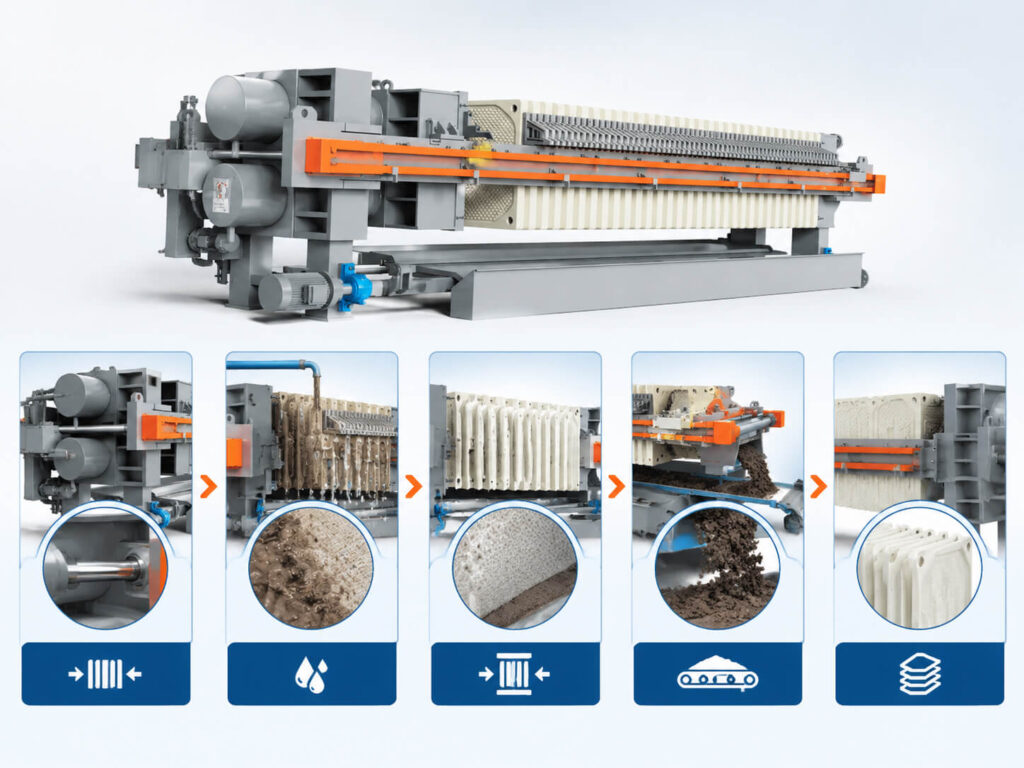
Two hydraulic filter presses can have the same tonnage rating, the same filtration area and the same price tag, yet one runs for a decade while the other leaks at the plate seams within a few years. In most cases, the difference is not the oil cylinder. It is how well the clamping system, the […]
Recessed Filter Press Guide: Plates, Pressure Rating and Sizing
A recessed filter press can look simple on a quotation sheet, but the wrong plate design can create leakage, wet cake, long cycles, and high maintenance cost. I often see buyers compare frame size and motor power first. The better solution is to evaluate the press around slurry behavior, plate quality, pressure, and daily operation. […]
Filtro prensa para aceite: cómo funciona, aplicaciones y cómo elegir el filtro prensa de aceite adecuado
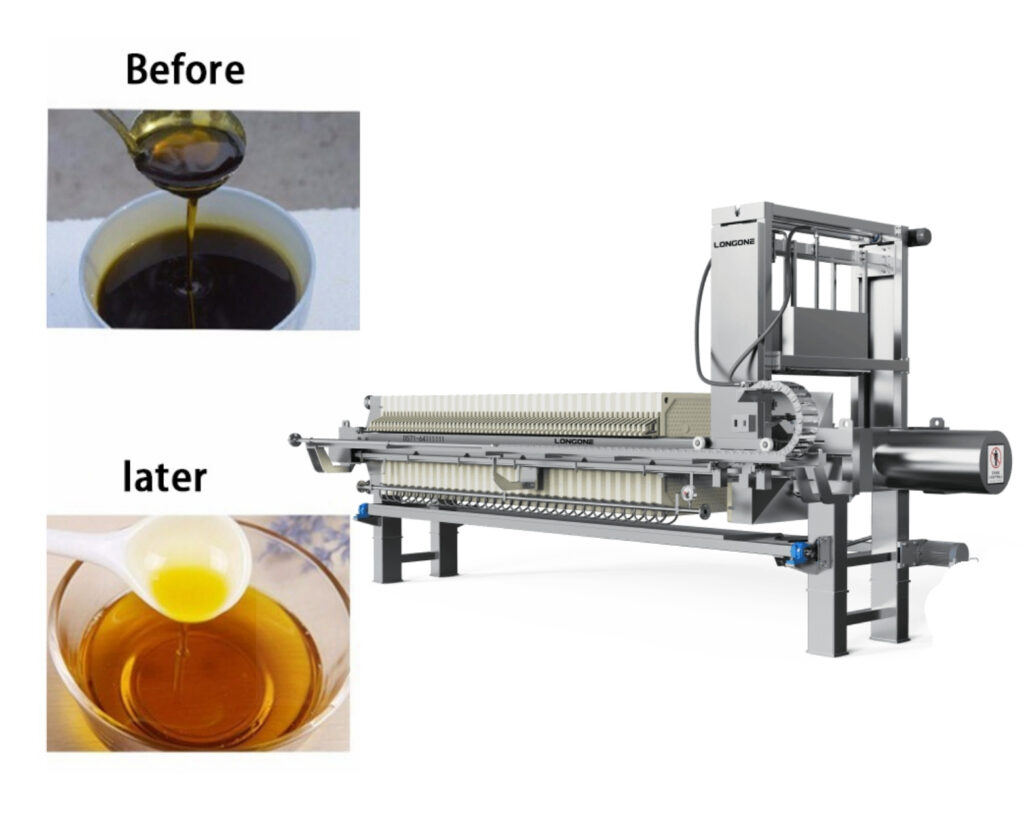
Oil looks simple to filter until you try it. It is viscous, it often carries fine solids, and in many plants it is hot, flammable, or both. A filter press for oil is one of the most dependable ways to separate those solids and recover clean oil, but only when the machine is matched to […]
Membrane Filter Presses: How They Work and How to Choose One
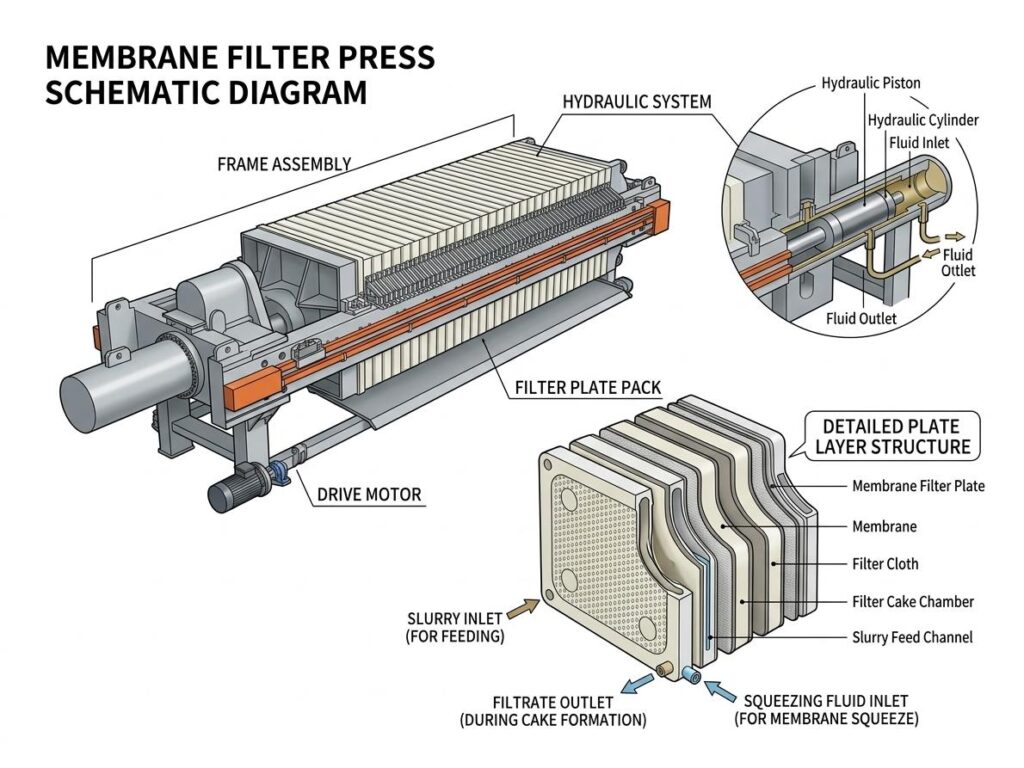
Most dewatering problems show up long after the filter press itself. The cake leaves the machine too wet, so trucks carry extra water, disposal fees climb, and any downstream dryer burns more energy than planned. Cycle times stretch because operators wait for a cake that never gets quite dry enough. A membrane filter press is […]
Plate and Frame Filter Press Working Principle Explained

Cloudy filtrate, wet cake and leaking plates usually point to the same root problem: the filter press is not matched to the slurry it is filtering. Before you can fix that, or choose the right machine, you need to understand how the equipment actually works. The plate and frame filter press working principle is straightforward. […]