Choosing the wrong filtration equipment in a pharmaceutical plant is not just a capital cost problem — it is a product quality problem. Filter press selection in the pharmaceutical industry demands a different evaluation framework than mining or wastewater, where batch value is low and contamination tolerance is high. This guide explains how to match the right pharmaceutical filter press to your process.
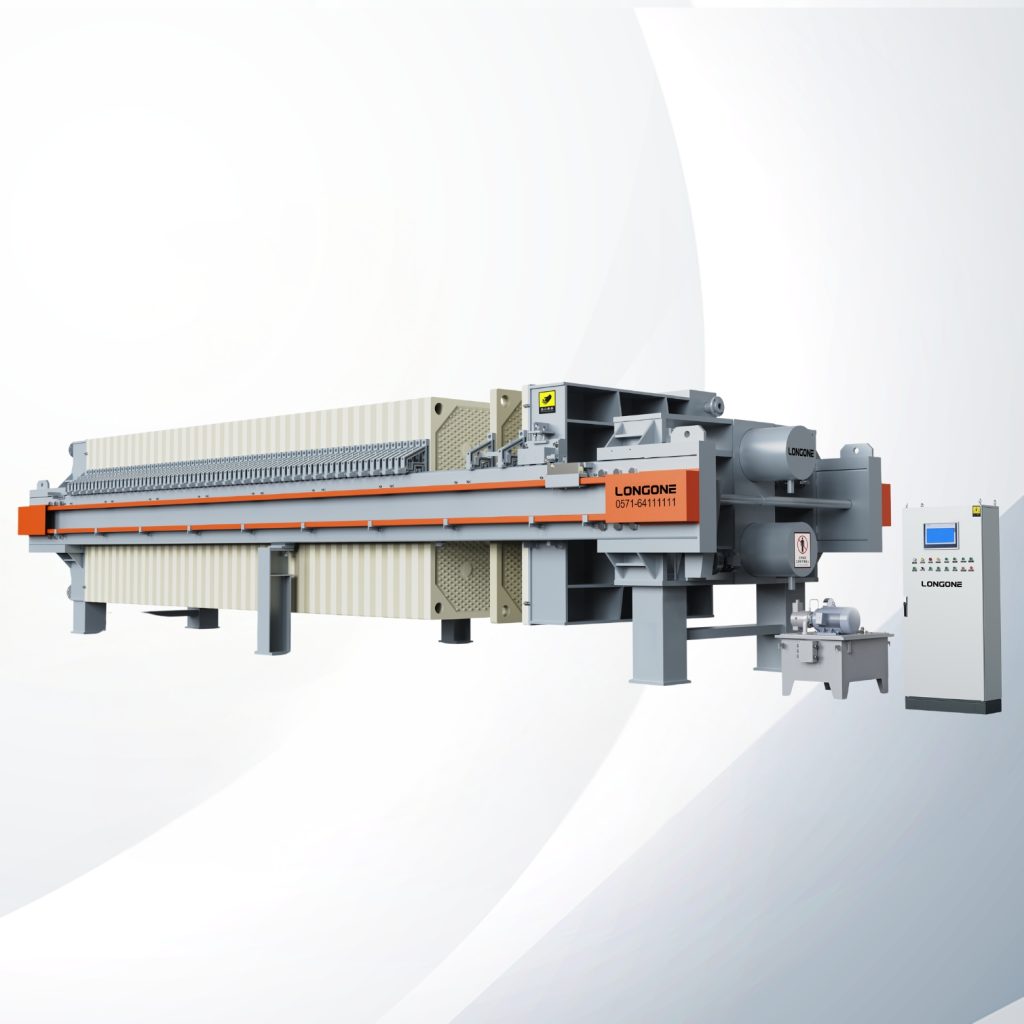
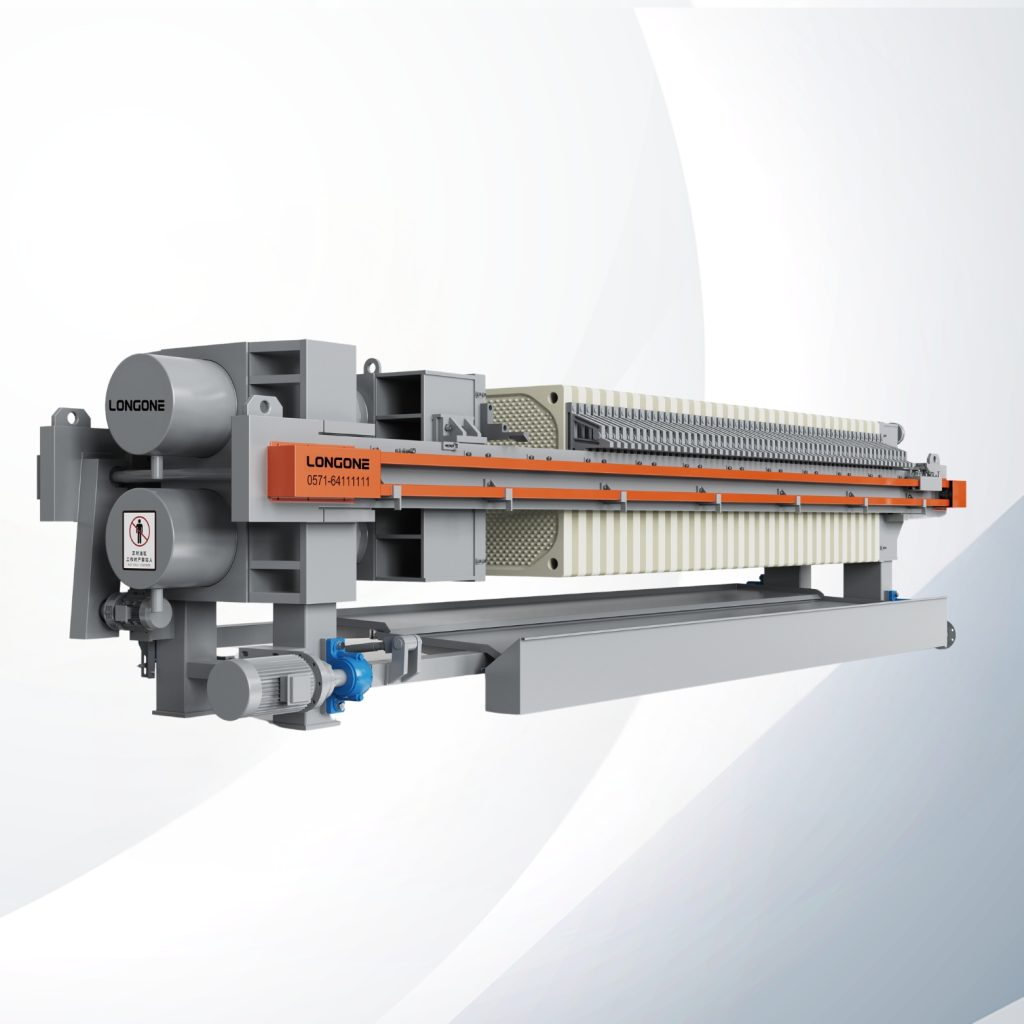
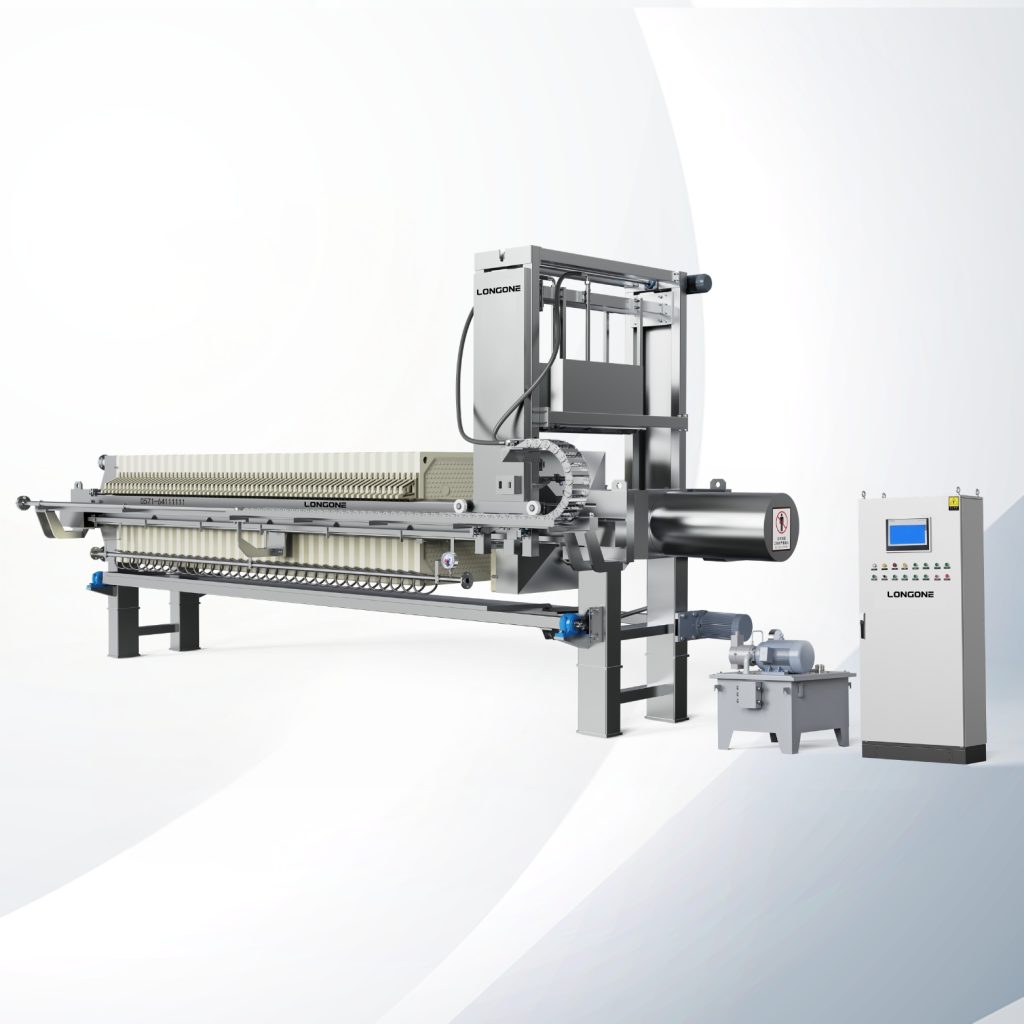
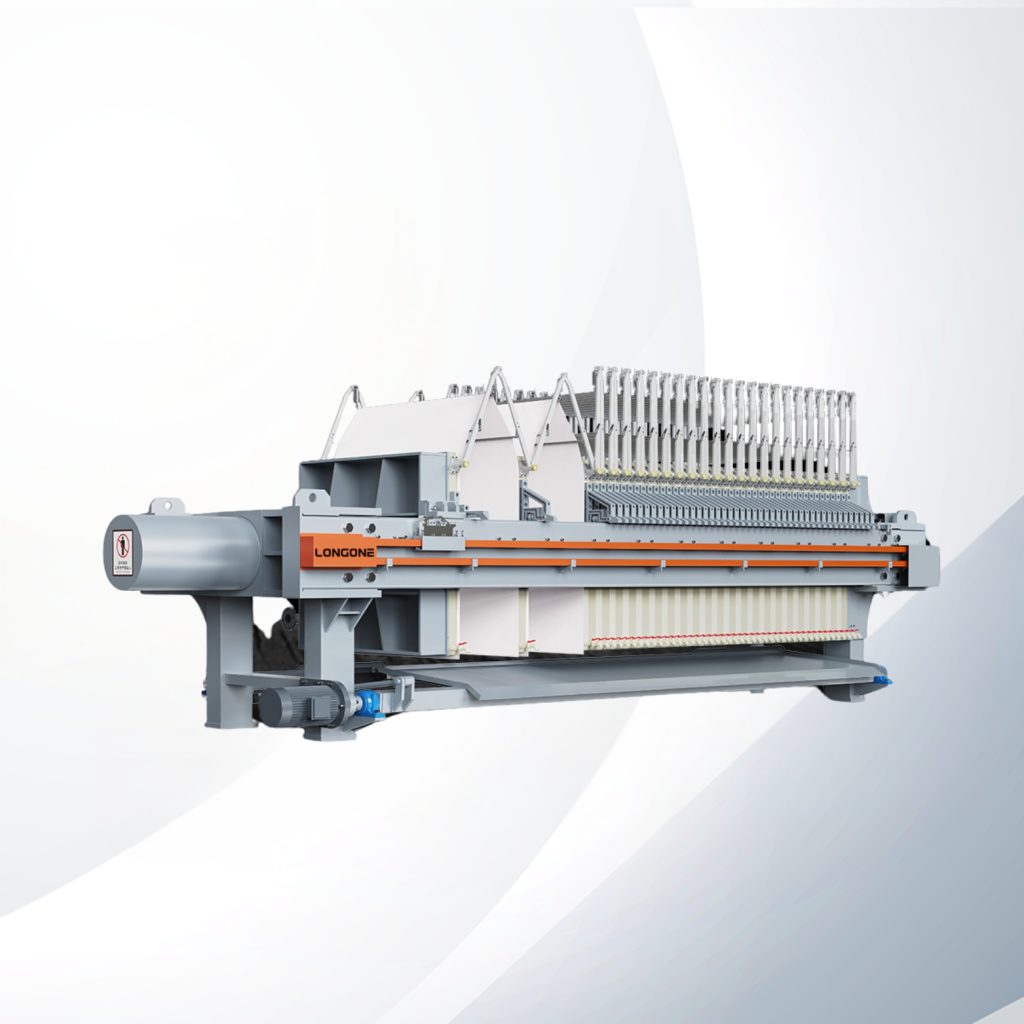
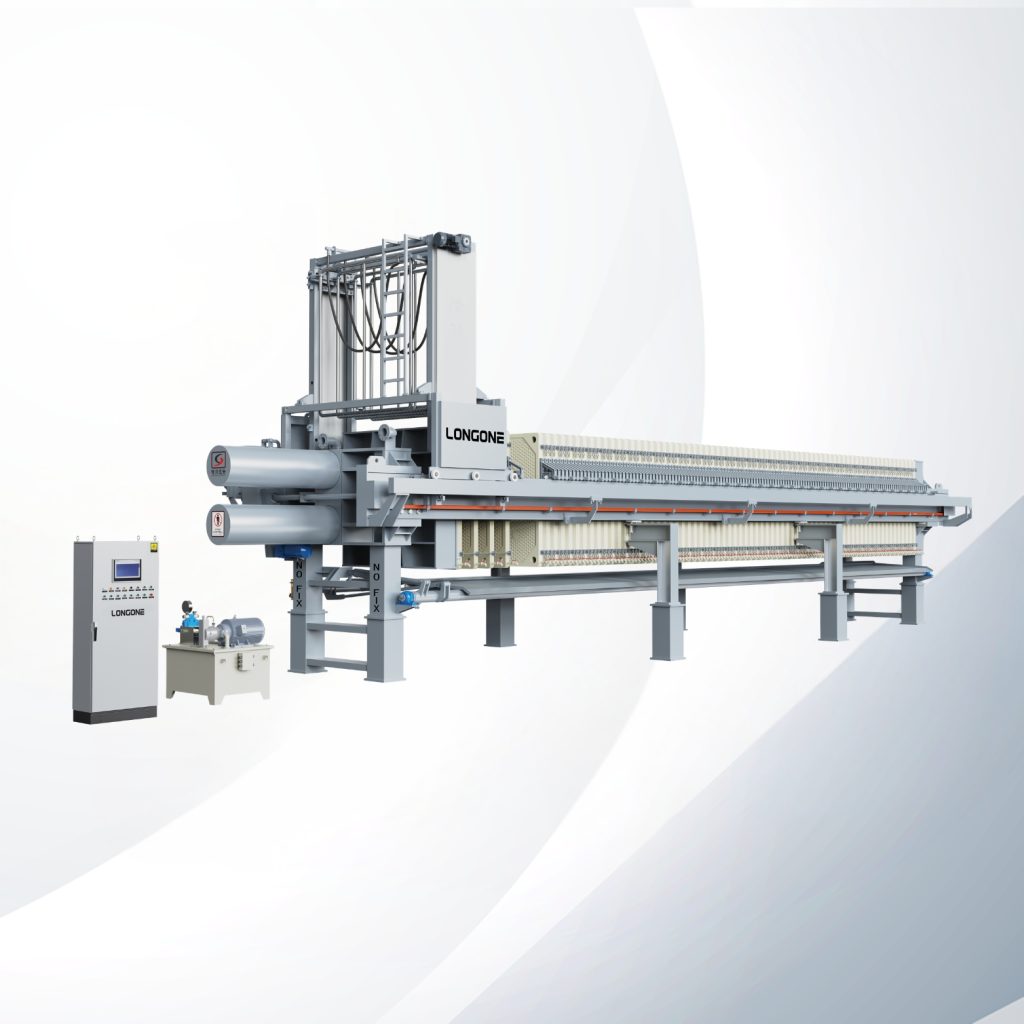
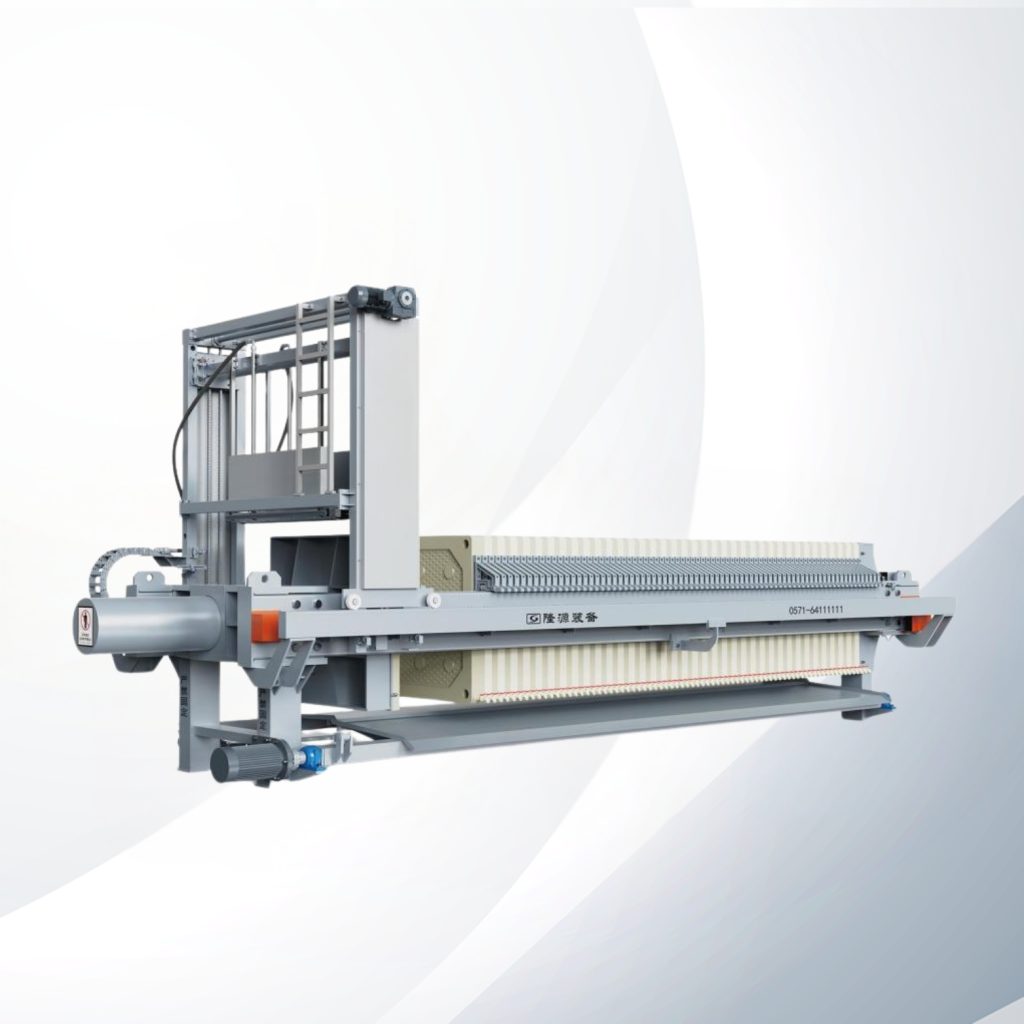
A filter press in pharmaceutical industry is a pressure-driven solid-liquid separation device used to recover active ingredients, clarify fermentation broth, dewater herbal extracts, and remove spent activated carbon. The right configuration depends on slurry properties, required cake dryness, cleanability between batches, and documentation support for GMP compliance. Stainless steel construction, membrane plates, and wash-capable cloth are the most common requirements.
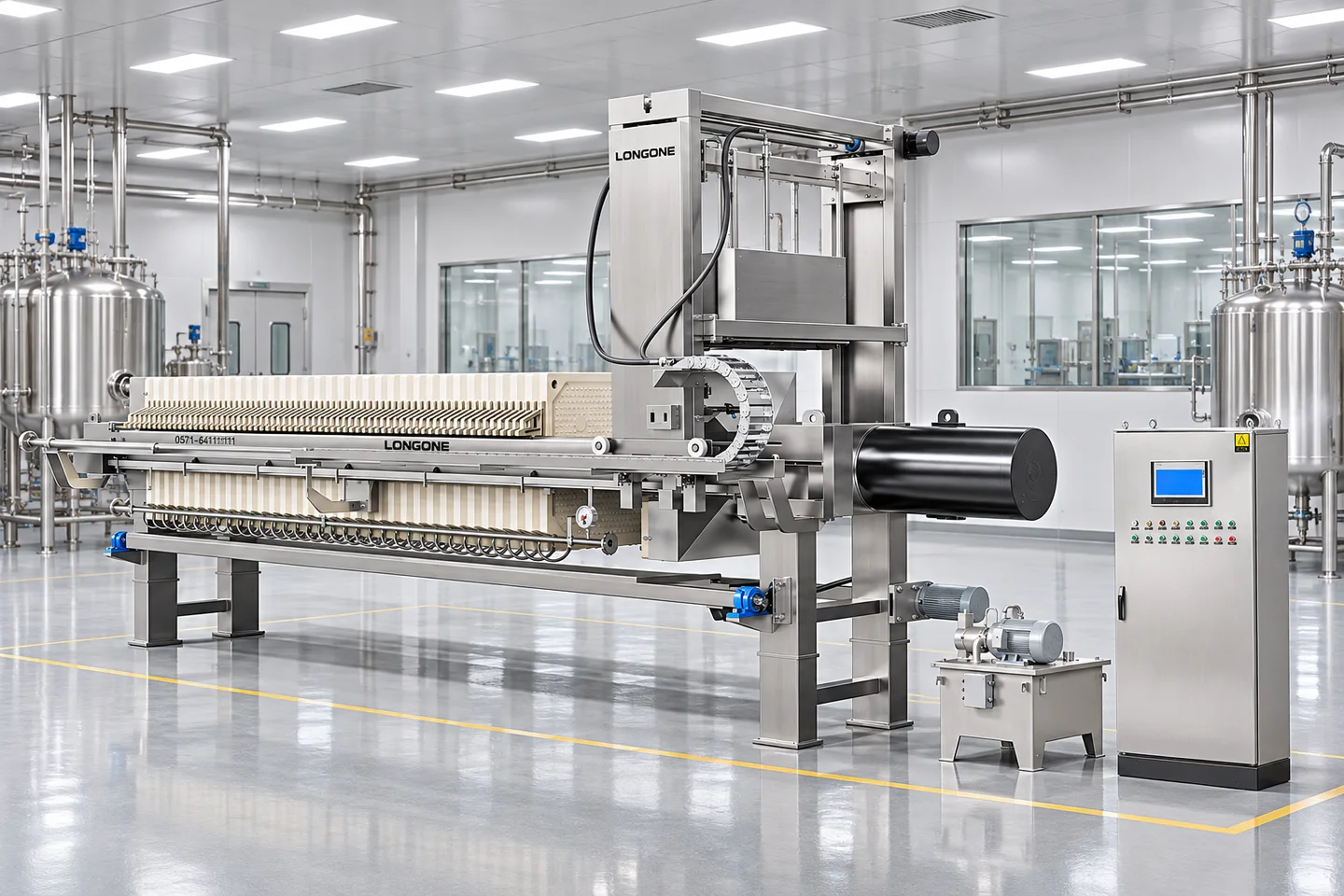
Understanding which design features matter — and why — helps procurement teams write better specifications and ask better questions of potential suppliers. The sections below cover each evaluation area in sequence, from application type to manufacturer selection.
Why Pharmaceutical Manufacturers Rely on Filter Presses
Pharmaceutical plants need filtration equipment that recovers as much active ingredient as possible, prevents cross-contamination between batches, and tolerates rigorous cleaning cycles without degrading. Standard industrial filter presses often fall short on all three counts.
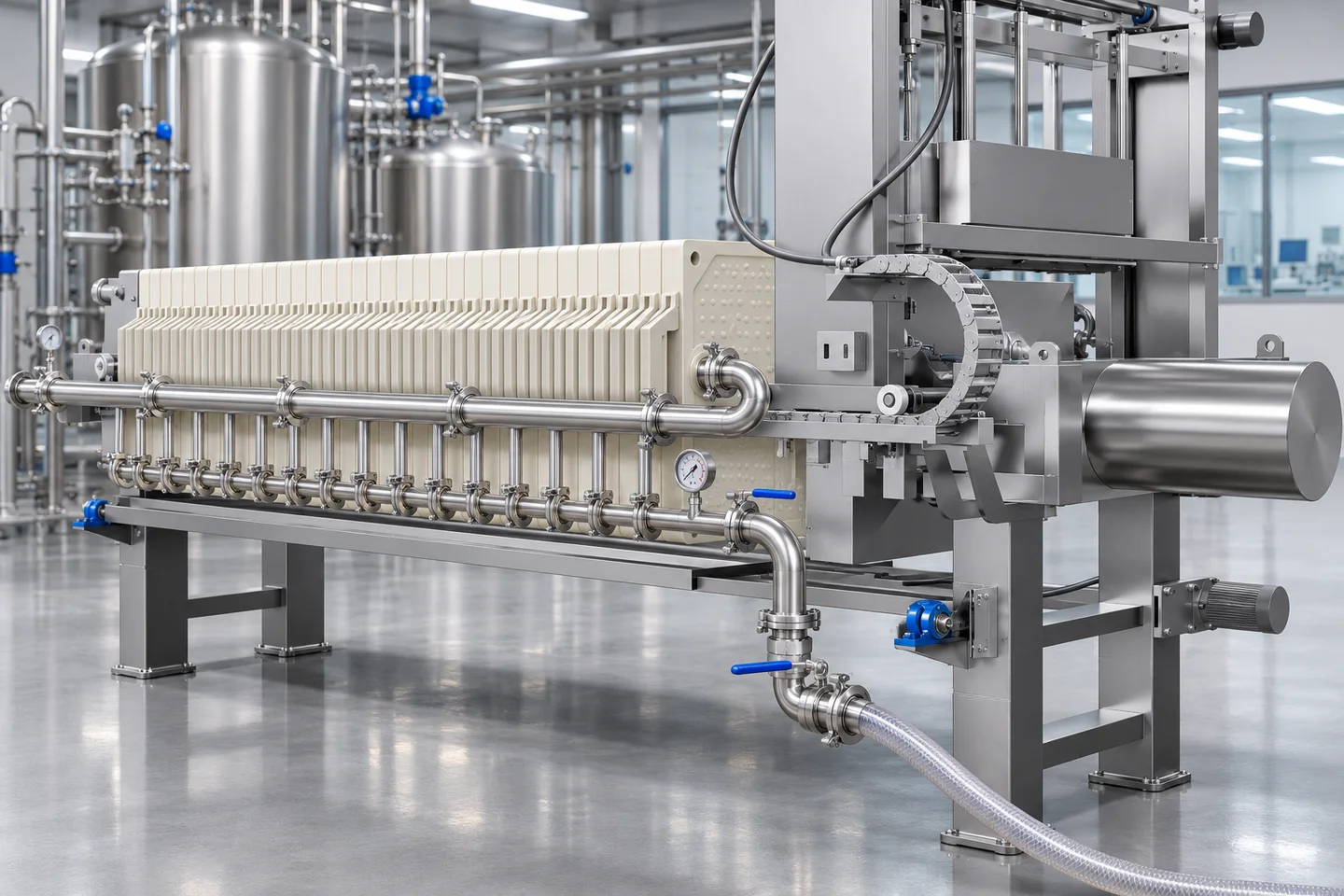
Pharmaceutical manufacturers rely on filter presses because they deliver controlled pressure filtration, support in-process cake washing to maximize product recovery, and can be built from materials that survive CIP and SIP cleaning protocols. No other batch filtration technology combines these three capabilities at comparable capital cost and scalable filtration area.
The economics of pharmaceutical filtration are fundamentally different from industrial sludge dewatering. In my experience dealing with pharma inquiries, buyers almost never lead with price. The first three questions are almost always:
- Which parts contact the product?
- How fast can the press be cleaned and changed over between batches?
- Can the filter cake be washed to recover the active ingredient?
These priorities should shape every specification you write.
Product Recovery Is the Primary Driver
A single batch of API crystals can represent significant value. Losing one or two percent of yield through poor cake washing or high residual moisture affects both economics and downstream processing. A properly configured membrane filter press with wash capability can recover more active ingredient per batch than a simple chamber press — a point we return to later in this guide.
Cross-Contamination Risk Is Real
Multi-product pharmaceutical plants run different formulations through the same equipment. Every surface that contacts the product must be cleanable to validated standards. Rough surfaces, dead zones, gasket recesses, and cloth weave gaps all create contamination risk. Equipment design — not just operating procedure — determines how thoroughly a press can be cleaned.
Documentation Supports Validation
Pharmaceutical manufacturers operate under GMP frameworks that require documented evidence of equipment suitability. A reliable filter press manufacturer should supply material certificates for all product-contact parts, dimensional drawings, inspection records, and clear operating procedures. Equipment can be configured to support customers’ own GMP validation requirements, but the supplier’s documentation quality is the foundation.
Key Pharmaceutical Applications: API, Fermentation Broth, Activated Carbon and Herbal Extracts
Not all pharmaceutical slurries behave the same way. Specifying a filter press correctly requires starting from the slurry, not from a catalog page.
Each pharmaceutical slurry type — API crystals, fermentation broth, spent activated carbon, and herbal extracts — has distinct particle size, compressibility, and filtrate value characteristics that determine filter cloth selection, plate material, operating pressure, and whether a wash cycle is needed.

Here is how the four main application types differ in practice:
API Crystal Filtration
Active pharmaceutical ingredient slurries typically involve fine, compressible crystals in a solvent carrier. The filtrate — often containing residual active compound — has real value. A thorough cake wash step displaces the mother liquor and recovers more product. Tight-weave filter cloth (monofilament or multifilament polyester or polypropylene) reduces crystal loss through the cloth. Stainless steel contact parts resist the solvents commonly used in API synthesis.
Fermentation Broth
Fermentation broth presents a compressible, gelatinous cake that blinds filter cloth quickly if pressure is applied too fast. A staged pressure ramp — starting at low pressure and stepping up — extends cloth life and improves filtration rate. Pre-coat filtration with diatomaceous earth is sometimes used upstream. The feed slurry is often biologically active, which adds hygiene requirements.
Spent Activated Carbon
Activated carbon is used widely in pharmaceutical purification to decolorize and deodorize process streams. Spent carbon must be separated from the treated liquid. Carbon particles are abrasive and very fine, requiring a dense filter cloth with low pore size. Because the filtrate (the purified liquid) is the product, cloth integrity is critical — any pinhole allows carbon particles to contaminate the output stream.
Herbal Extracts
Herbal extract filtration involves fibrous, variable-composition slurries. Cake compressibility and filtration rate vary significantly by raw material and season. A flexible pressure program and robust cloth selection help manage this variability. Stainless steel frames and plates simplify cleaning between herb types in multi-product facilities.
Hygienic Design: Stainless Steel Construction and Contamination Control
Pharmaceutical equipment design is not just about materials — it is about every surface that the product sees, from the feed inlet to the filtrate outlet.
A hygienic pharmaceutical filter press uses stainless steel frames and product-contact components, smooth-surfaced plates, sanitary fittings, and minimal dead-legs to reduce residue accumulation and support effective cleaning between batches. Material certificates for stainless steel grades should be verified against your internal material qualification requirements.

Material Selection for Product-Contact Parts
| Component | Standard Industrial | Pharmaceutical Specification |
|---|---|---|
| Frame | Carbon steel, painted | Stainless steel (SS304 / SS316L) |
| Placas filtrantes | Polipropileno (PP) | PP (food-grade) or SS304/316L |
| Manifolds and piping | Standard carbon steel | Stainless steel, sanitary fittings |
| Gaskets | Rubber | Silicone or EPDM (product-contact grade) |
| Tela filtrante | Standard PP or polyester | Pharmaceutical-grade, lot-traceable |
Stainless steel is not a universal upgrade — it adds cost and weight. The right approach is to identify every surface the product actually contacts and specify stainless steel or validated polymers there. Non-contact structural parts can remain in painted or galvanized steel if appropriate for the installation environment.
Surface Finish and Cleanability
Plate surface roughness directly affects how completely residue can be removed during CIP. Smooth-surfaced PP plates and electropolished stainless plates clean more reliably than rough-cast equivalents. During supplier evaluation, ask for surface finish specifications and request sample plates for inspection.
Drainage and Dead-Zone Design
Residue accumulates in low points, corners, and undrainable pockets. A well-designed pharmaceutical filter press minimizes these by using sloped drainage channels, drainable manifolds, and sanitary connections. Review drawings carefully before ordering — it is much harder to modify dead zones after manufacture.
Filter Plate and Filter Cloth Selection for Pharmaceutical Slurries
Plate and cloth selection may be the most consequential specification decision in a pharmaceutical filter press project.
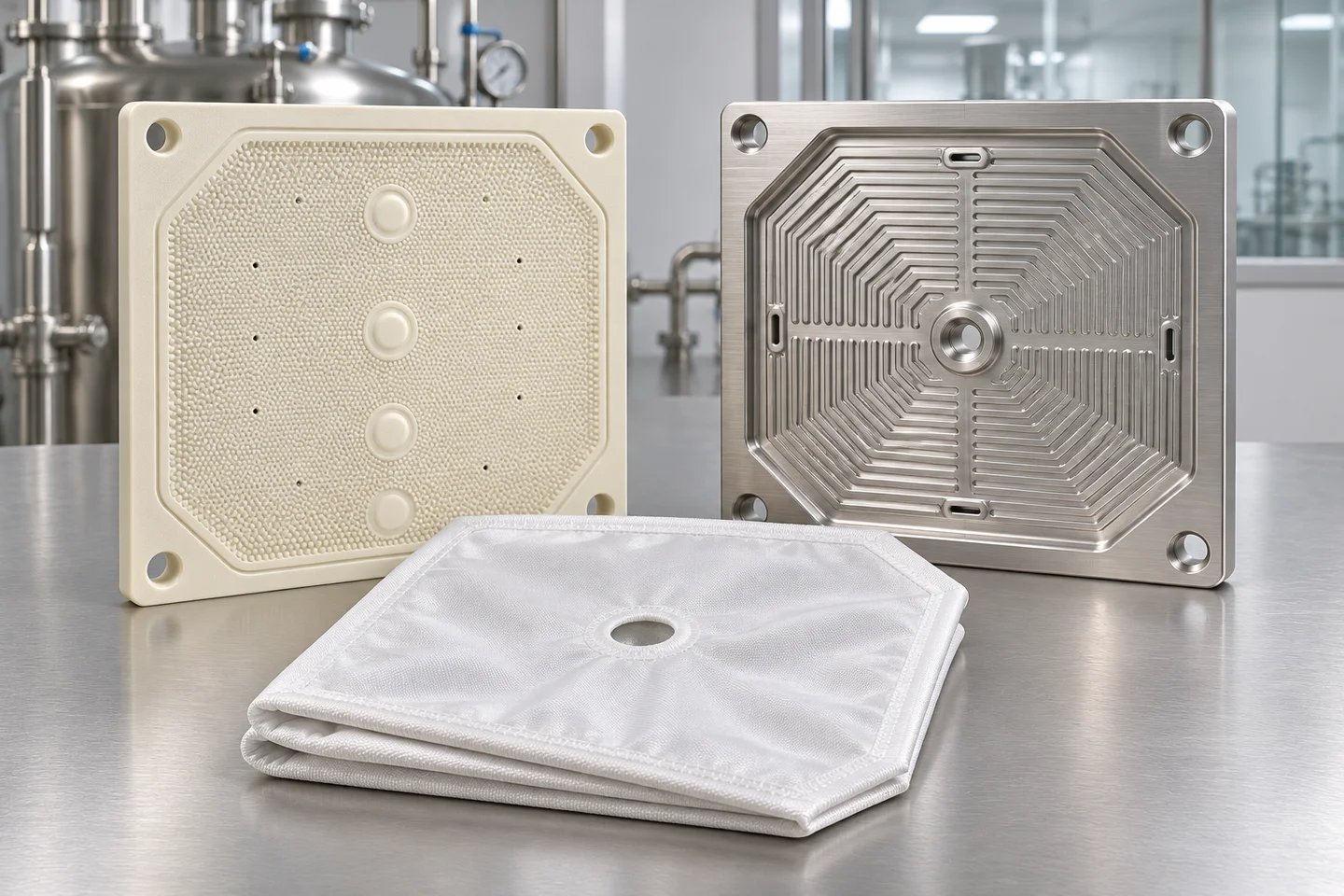
Pharmaceutical filter plate selection depends on chemical compatibility with the slurry solvent, operating pressure, required surface finish, and whether a membrane squeeze step is needed. Filter cloth selection depends on particle size, cake compressibility, required filtrate clarity, and cleanability between batches.
Filter Plate Materials
- Polypropylene (PP): Resistant to most acids, alkalis, and many solvents. Lightweight, cost-effective, available in smooth surface finish. Suitable for most API and herbal extract applications. Food-grade PP available.
- Stainless steel (SS304 / SS316L): Required where PP chemical resistance is insufficient (e.g., some aromatic solvents or strong oxidizers) or where electropolished surfaces are specified for cleaning validation. Higher cost and weight.
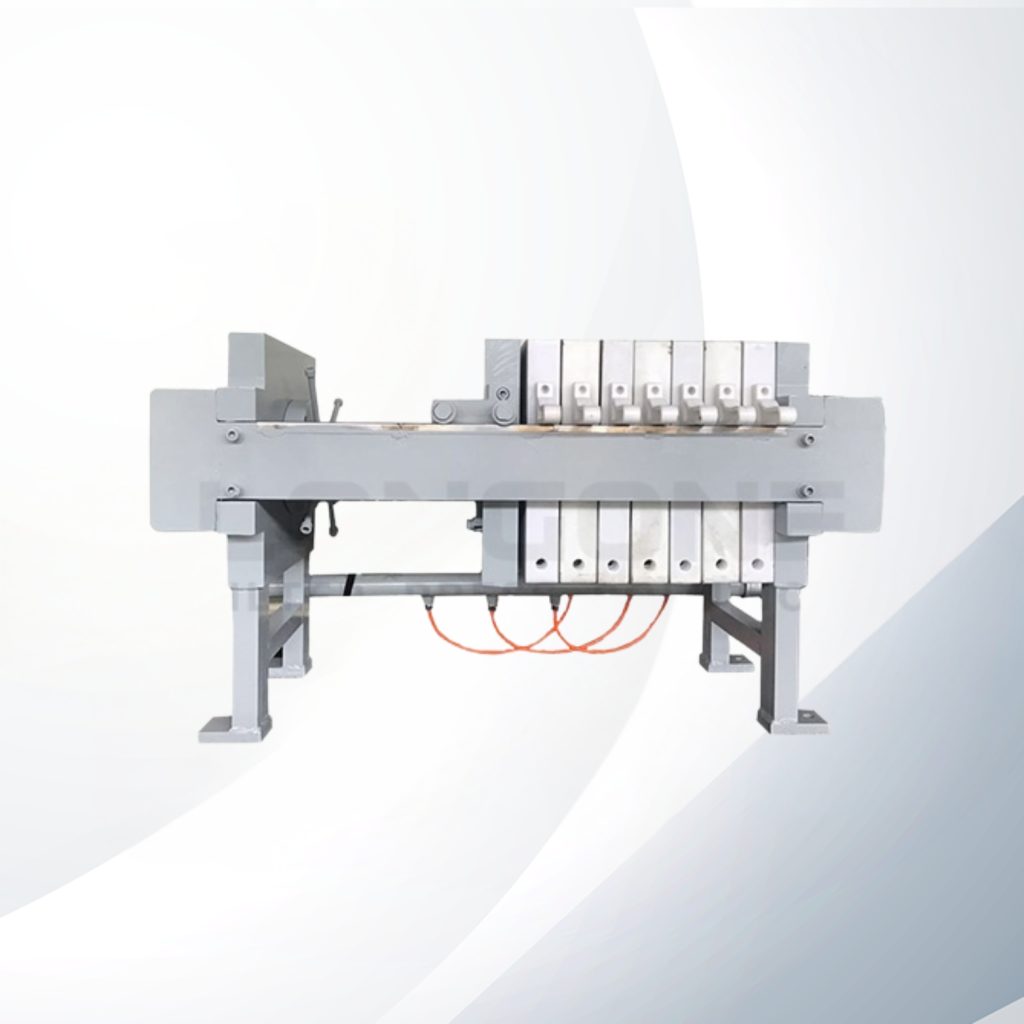
LONGONE produces both PP and stainless steel filter plates across filtration areas from 0.16 m² to 1,600 m², which covers pilot-scale laboratory units through full production presses.
Filter Cloth Selection
The cloth is the filtration medium. For pharmaceutical applications:
- Pore size must retain the target particles while maintaining acceptable flow rate.
- Weave type (monofilament, multifilament, or needle felt) affects cake release and residue retention.
- Material must be chemically compatible and cleanable. Polypropylene and polyester are most common; PTFE is used for aggressive solvents.
- Lot traceability supports supplier qualification records.
A small pilot test on actual slurry before final cloth selection reduces the risk of choosing a cloth that blinds rapidly or allows fines to pass.
Membrane vs Chamber Filter Press: Choosing the Right Configuration
The choice between a chamber press and a membrane press is one of the most consequential configuration decisions for pharmaceutical applications.
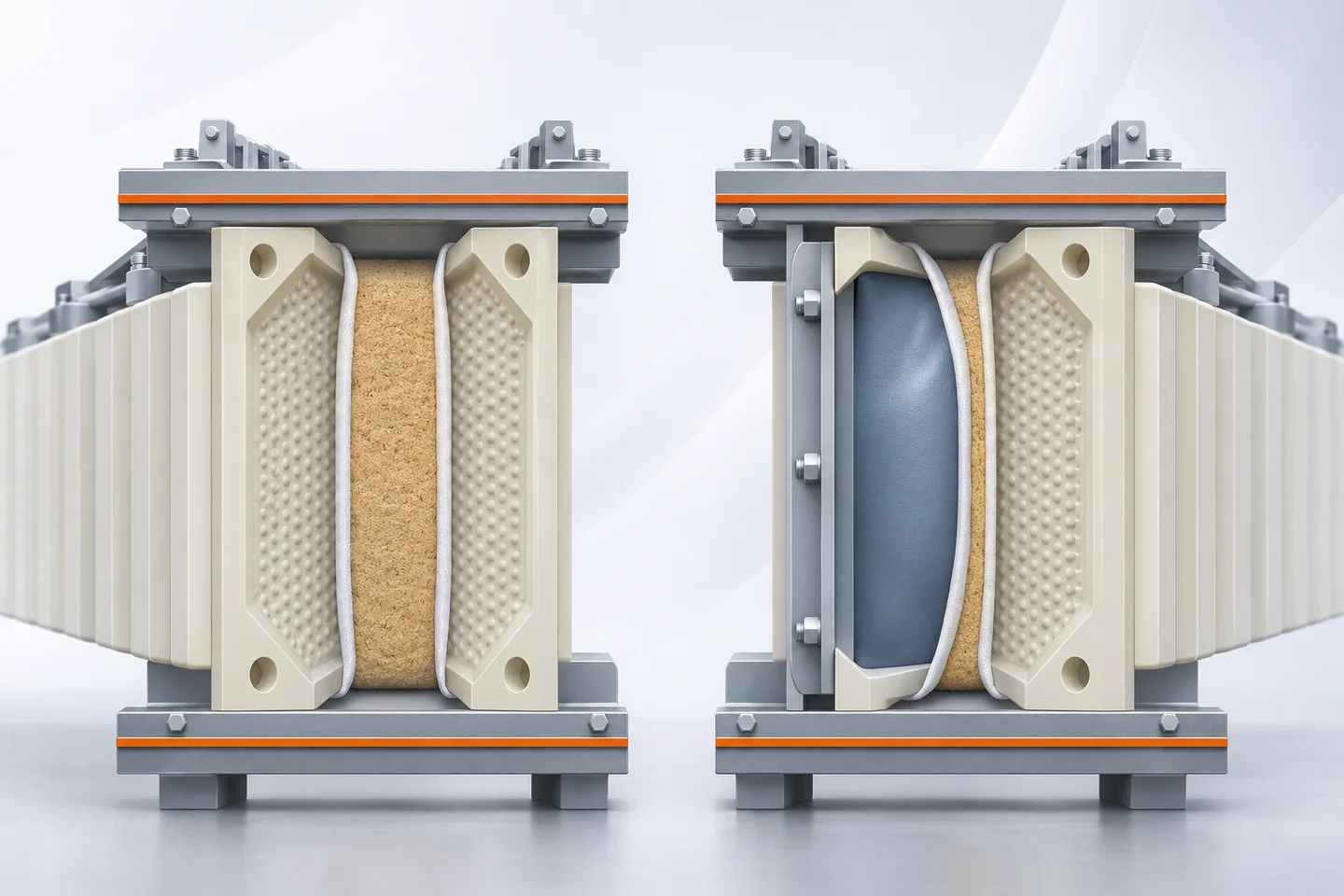
A membrane filter press adds an inflatable diaphragm to each plate. After initial filtration, compressed air or water inflates the membrane to squeeze the cake further, reducing moisture content and improving cake wash efficiency. Chamber filter presses are simpler and lower cost but deliver higher residual cake moisture.
| Característica | Prensa de filtro de cámara | Prensa de filtro de membrana |
|---|---|---|
| Humedad del pastel | Higher | Lower (membrane squeeze reduces moisture) |
| Cake wash efficiency | Standard | Improved — squeeze homogenizes cake before wash |
| Complexity | Lower | Higher (membrane, squeeze system) |
| Capital cost | Lower | Higher |
| Recommended for API recovery | Acceptable | Preferred |
| Recommended for fermentation broth | Acceptable | Preferred |
| Recommended for spent carbon removal | Suitable | Not required |
| Maintenance requirement | Standard | Higher (membrane integrity checks) |
For pharmaceutical applications where maximum product recovery or minimum downstream drying load matters — particularly API and fermentation applications — a prensa de filtro de membrana is the preferred choice. The additional capital cost is typically justified by yield improvement over the press lifetime.
How to Choose a Filter Press Manufacturer for Pharmaceutical Projects
Equipment quality and supplier reliability are equally important. A filter press that arrives without documentation, without material certificates, or without commissioning support can delay a GMP validation program by months.
When selecting a filter press manufacturer for pharmaceutical projects, evaluate technical capability (materials, surface finish, wash configuration), documentation quality (material certs, drawings, inspection records), after-sales support (warranty, spare parts availability, commissioning assistance), and willingness to conduct pilot testing before final order.
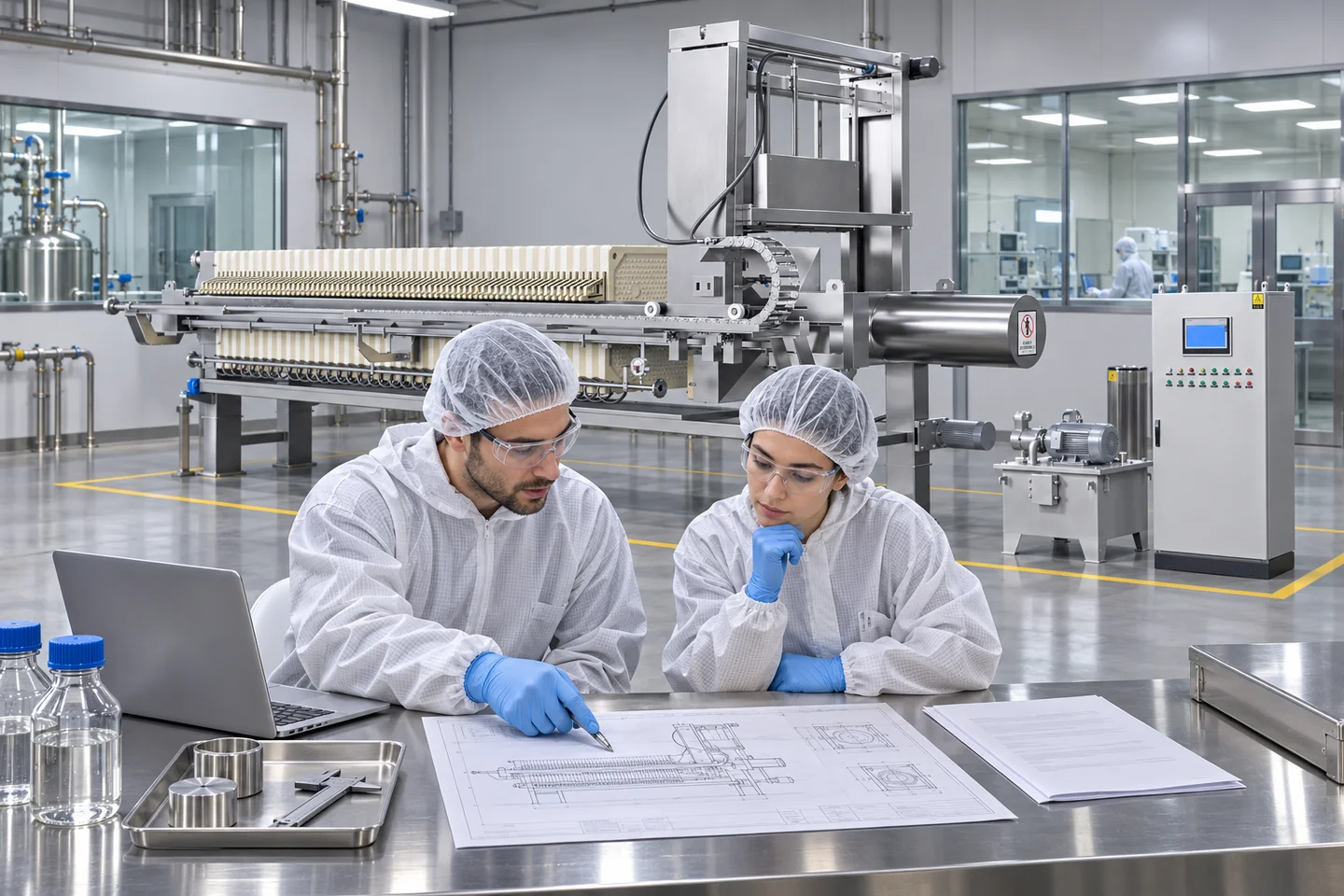
Use this checklist during supplier evaluation:
- Can the manufacturer supply material certificates for all product-contact parts?
- Are dimensional drawings and P&IDs available for review before order?
- Does the press support in-place cake washing with wash liquid inlet and displaced filtrate outlet?
- Is membrane squeeze available, and what is the squeeze medium (air or water)?
- What surface finish is provided on plates, and how is it documented?
- What is the warranty period and scope?
- Can the manufacturer provide a pilot or laboratory-scale unit for slurry testing?
- Does the manufacturer have export experience relevant to your destination country?
LONGONE has manufactured automatic filter presses since 2007 and ships to international customers across mining, chemical, and pharmaceutical industries. Our filter presses carry a 12-month warranty on every unit, and we provide material certificates, inspection records, and operating documentation as standard — not as optional extras. Equipment is configured to support customers’ GMP validation activities. We recommend pilot testing for new pharmaceutical slurries before committing to full production scale.
Preguntas frecuentes
What materials should product-contact parts be made from in a pharmaceutical filter press?
Stainless steel (SS304 or SS316L) and food-grade polypropylene are the most common choices. Stainless steel is preferred where solvent compatibility or surface finish requirements are stringent. All material choices should be supported by material certificates that your engineering or quality team can verify against your internal standards.
Is a membrane filter press always required for pharmaceutical applications?
Not always. Spent activated carbon removal and some herbal extract applications work well with chamber presses. For API crystal recovery and fermentation broth filtration — where cake washing and low residual moisture matter — a membrane filter press is strongly preferred because the squeeze step improves both washing efficiency and final cake dryness.
How is cross-contamination controlled between batches in a pharmaceutical filter press?
Contamination control depends on three factors: material choice (non-porous, smooth surfaces), mechanical design (no dead zones, drainable manifolds), and operating procedure (defined CIP protocol). A well-designed pharmaceutical filter press makes the cleaning step fast, thorough, and verifiable. Ask potential suppliers to describe their design features that support cleanability.
Can a filter press support GMP validation requirements?
Filter press equipment itself is not GMP-certified, but it can be configured and documented to support your facility’s own GMP validation program. This means providing material certificates, dimensional documentation, surface finish specifications, and operating procedures that you can reference in your equipment qualification records.
What filtration area should I specify for a pharmaceutical filter press?
Filtration area is determined by slurry volume per batch, cycle time requirement, and specific filtration resistance of the slurry. These numbers come from bench-scale or pilot tests, not from catalog estimates. A reputable manufacturer will help you size correctly once you share your slurry data. LONGONE produces filter presses from 0.16 m² (laboratory scale) to 1,600 m² (full production), which covers the full range of pharmaceutical applications.
Conclusión
The filter press in the pharmaceutical industry is a mature, flexible technology — but only when specified correctly for the slurry, the cleaning requirement, and the documentation standard of the facility. Start from your slurry properties and product value, not from a standard catalog. Choose stainless steel or validated polymer contact parts, verify surface finish, and confirm that the press supports cake washing if product recovery is a priority. A membrane filter press delivers lower cake moisture and better wash efficiency for high-value API and fermentation applications. And always require documentation — material certificates, drawings, and inspection records — from any manufacturer you consider.
If you are evaluating a pharmaceutical filter press for a new project or upgrading existing filtration capacity, we invite you to share your slurry details with our engineering team. LONGONE offers free technical consultations to help you identify the right configuration, plate material, and cloth before you commit to an order.