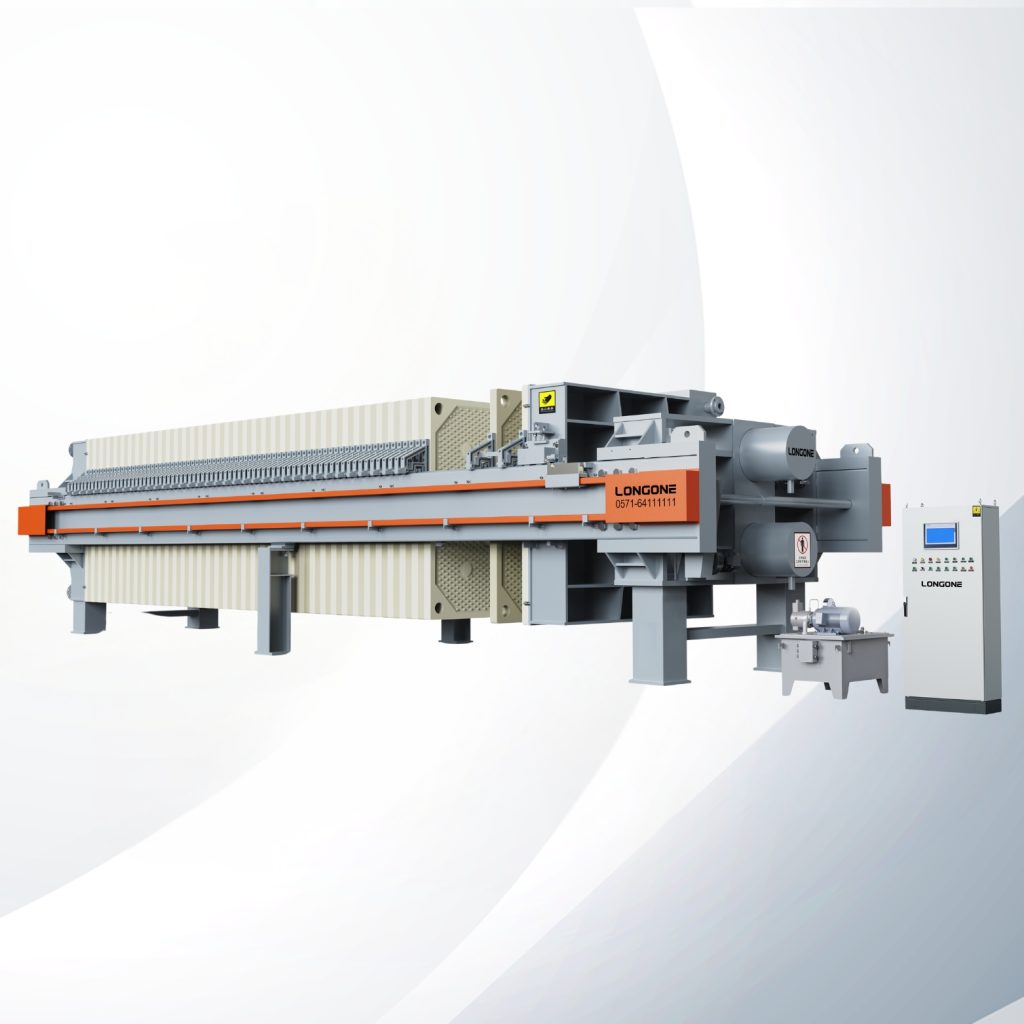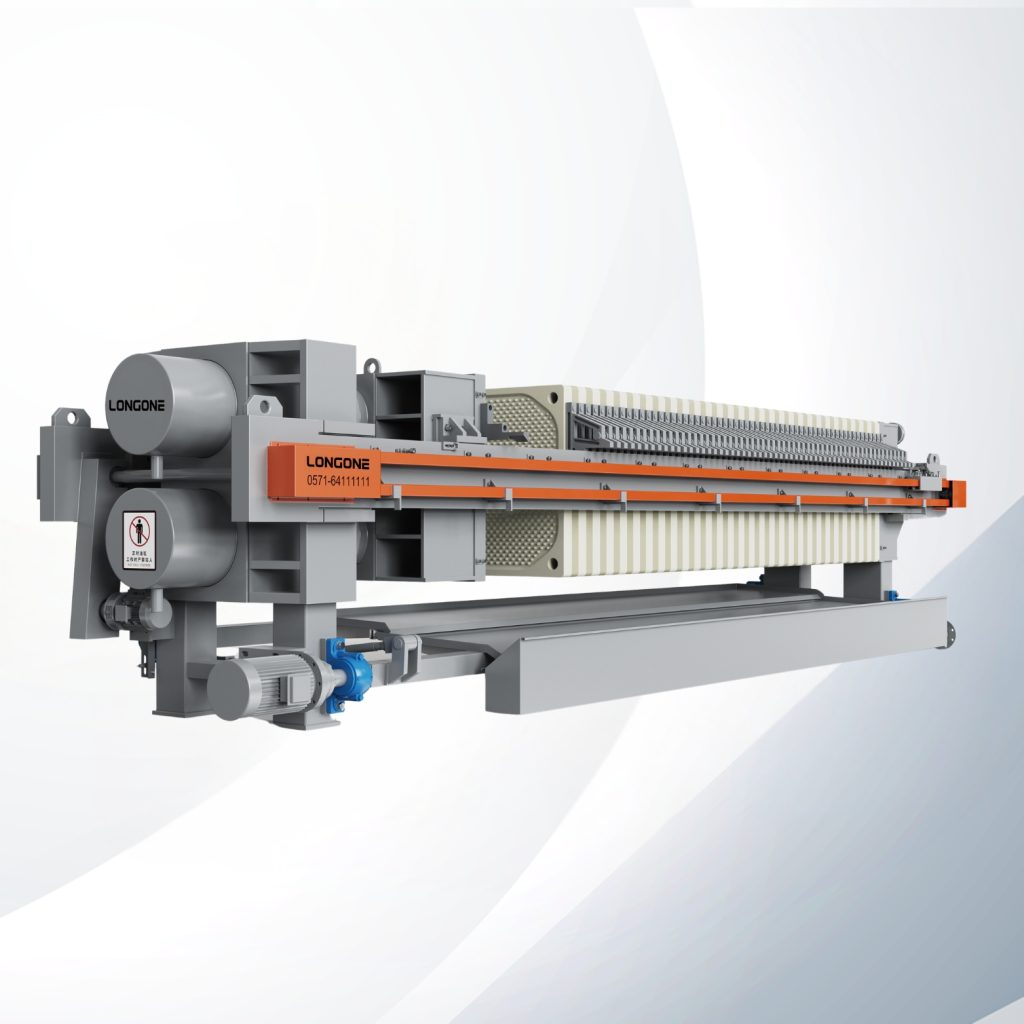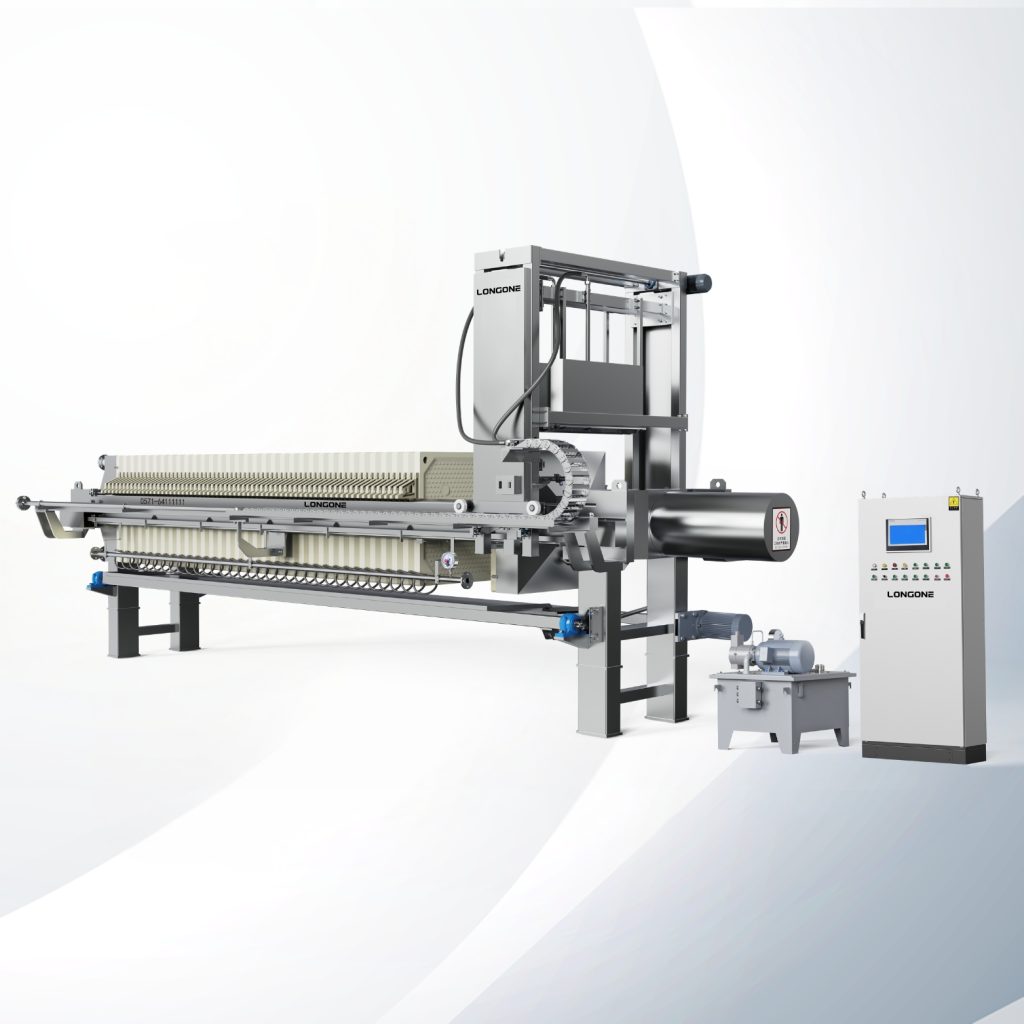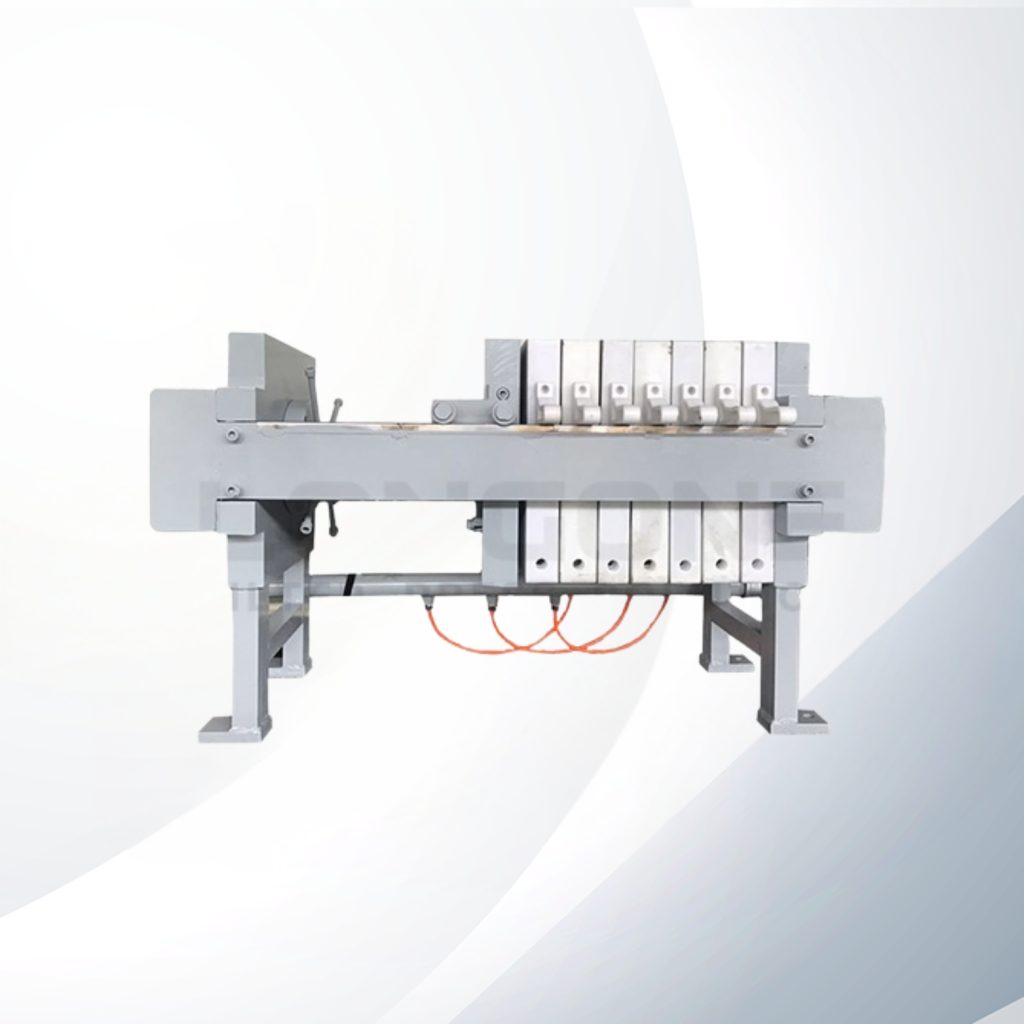
Choosing between a filter press and a centrifuge is rarely a matter of picking the “better” machine — it’s a matter of matching the equipment to your sludge, your throughput, and your disposal costs. Both technologies remove water from slurry, but they get there through completely different mechanisms, and that difference shows up directly in your operating budget.
A filter press dewaters through mechanical pressure filtration: slurry is pumped between filter plates lined with filter cloth, and hydraulic pressure forces the liquid through the cloth while solids build up as a filter cake inside the chambers. A centrifuge dewaters through centrifugal force: slurry spins inside a rotating bowl at high speed, and the density difference between solids and liquid pushes the heavier particles outward while the lighter liquid stays closer to the center.
Quick answer: if your priority is maximum cake dryness, lower energy consumption, and lower long-term operating cost, a filter press is generally the stronger fit. If your priority is continuous, high-volume processing with minimal batch interruption, a centrifuge is usually the better choice. The right answer for your plant depends on sludge characteristics, production volume, available floor space, and total cost of ownership — not just the purchase price on day one.
¿Qué es un filtro prensa?
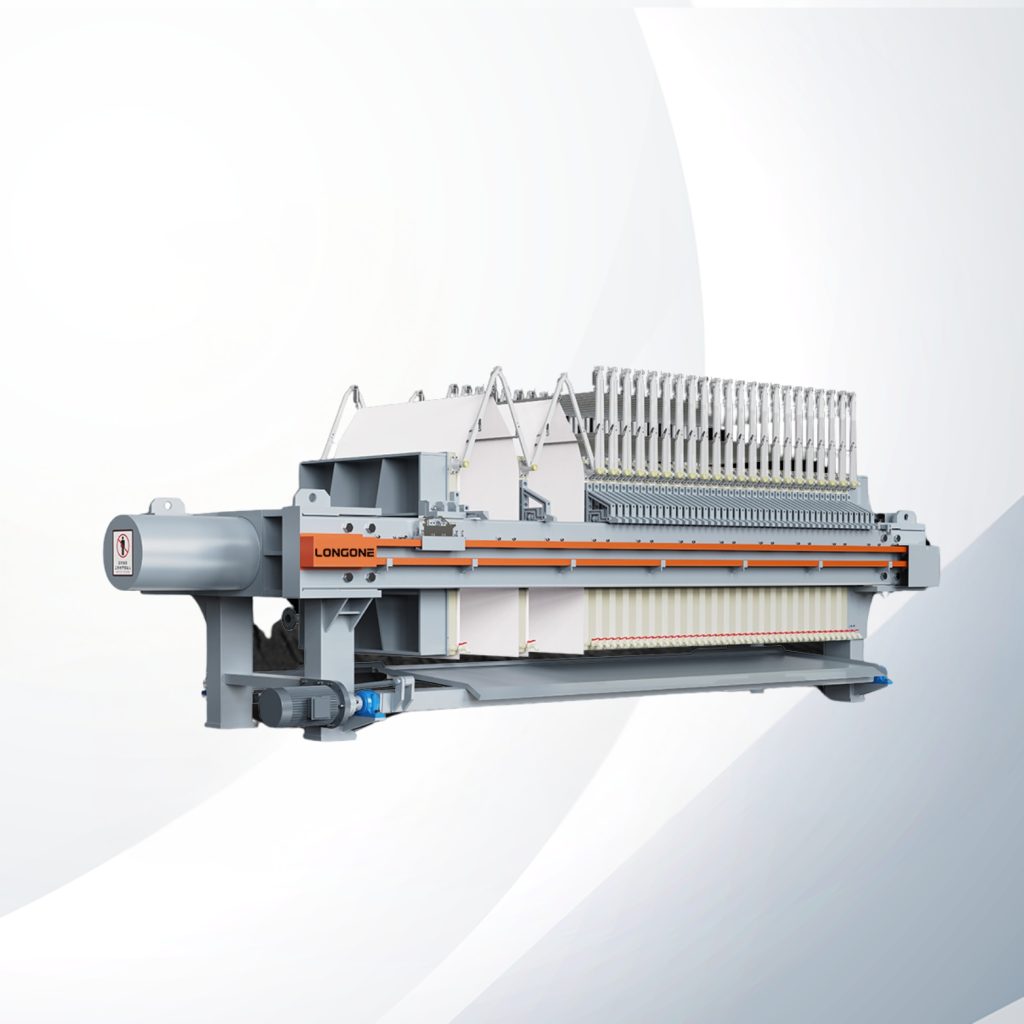
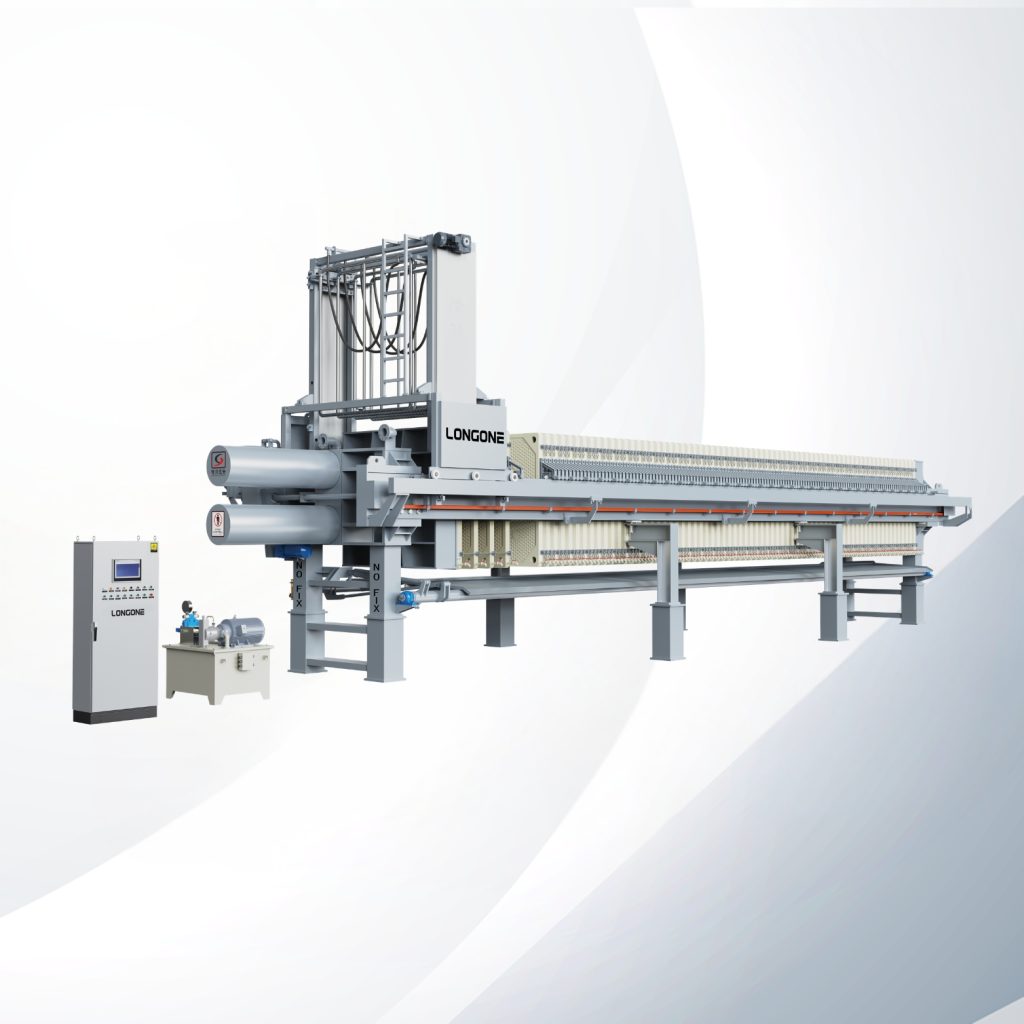
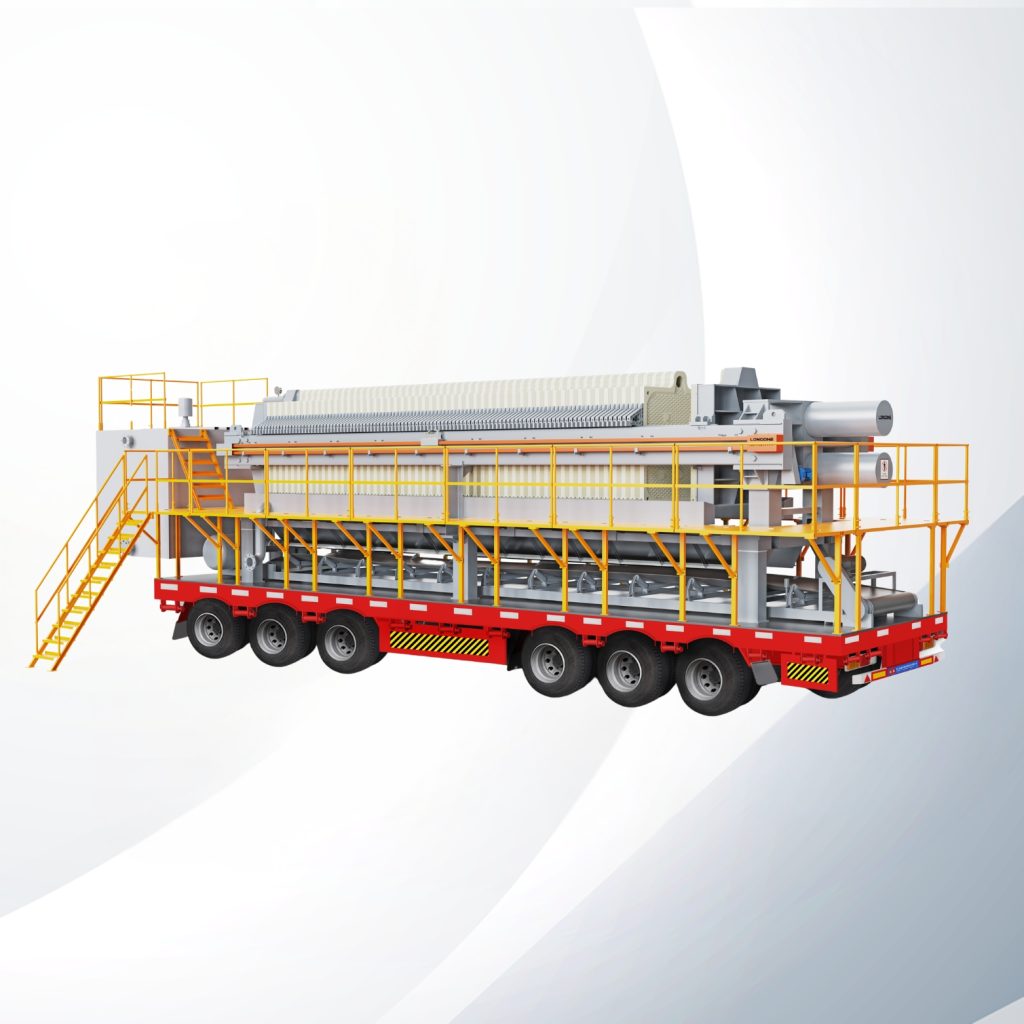
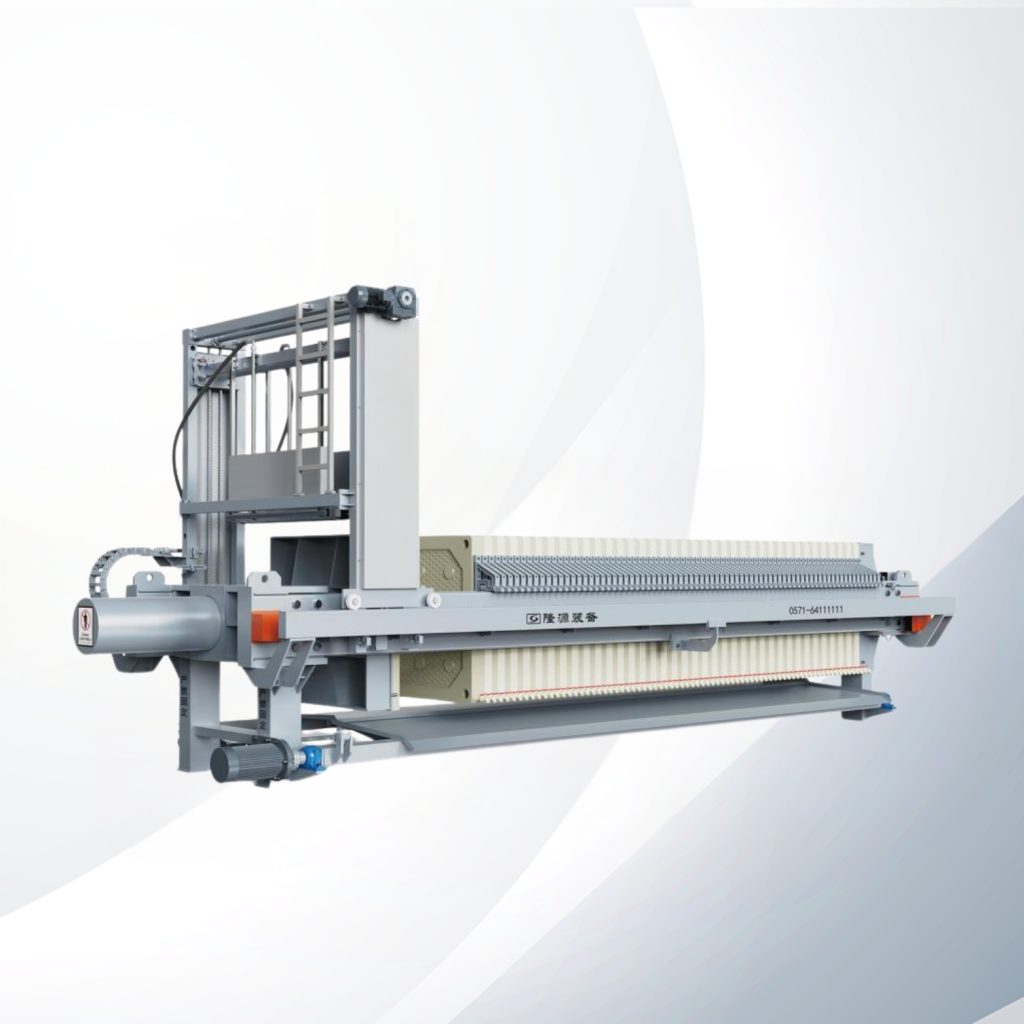
A prensa de filtro is a batch pressure filtration system built around a stack of filter plates, each wrapped in filter cloth, clamped together under hydraulic pressure. Slurry is pumped into the chambers between plates; as pressure builds, water passes through the cloth and drains out through the filtrate channels, while solid particles are trapped and compress into a dense filter cake.
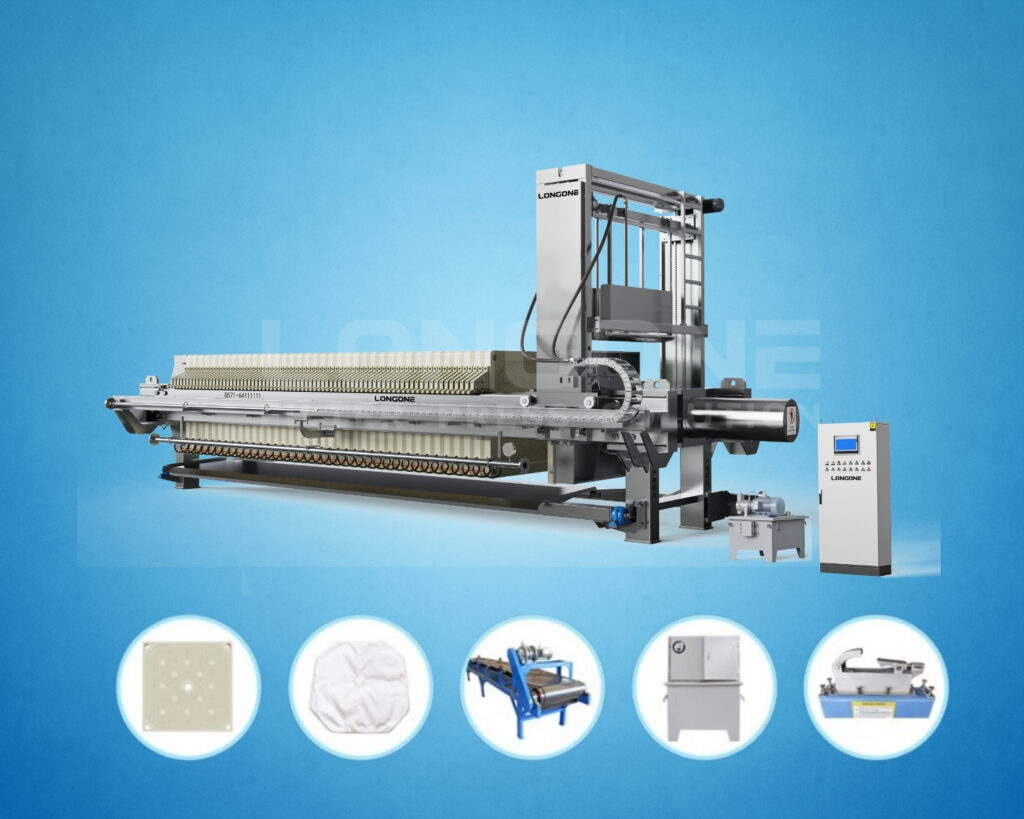
The core components of a filter press system typically include:
- Filter plates (recessed chamber, plate-and-frame, or membrane type)
- Filter cloths
- A hydraulic closing/clamping system
- A feed pump capable of building process pressure
- A filtrate collection and drainage system
- A control panel for automated or semi-automated cycling
Because the plates and cloth do the actual separation work, the design and material quality of the plates has an outsized effect on cake dryness, cycle time, and cloth wear — which is one reason plate specification and material selection deserve more attention than they typically get in general dewatering comparisons.
Filter presses are widely used across:
- Wastewater and industrial effluent treatment
- Mining and mineral processing
- Chemical and pigment manufacturing
- Food and beverage processing
- Pharmaceuticals
- Ceramics and ceramic slip dewatering
- Metal finishing and electroplating wastewater
What Is a Centrifuge?
A centrifuge is a continuous mechanical dewatering system that separates solids from liquids using rotational force. Slurry enters a rotating bowl; as the bowl spins at high speed, centrifugal force drives denser solid particles toward the outer wall, while a scroll conveyor inside the bowl continuously moves the accumulated solids toward a discharge port. The clarified liquid, meanwhile, is drawn off separately.
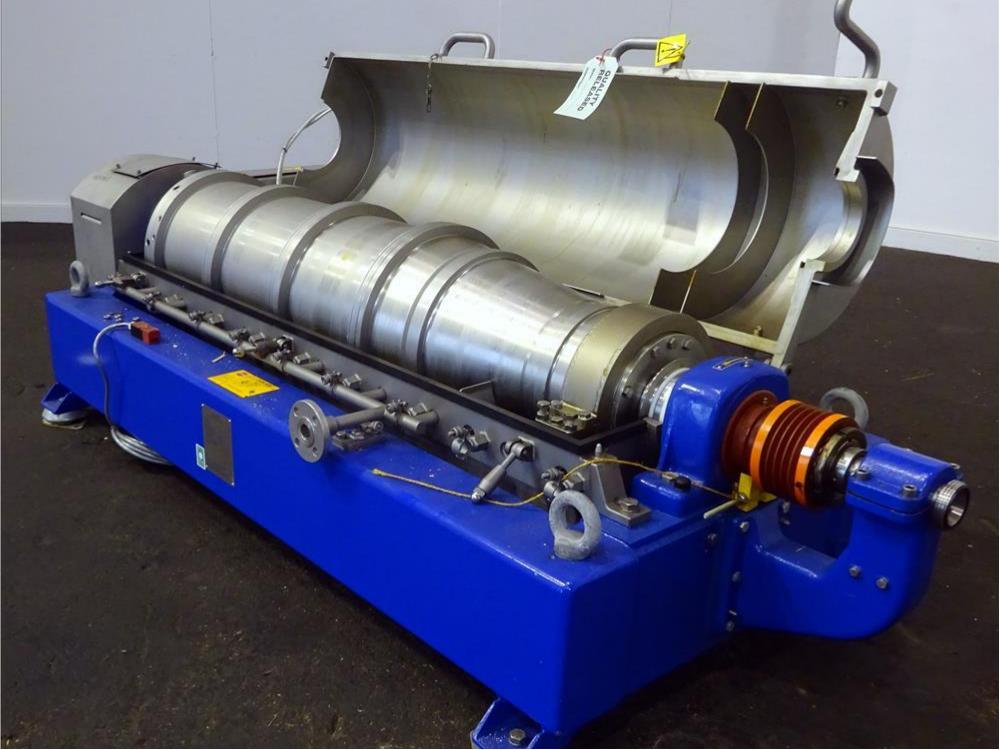
Main components typically include:
- A rotating bowl
- An internal scroll conveyor
- A drive motor and gearbox
- A feed inlet system
- A control system for speed and feed rate
Centrifuges are common in:
- Municipal wastewater treatment plants
- Oil and gas sludge processing
- Food processing effluent
- Chemical plant waste streams
- Pharmaceutical manufacturing byproducts
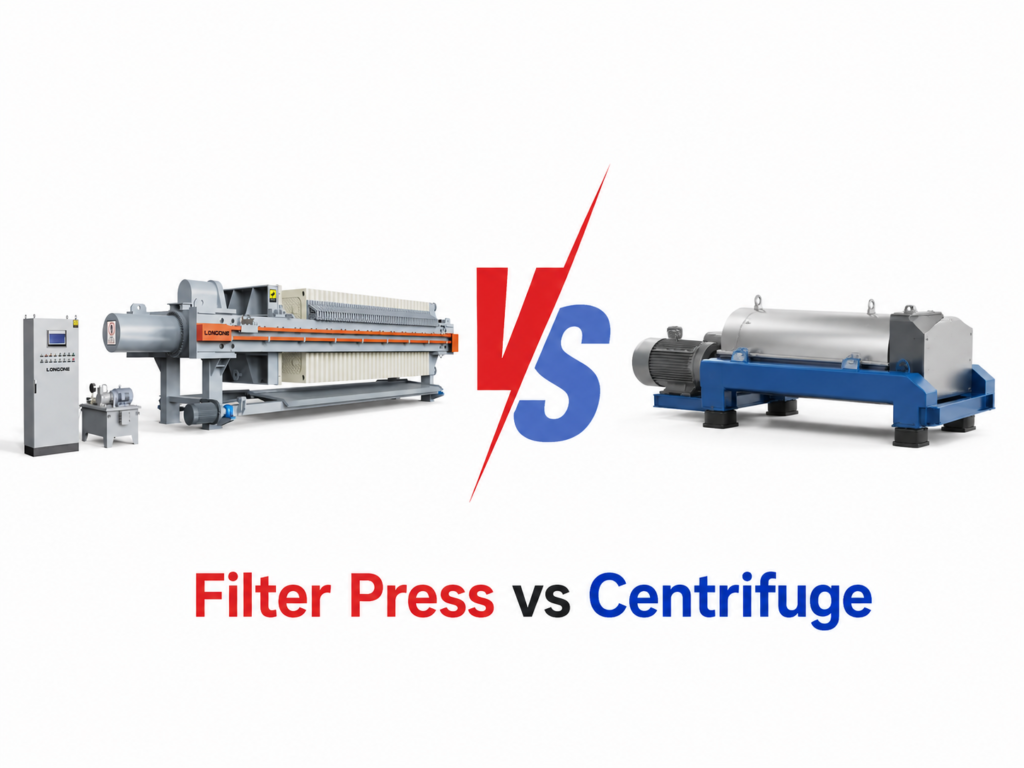
Filter Press vs Centrifuge: Side-by-Side Comparison
| Feature | Prensa de filtro | Centrifuge |
|---|---|---|
| Operating method | Batch process | Continuous process |
| Separation principle | Pressure filtration | Centrifugal force |
| Cake dryness | Very high (35%+ solids typical) | Moderate (18–25% solids typical) |
| Processing speed | Moderate, cycle-dependent | High, continuous throughput |
| Energy consumption | Lower — no high-speed rotation | Higher — sustained rotational power |
| Maintenance | Filter cloth replacement, routine hydraulic upkeep | Bearing/scroll wear, balancing, skilled servicing |
| Initial investment | Moderate | Generally higher |
| Footprint | Larger installation area | More compact |
| Best suited for | High solids recovery, dry cake requirements | Large volume, continuous processing |
The dryness gap is the number that most directly affects your bottom line. A filter press’s ability to consistently push cake dryness above 35% versus a centrifuge’s typical 18–25% range translates into materially lower sludge volume for transport and landfill disposal — often the single largest recurring cost in a dewatering operation.
Applications: Where Are They Used?
The two technologies overlap in many industries, but the specific job each one is asked to do tends to diverge.
Filter presses are the default choice wherever the priority is squeezing out the last percentage points of moisture — chemical slurry filtration where the goal is a saleable or landfill-compliant dry cake, mineral processing tailings that need to meet strict dryness thresholds before disposal, pharmaceutical and food-grade filtration where clean filtrate and batch traceability matter, and metal finishing wastewater where hazardous sludge volume directly drives disposal cost. Ceramic manufacturers also rely on filter presses to dewater clay slip into consistent, workable cake.
Centrifuges tend to win out in high-volume, continuous operations where stopping for batch cycles isn’t practical — municipal wastewater treatment plants processing steady daily flow, oil and gas operations separating oily sludge where throughput matters more than final dryness, and food processing plants generating large, relatively low-solids effluent streams. Their compact footprint also makes them attractive where plant floor space is limited and a large multi-plate press installation isn’t feasible.
In practice, some larger facilities run both: a centrifuge for initial high-volume thickening, followed by a filter press for final polishing to landfill-ready dryness. That combination isn’t unusual in mining and municipal operations handling large, variable sludge loads.
Industry-specific nuances also matter. In mining, tailings dewatering often has hard regulatory dryness thresholds before material can be stacked or landfilled — a requirement filter presses are typically specified to meet. In municipal treatment, plants processing continuous inflow around the clock often prioritize uninterrupted throughput over the last few percentage points of cake dryness, which favors centrifuges. In food and pharmaceutical processing, filtrate clarity and batch-level traceability can matter as much as dryness itself, which tends to favor filter press systems built with hygienic, cleanable plate and cloth configurations.
Advantages and Trade-offs
Each technology earns its place by trading one set of strengths for another, and the trade-off is worth spelling out rather than treating one machine as universally superior.
A filter press’s main strength is dryness. Because separation happens under sustained mechanical pressure rather than through rotational force, it consistently produces a drier, more compact filter cake — which lowers transport weight, reduces the volume sent to landfill, and in many jurisdictions helps meet disposal regulations that a wetter cake can’t satisfy. That performance comes with lower running costs on two fronts: filter presses don’t need the sustained high-speed rotation that drives up a centrifuge’s electricity bill, and they have fewer moving parts subject to wear, which keeps maintenance simpler and cheaper over the equipment’s service life. The filtrate produced is also typically cleaner, which matters in processes where the liquid stream is recycled or needs further treatment. The trade-off is that a filter press runs in batches rather than continuously, and a full-size installation needs more floor space than a comparably rated centrifuge — real constraints in plants with tight footprints or around-the-clock processing demands.
A centrifuge’s main strength is throughput. Continuous operation means no cycle interruptions, which suits facilities moving large, steady volumes of sludge — municipal plants and high-volume industrial effluent lines are the clearest examples. Its rotating-bowl design is also more space-efficient than a large plate stack, and modern units integrate readily into automated control systems with minimal manual intervention. The cost of that continuous throughput is higher energy draw to sustain rotation, a higher initial equipment investment, and more demanding maintenance — the high-speed rotating components need regular servicing, balancing, and a level of technical skill that adds to labor cost over time. The cake it produces is also typically wetter than what a filter press achieves, which pushes disposal volume and cost upward.
Neither trade-off makes one machine objectively better — it makes the choice dependent on which cost you’d rather carry: higher energy and maintenance spend in exchange for continuous throughput, or a batch cycle and larger footprint in exchange for a drier cake and lower operating cost.
How to Choose the Right Equipment
Before committing to either technology, it’s worth running through the same factors that plant engineers and procurement teams typically weigh:
- Sludge characteristics. Poorly dewatering, high-solids sludge that needs to meet strict dryness requirements generally favors a filter press. Oily or lower-solids sludge processed in large volumes often favors a centrifuge.
- Target cake dryness. If landfill regulations or transport costs require cake dryness above roughly 35%, a filter press is usually the more reliable path.
- Production volume and continuity. Facilities that can’t tolerate batch downtime, or that process very large daily volumes, tend to lean toward centrifuges.
- Energy and maintenance budget. Filter presses generally cost less to run and maintain over their service life; centrifuges cost more to operate but can process more material per hour.
- Available floor space. Centrifuges have a smaller footprint per unit of throughput; filter presses need more room for the plate stack and clamping system.
- Total cost of ownership, not just purchase price. A centrifuge’s higher upfront cost and energy draw can outweigh a filter press’s larger footprint over a multi-year horizon, depending on disposal costs in your region.
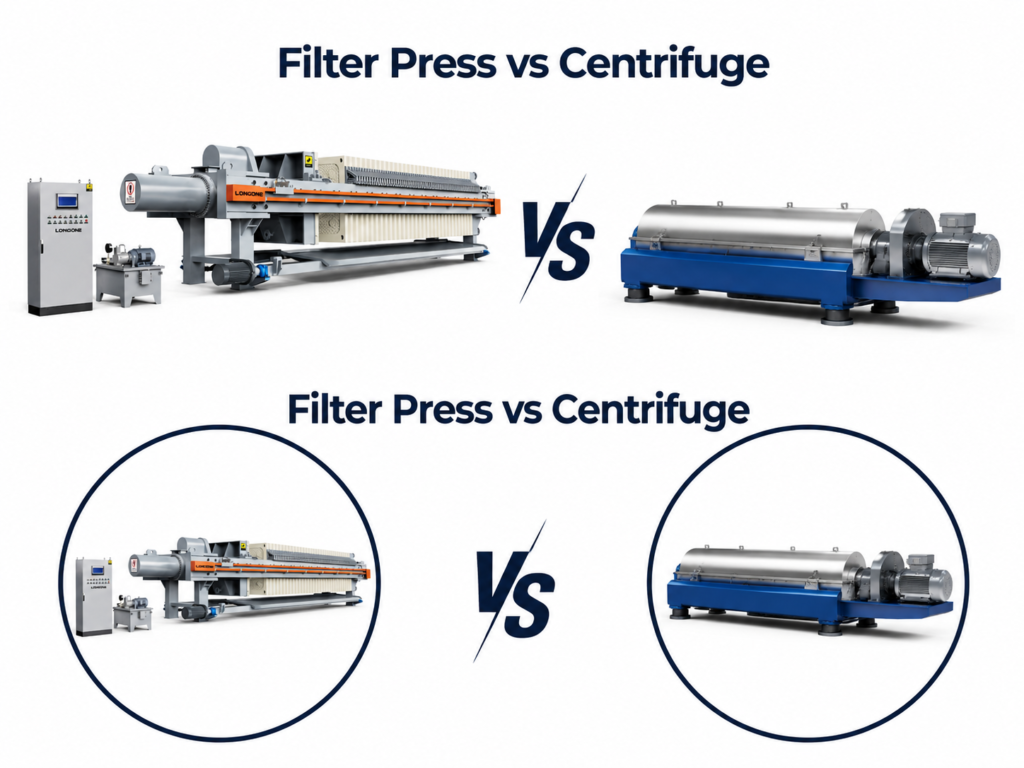
There’s no universally “correct” answer — only the answer that fits your sludge, your volume, and your cost structure. Many procurement teams run a pilot filtration test on their actual slurry before committing, since lab-scale results on your specific material tell you more than a general comparison table ever can. A short pilot run can reveal how a given slurry actually behaves under pressure filtration — cycle time, achievable dryness, cloth blinding tendencies — information that’s difficult to estimate accurately from sludge composition data alone.
It’s also worth factoring in how your process might change over the next several years. A plant expecting production volume to grow substantially may find a centrifuge’s continuous-processing headroom worth the higher operating cost. A plant with a fixed, predictable sludge volume and strict disposal cost pressure is more likely to see a faster payback from a filter press’s lower energy and maintenance profile. Reviewing both the current-state numbers and the expected trajectory of your operation tends to produce a more durable equipment decision than optimizing for today’s throughput alone.
Conclusión
Filter presses and centrifuges solve the same problem — separating solids from liquids — through fundamentally different mechanisms, and that difference carries through every decision factor that matters to a plant: cake dryness, energy use, maintenance load, footprint, and disposal cost. A filter press earns its place where dryness and lower operating cost matter most, typically in batch operations with high-solids or hard-to-dewater sludge. A centrifuge earns its place where continuous, high-volume throughput and a compact footprint outweigh the benefit of a drier cake.
Neither machine is the right choice in every situation, and the comparison table, application patterns, and trade-offs above are meant to narrow the decision rather than settle it outright. The sludge characteristics unique to your process, your production volume, your available floor space, and your long-term operating budget will ultimately determine which technology — or which combination of the two — delivers the best return for your plant.