Most dewatering problems show up long after the filter press itself. The cake leaves the machine too wet, so trucks carry extra water, disposal fees climb, and any downstream dryer burns more energy than planned. Cycle times stretch because operators wait for a cake that never gets quite dry enough.
A membrane filter press is built to attack exactly this problem. It adds a second dewatering stage to ordinary pressure filtration, and that single change often decides whether a solid-liquid separation line is merely functional or genuinely economical. This guide explains how membrane filter presses work, how they differ from chamber presses, where they deliver the most value, and what buyers should check before specifying one.
What Is a Membrane Filter Press and How Does It Work
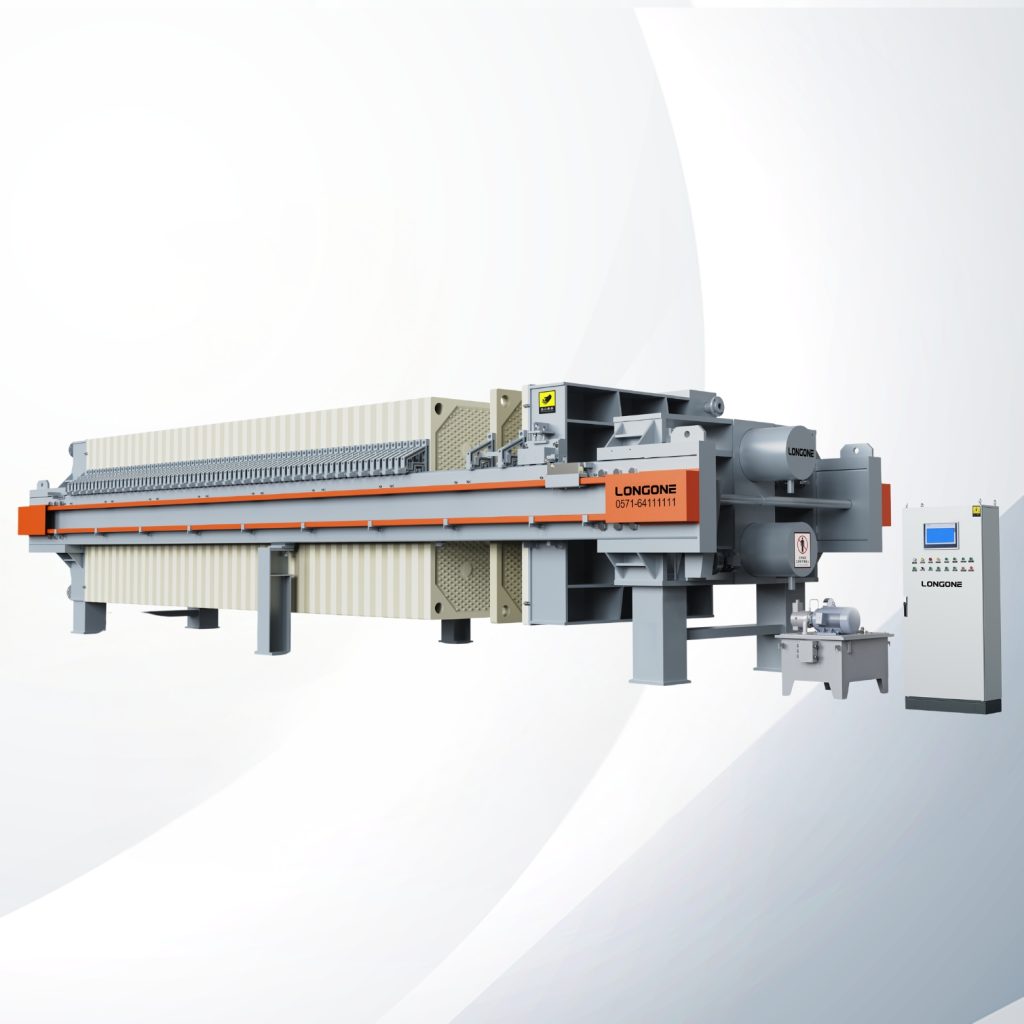
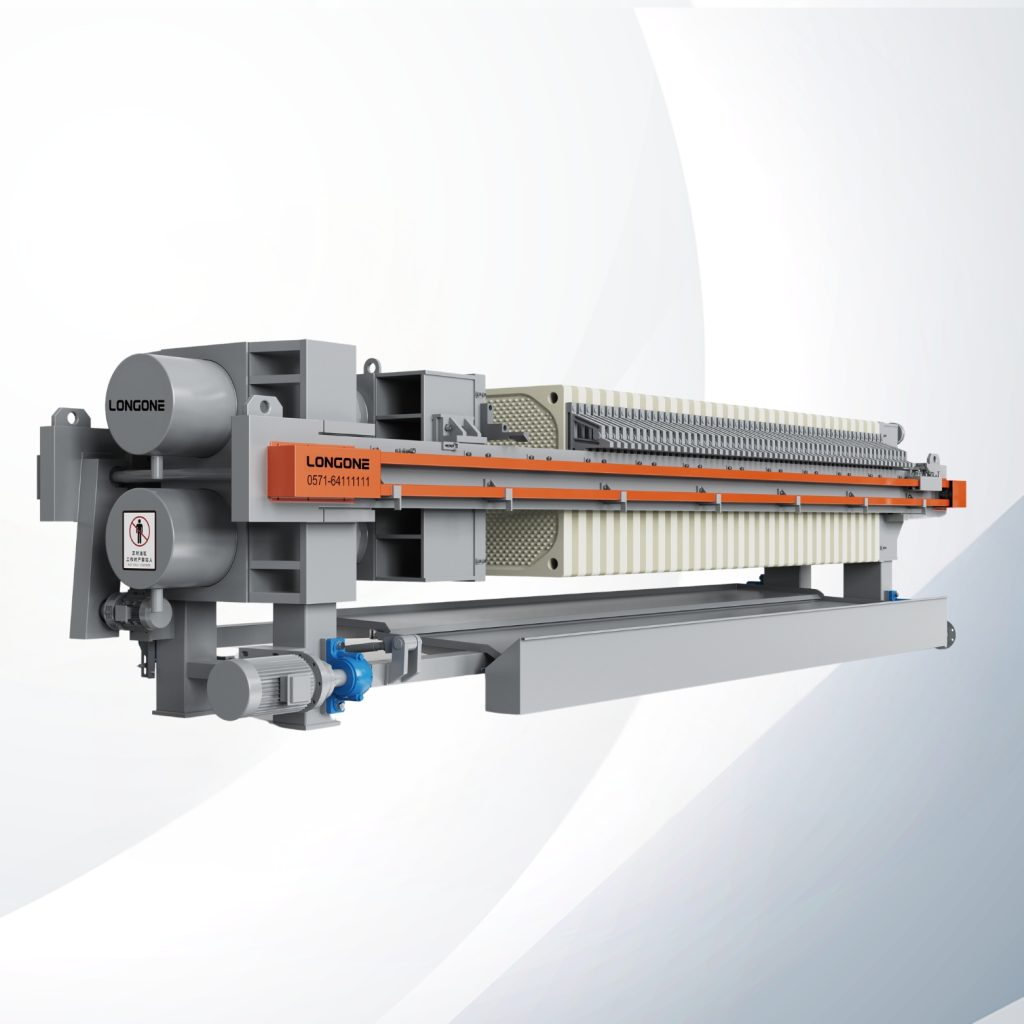
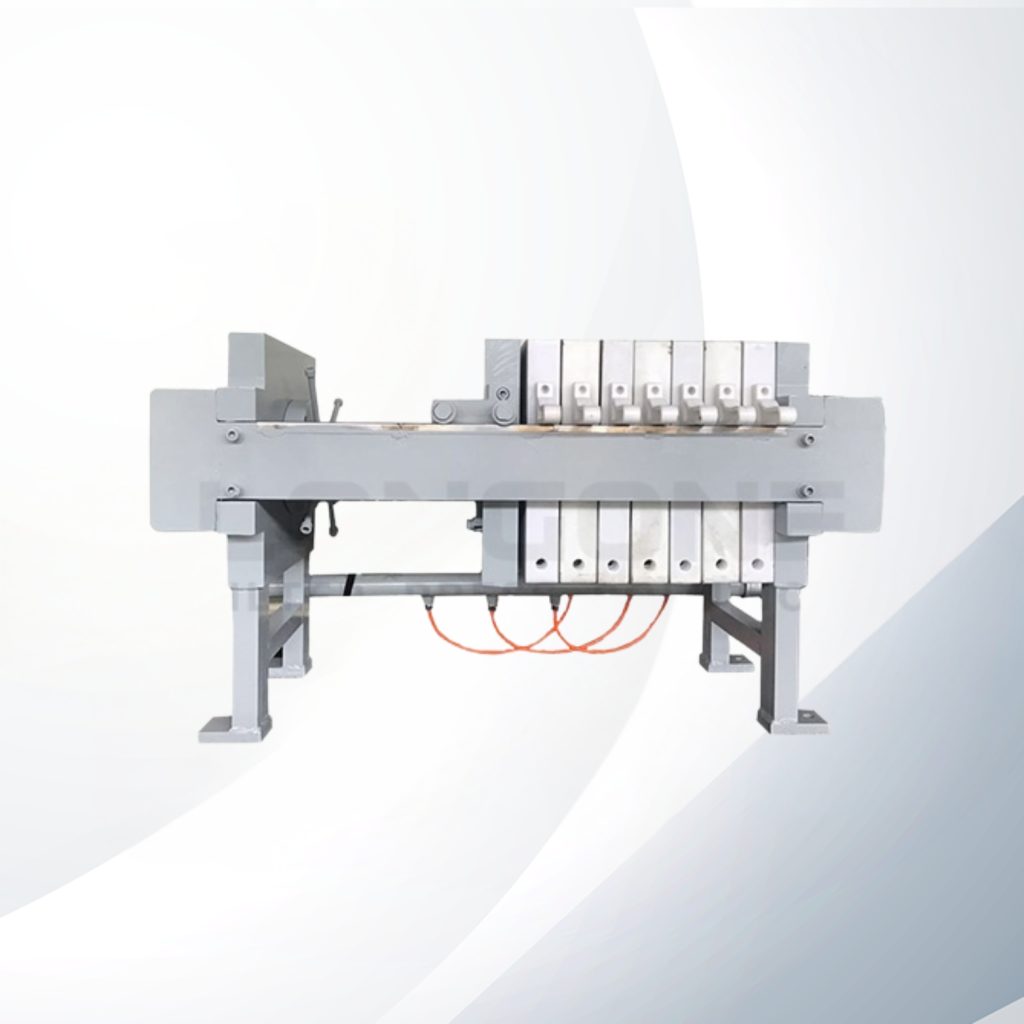
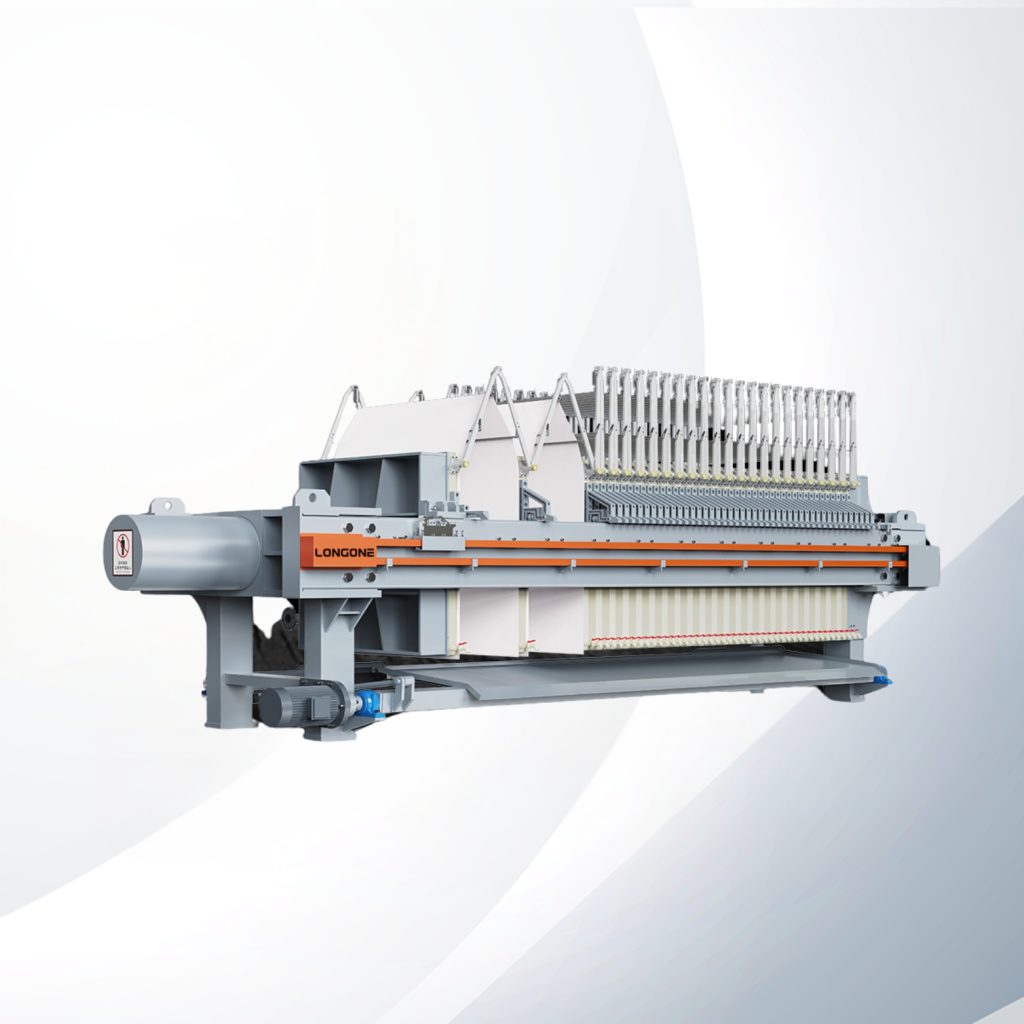
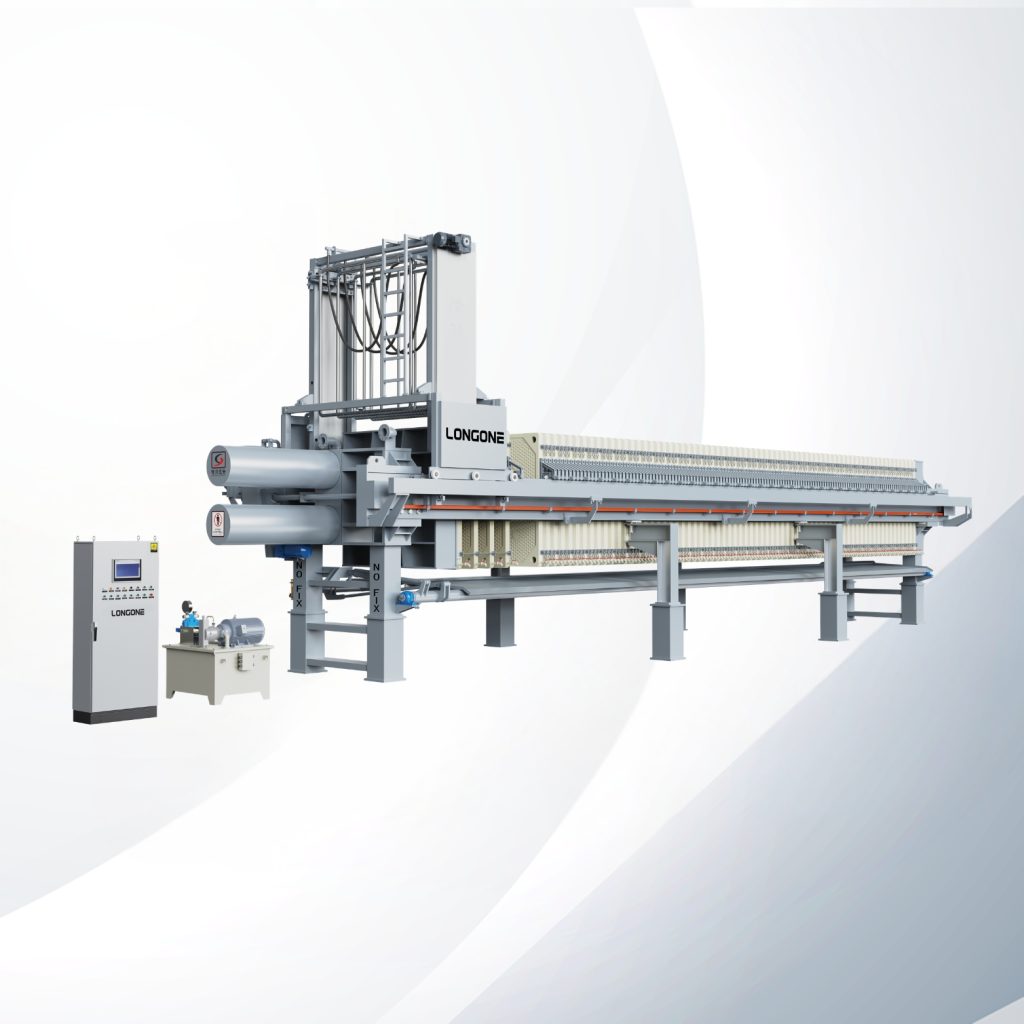
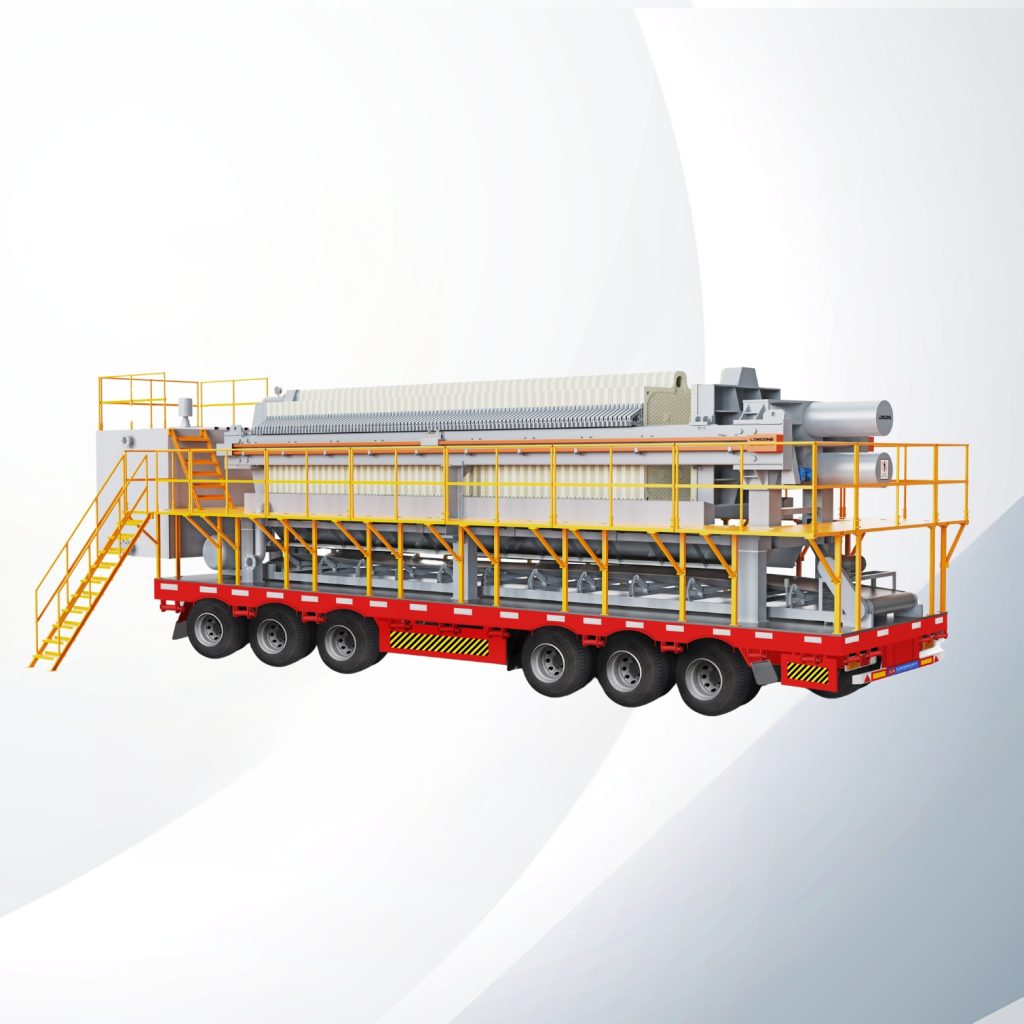
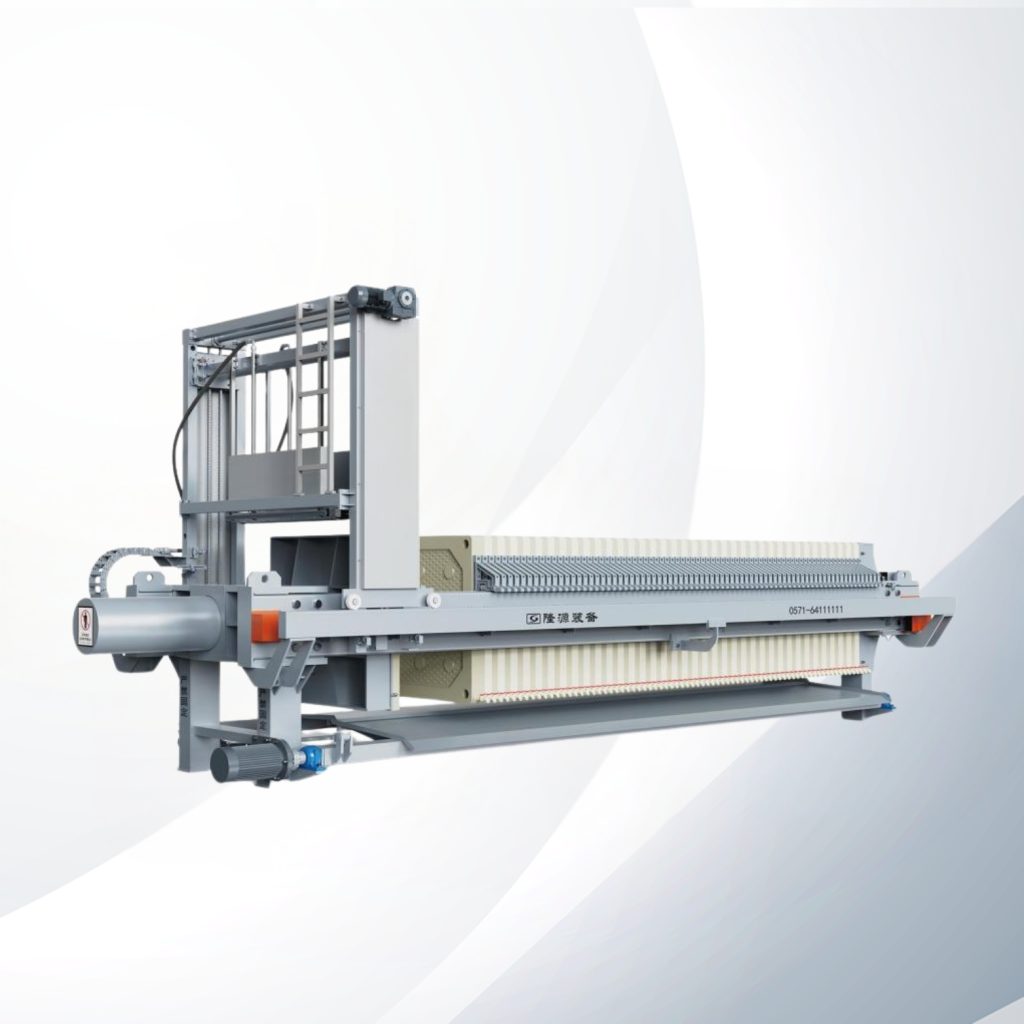
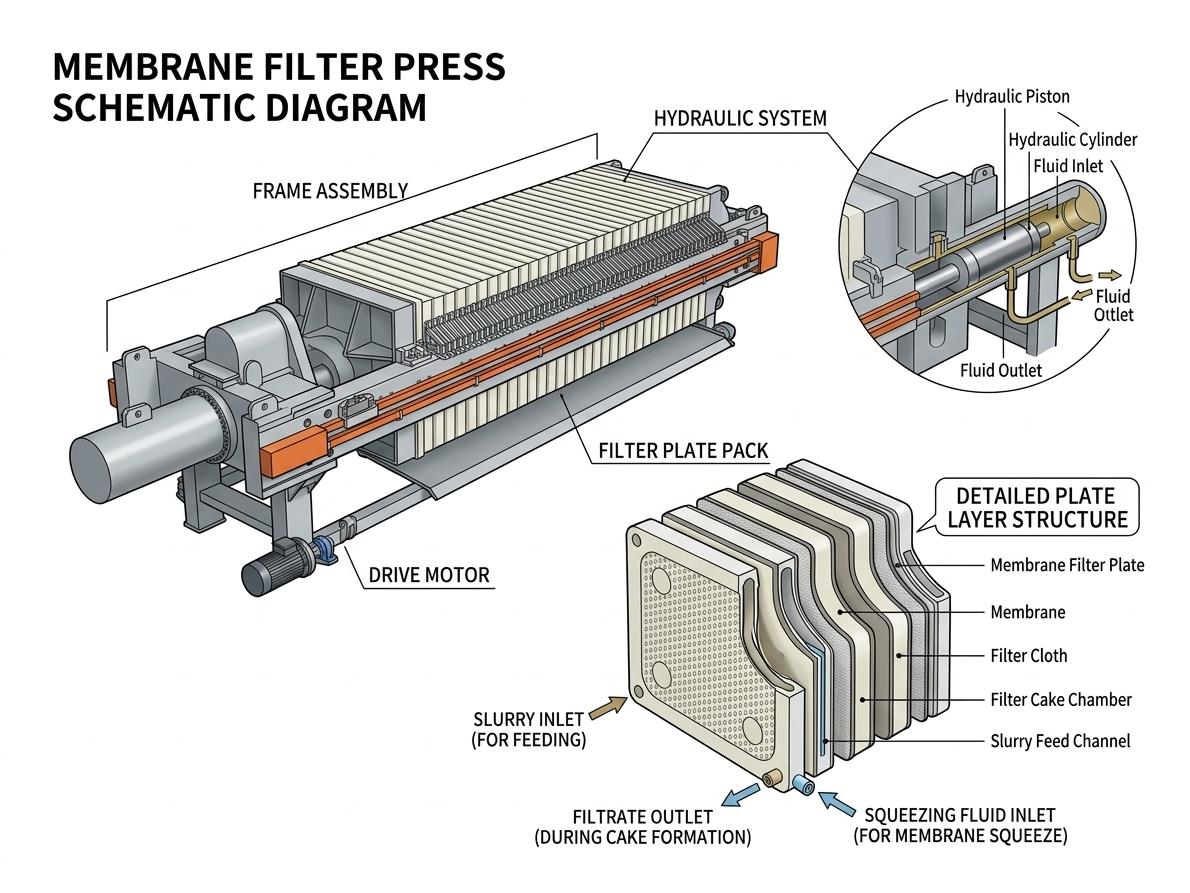
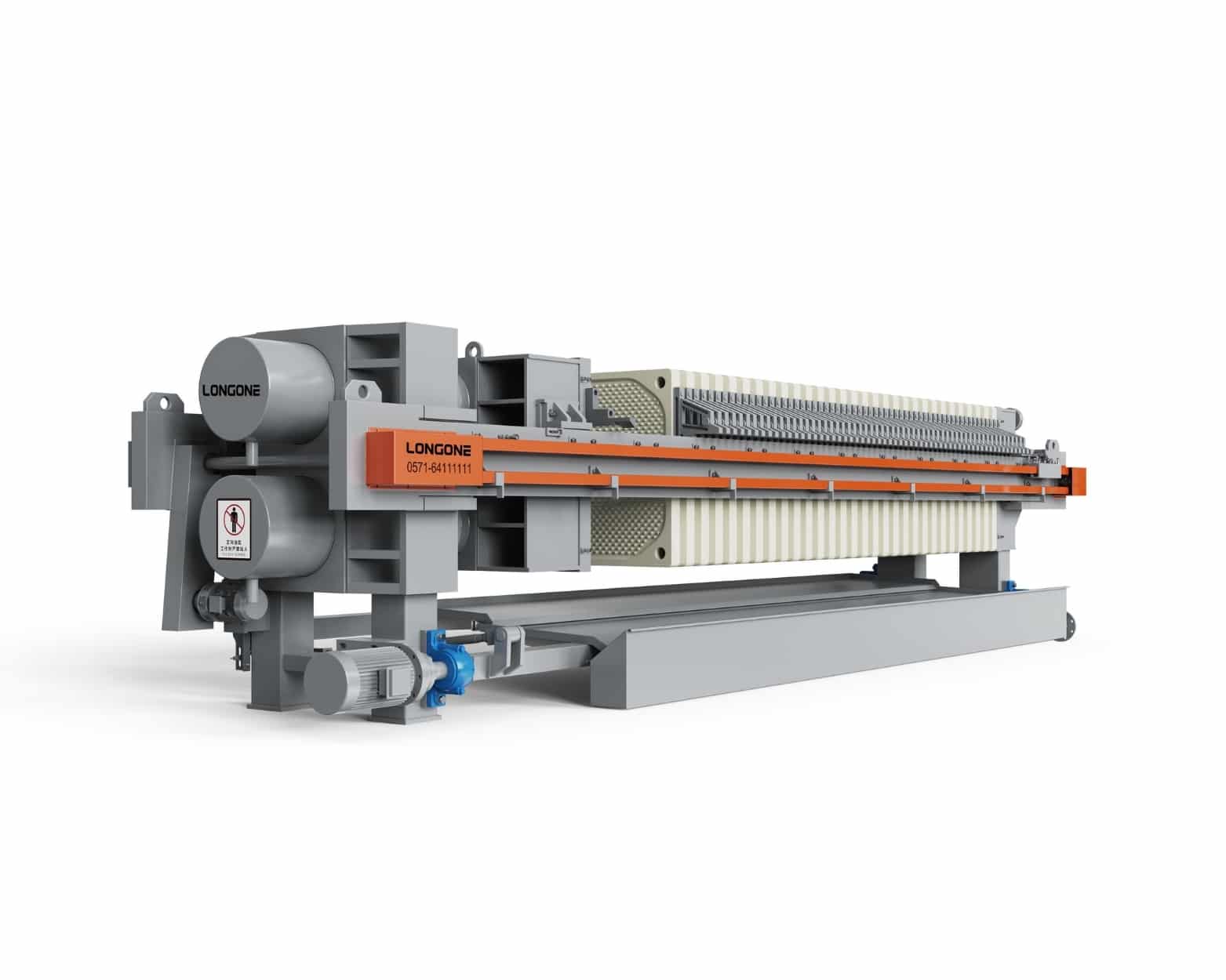
A membrane filter press is a batch solid-liquid separation machine that removes water from slurry in two stages: pressure filtration followed by mechanical squeezing. It uses the same basic architecture as other plate-type presses, with a stack of filter plates held together between a fixed head and a moving follower by a hydraulic closing system. What sets it apart is the plate design.
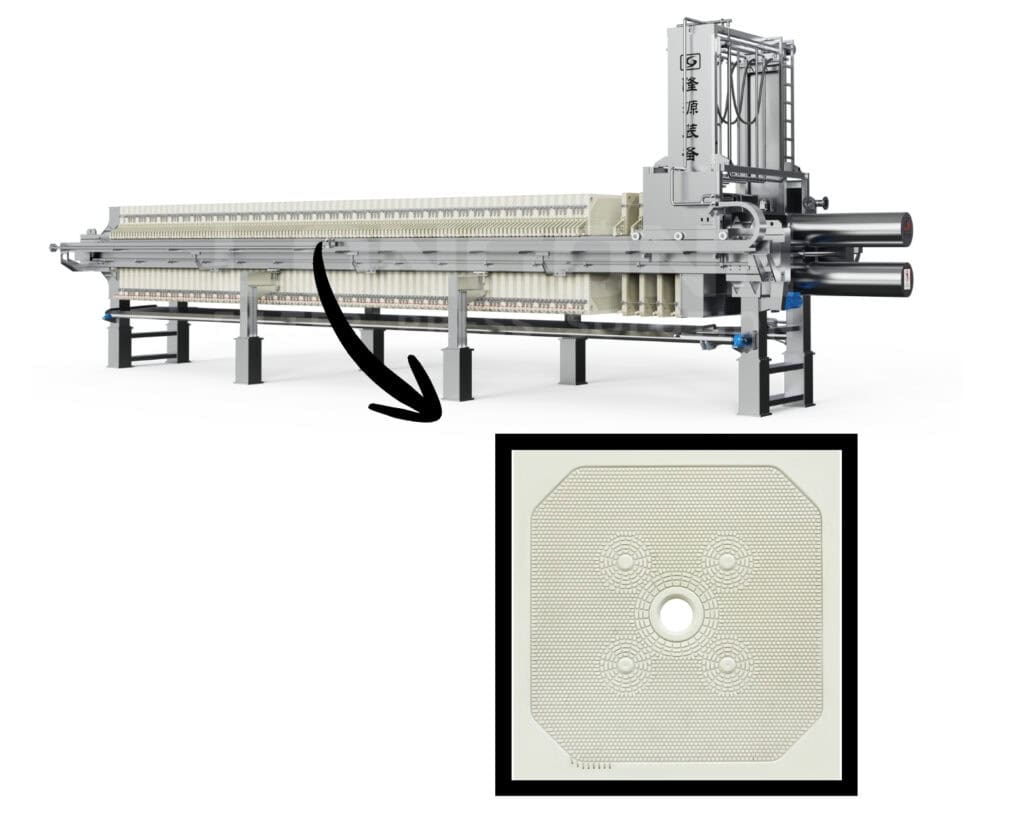
In a membrane filter press, some or all of the plates carry a flexible diaphragm (the membrane) on their faces. Filter cloth covers the plates, and the cavity between two neighboring plates forms the filtration chamber. The main components are:
- Frame and hydraulic system: Holds the plate pack closed against feed pressure.
- Membrane filter plates: Usually made of reinforced polypropylene, with an inflatable diaphragm on the face.
- Filter cloth: Retains the solids while letting the filtrate pass.
- Feed, squeeze, and blow-down piping: Carries slurry in and supplies the squeeze medium, which is compressed air or water.
The principle is simple. Slurry is pumped into the chambers and builds a cake against the cloth. Once the chambers are full, the membranes are inflated with air or water, pressing the cake from both sides and forcing out moisture that feed pressure alone could not remove.
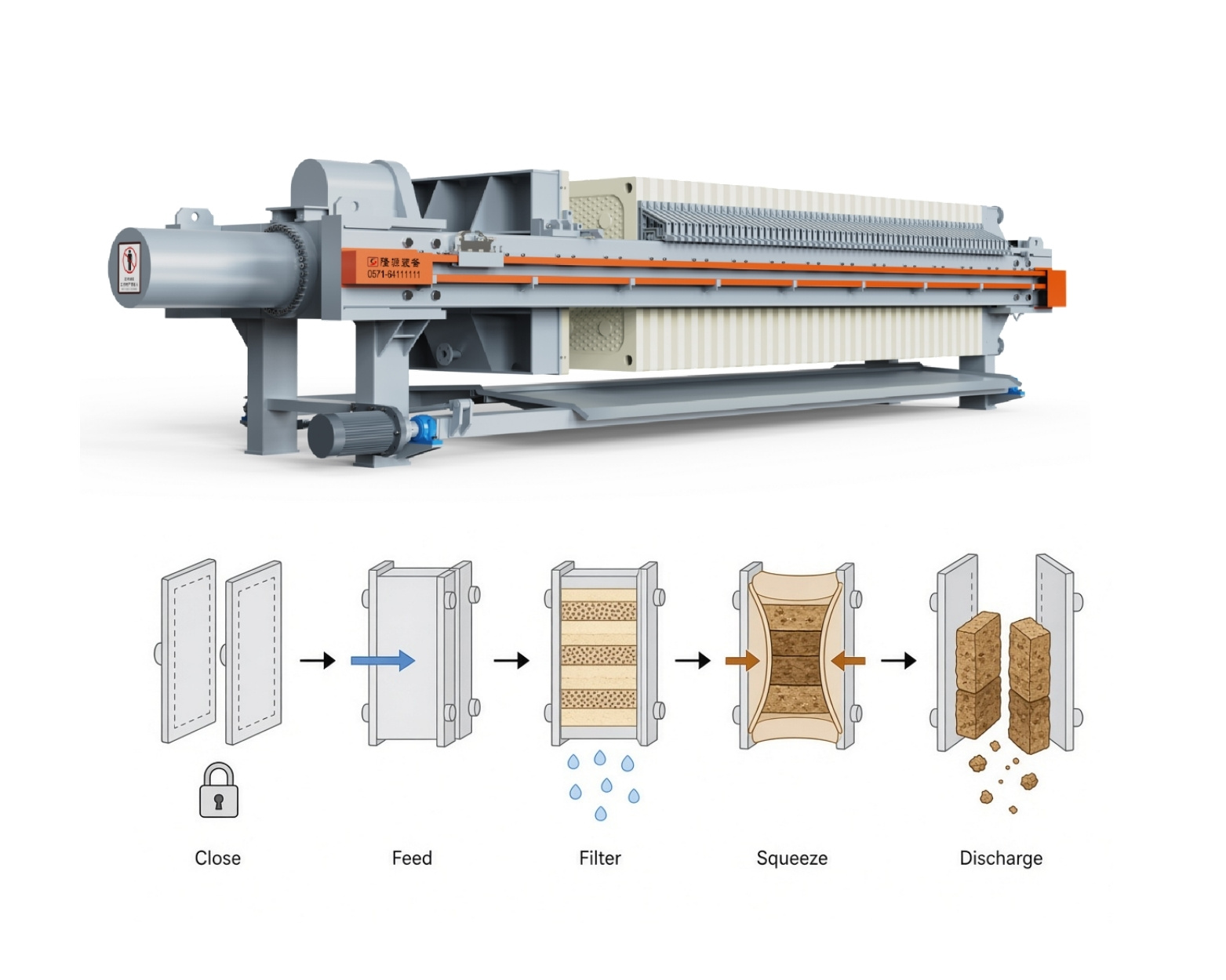
Filtration Cycle Step by Step: From Feeding to Membrane Squeeze and Cake Discharge
Understanding the cycle helps buyers see where time and dryness are won or lost.
- Cierre: The hydraulic cylinder pushes the plate pack together and holds it under enough force to resist feed pressure.
- Feeding and filtration: The feed pump fills the chambers. Filtrate passes through the cloth and exits through the plate drainage channels while solids form a cake.
- Membrane squeeze: When feed flow drops, the feed stops and the membranes are inflated. This compresses the cake and expels additional filtrate. It is the step that separates membrane presses from standard chamber presses.
- Cake washing (optional): For products where soluble impurities must be removed, wash liquid is pumped through the cake before the final squeeze.
- Air blow: Compressed air is blown through the cake to push out residual liquid from the pores and the center feed channel.
- Opening and discharge: The plate pack opens, and the cake drops out by gravity or with shaker assistance, depending on the model.
Because the squeeze phase works on an already formed cake, it is far more effective than extending the feed phase. Longer feeding eventually yields very little extra dryness, while a short squeeze can change the moisture result noticeably.
Membrane vs Chamber Filter Press: Where the Extra Dewatering Comes From
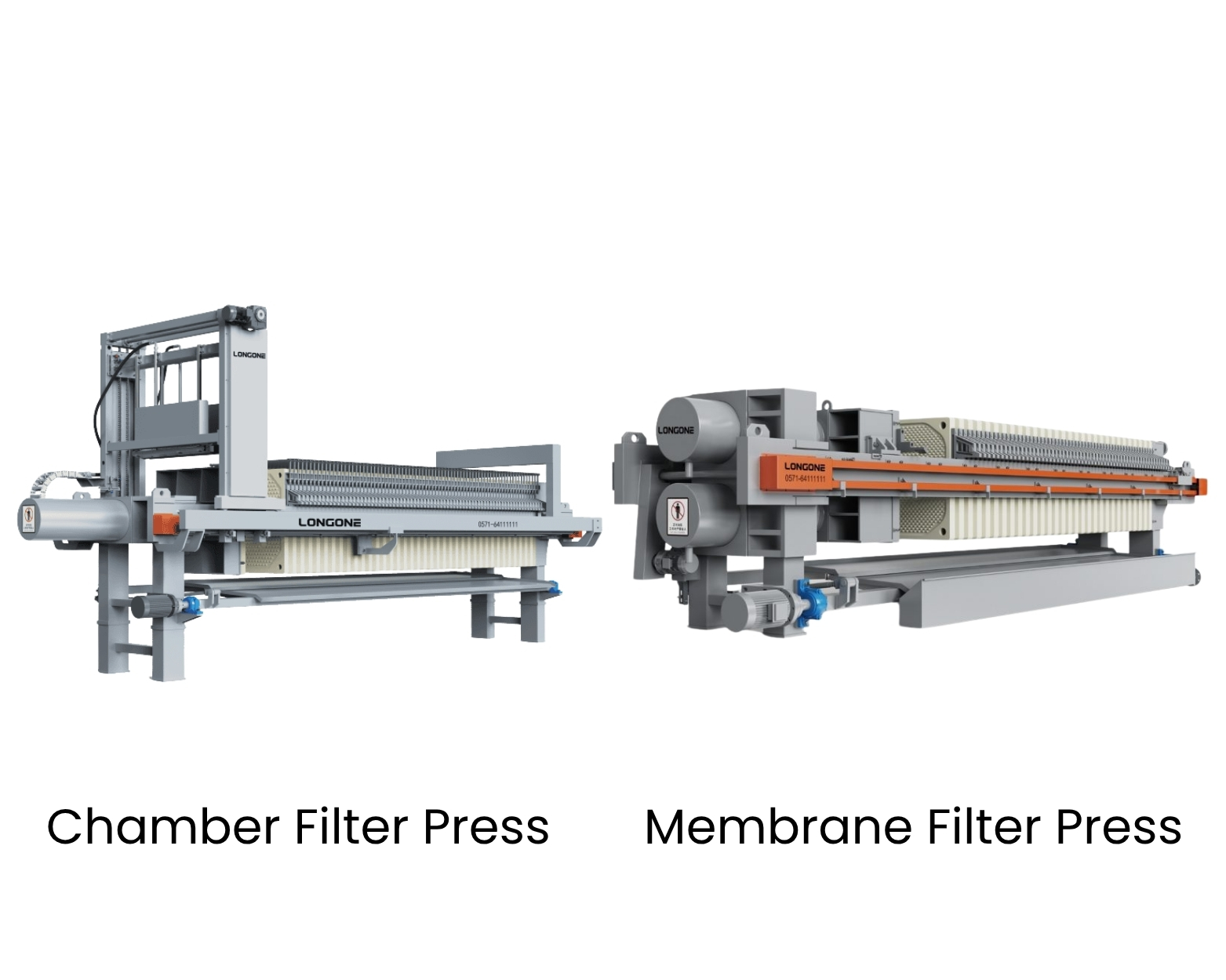
Both machine types look similar from the outside, but they behave differently inside. A chamber filter press has rigid recessed plates, and the cake is formed and held only by feed pressure. A membrane press adds the squeeze stage on top of that.
| Factor | Prensa de filtro de membrana | Prensa de filtro de cámara |
|---|---|---|
| Dewatering method | Filtration plus mechanical squeeze | Sólo filtración |
| Humedad del pastel | Typically lower, especially for compressible solids | Higher, limited by feed pressure |
| Cake uniformity | More even thickness and dryness | Can vary across the chamber |
| tiempo de ciclo | Often shorter for the same target dryness | Can run long when chasing dryness |
| Plate cost | Higher | Lower |
| Auxiliary needs | Squeeze air or water supply | Simpler utilities |
| Mantenimiento | Membrane condition needs attention | Fewer wear points |
| Best fit | Strict moisture targets, high disposal or drying cost | Easy-to-filter solids, low dryness requirements |
The difference matters most with compressible materials such as many sludges and fine tailings, where squeezing releases water that filtration cannot. For rigid, free-draining solids, the gain is smaller, and a chamber press may be perfectly adequate. A fair assessment starts with the slurry, not with a preference for one technology.
Where Membrane Filter Presses Deliver the Most Value
A membrane press earns its higher plate cost wherever each point of cake moisture has a real price attached.
Municipal and industrial sludge: Disposal is usually charged by weight, so drier cake directly cuts transport and landfill or incineration cost. Membrane presses are widely used for both biological and chemical sludge.
Mining and mineral processing: Tailings, concentrates, and washing residues benefit from lower moisture, which makes stacking, transport, and water recovery easier. Dry stacking projects in particular rely on predictable cake dryness.
Chemical processing: Products and by-products often need low residual moisture before drying, packaging, or further reaction. Washing capability is an added advantage when purity matters.
New energy materials: Battery material precursors and similar fine, high-value slurries need consistent dewatering and, often, thorough washing. Membrane presses allow both in the same machine.
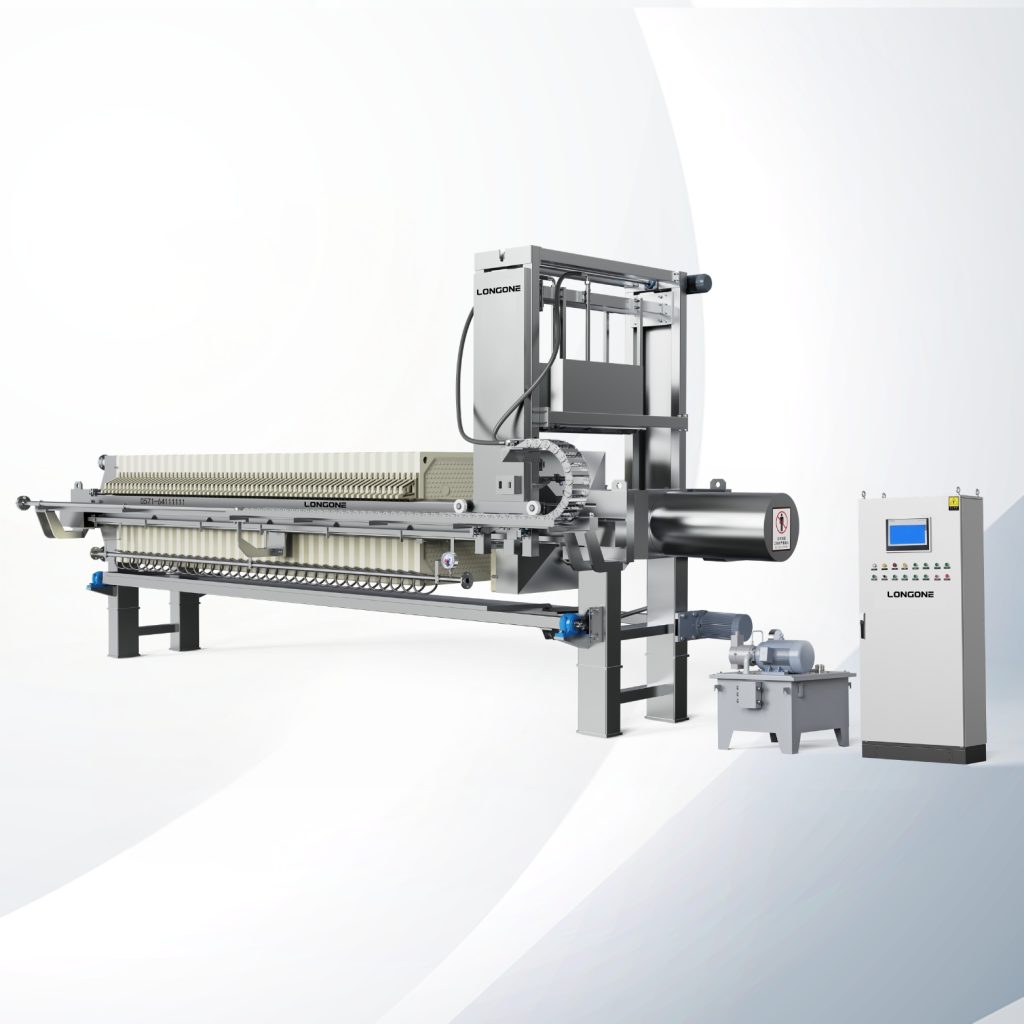
Pharmaceutical and fine chemical production: Here the focus is on material recovery and consistent results, and stainless steel or specially coated machines may be specified.
In each case the logic is the same: the press is a small part of total process cost, but its cake moisture drives costs elsewhere.
How to Select a Membrane Filter Press: Key Parameters Buyers Should Check
Choosing well means working from the slurry outward. A short checklist helps:
- Slurry characteristics: Solids concentration, particle size distribution, compressibility, temperature, and pH. These determine cloth choice, feed pressure, and achievable dryness.
- Target cake moisture: Define the number you actually need, based on disposal rules, dryer capacity, or product specification. Over-specifying raises cost without benefit.
- Squeeze pressure and medium: Air and water both work. Water squeeze generally gives more uniform membrane loading, while air systems are simpler to supply. The right pressure rating should match both the slurry and the plate design.
- Filtration area and chamber volume: Calculate from the daily solids load and the cycle time you can realistically achieve, then leave a sensible margin.
- Plate material and membrane construction: Look at the polypropylene grade, the way the membrane is attached or welded, and its tolerance for repeated inflation cycles. This is the component that defines service life.
- Filter cloth: Choose weave, material, and permeability for the particle size and chemistry. The cloth often determines filtrate clarity and cake release.
- Nivel de automatización: Consider automatic plate shifting, cloth washing, drip trays, and PLC control based on labor availability and throughput.
- Corrosion and temperature: Check frame coating or stainless options for aggressive or hot slurries.
Above all, test before buying. A laboratory-scale trial with the actual slurry provides real data on cake moisture, cycle time, and filtration area. It is far cheaper than discovering an undersized or poorly matched press after installation.
Maintenance and Membrane Plate Life: Keeping Squeeze Performance Stable
Membrane plates work harder than ordinary chamber plates, so a few habits protect their life and performance.
Control squeeze pressure. Running above the rated pressure, or applying squeeze before the cake is properly formed, stresses the membrane. Following the plate rating is the simplest way to extend life.
Keep the cloth clean. Blinded cloth raises feed pressure and causes uneven cakes, which loads the membranes unevenly. Regular washing is cheaper than premature plate replacement.
Protect against foreign objects. Hard particles or debris in the feed can puncture or cut the membrane. Screening upstream is worthwhile for abrasive or contaminated slurries.
Watch the sealing surfaces. Damaged plate edges or worn cloth edges cause leakage and can hide the real cause of poor pressing performance.
Check the pressure holding. If the machine loses closing pressure during a cycle, the problem may lie in the hydraulic system, seals, or locking mechanism, and it should be investigated early.
Inspect on a schedule. Regular visual checks of membranes, feed ports, and drainage surfaces catch small problems before they become downtime. Seasonal conditions matter too, since heat can affect hydraulic oil, plastic plates, and electrical cabinets.
When a membrane does fail, replacing the plate or membrane element in time prevents cake quality from drifting and protects neighboring plates.
Preguntas frecuentes
How much drier is the cake from a membrane filter press than from a chamber press?
The improvement depends on the material. Compressible solids such as many sludges usually show the largest gain, while rigid, free-draining solids show less. A lab trial with your own slurry is the only reliable way to estimate the difference.
Is air squeeze or water squeeze better?
Both are used successfully. Water squeeze tends to load the membrane more evenly, while air squeeze needs simpler equipment. The better choice depends on available utilities, pressure requirements, and the plate design.
How long do membrane filter plates last?
Service life varies with plate quality, squeeze pressure, feed cleanliness, and cycle count. Operating within the rated pressure and keeping debris out of the feed are the most effective ways to extend it.
Can a chamber filter press be upgraded to a membrane press?
In some cases, yes, if the frame, hydraulic system, and feed arrangement are suitable and the plate dimensions match. It requires checking the closing force, piping, and a squeeze medium supply, so the equipment should be assessed first.
What information is needed to size a membrane filter press?
Supplying the daily dry solids load, solids concentration, particle size, target cake moisture, slurry temperature and chemistry, and the available operating hours allows a proper filtration area and configuration to be recommended.
Choosing With the Whole Process in Mind
A membrane filter press is best judged by what it saves further down the line: lighter cake to haul, lower drying energy, and shorter, more predictable cycles. The right machine depends on the slurry, the moisture target, and the plate quality behind the squeeze stage, not on filtration area alone.
If you are evaluating a dewatering upgrade, our technical team can review your slurry data and discuss whether a laboratory trial or a particular plate and cloth configuration makes sense for your application. Sharing a few basic parameters is usually enough to start a useful conversation.