Filter presses have been used for solid-liquid separation for well over a century, and they remain a standard choice in mining, chemicals, food processing, and wastewater treatment.
This guide is written from the perspective of a manufacturer that produces filter press plates and supplies complete machines. It covers how the equipment works, what to check before you buy, and what to expect once it is running.
What Is a Filter Press Machine?
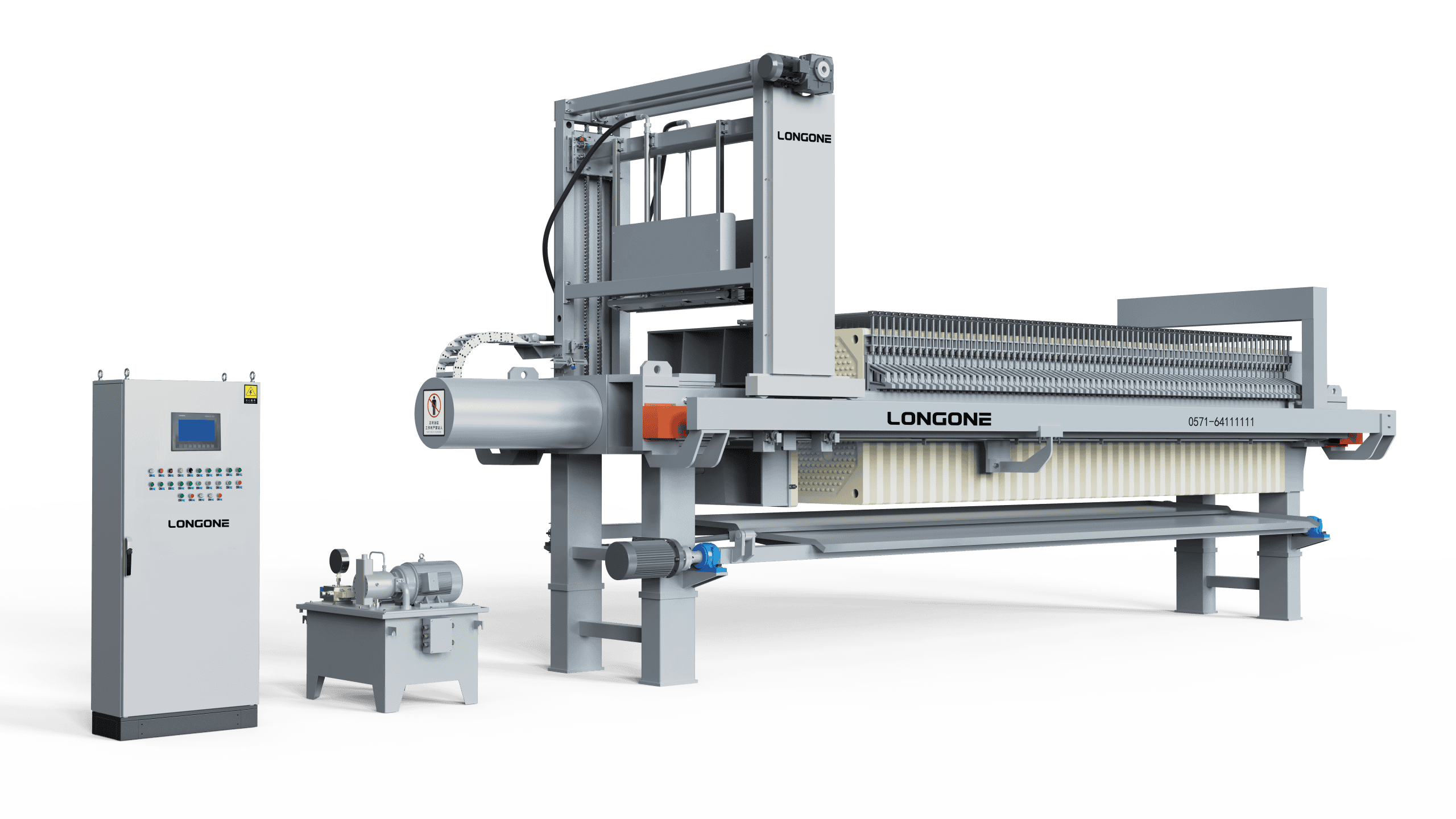
A filter press is a batch machine that uses pressure to push slurry through filter cloths, leaving the solids behind as a cake and releasing clear filtrate.
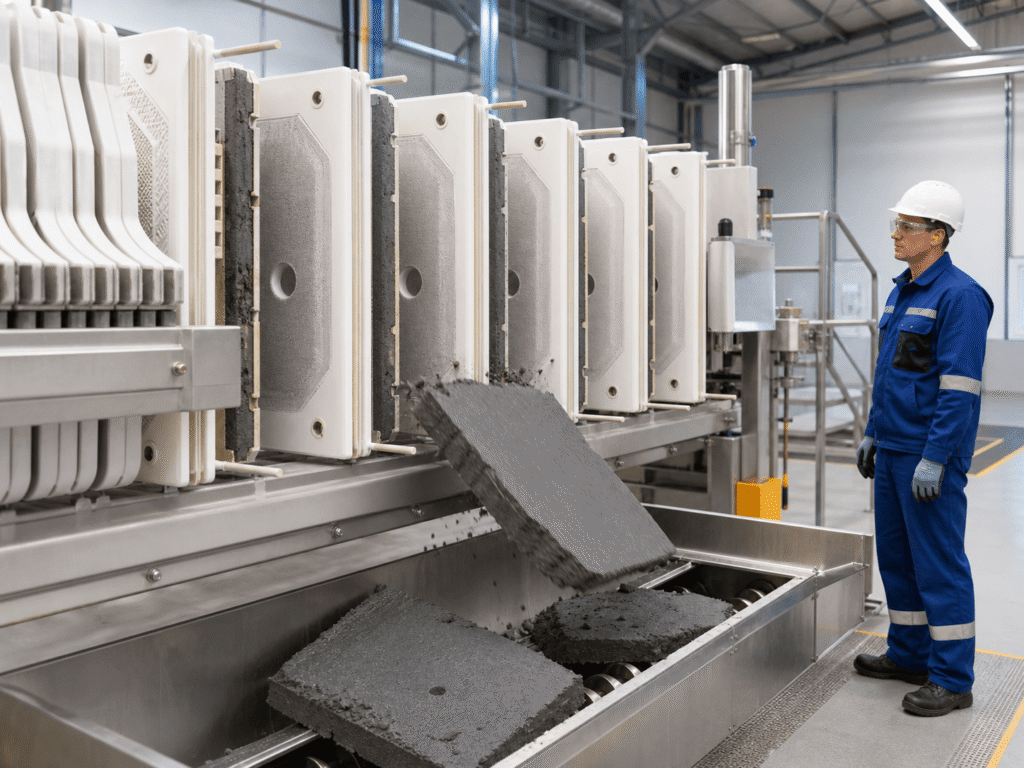
The basic idea is simple. A series of filter plates is pressed together to form sealed chambers. Slurry is pumped into these chambers, the liquid passes through the cloth, and the solids build up inside. When the chambers are full, the press opens and the cake is discharged.
Compared with other dewatering equipment, filter presses are valued for the dryness of the cake they produce and for the clarity of the filtrate. Dryer cake usually means lower transport and disposal costs, which is often the main economic reason to choose a press. The trade-off is that the process is batch-based, so throughput depends on cycle time rather than continuous flow.
How Does a Filter Press Work?
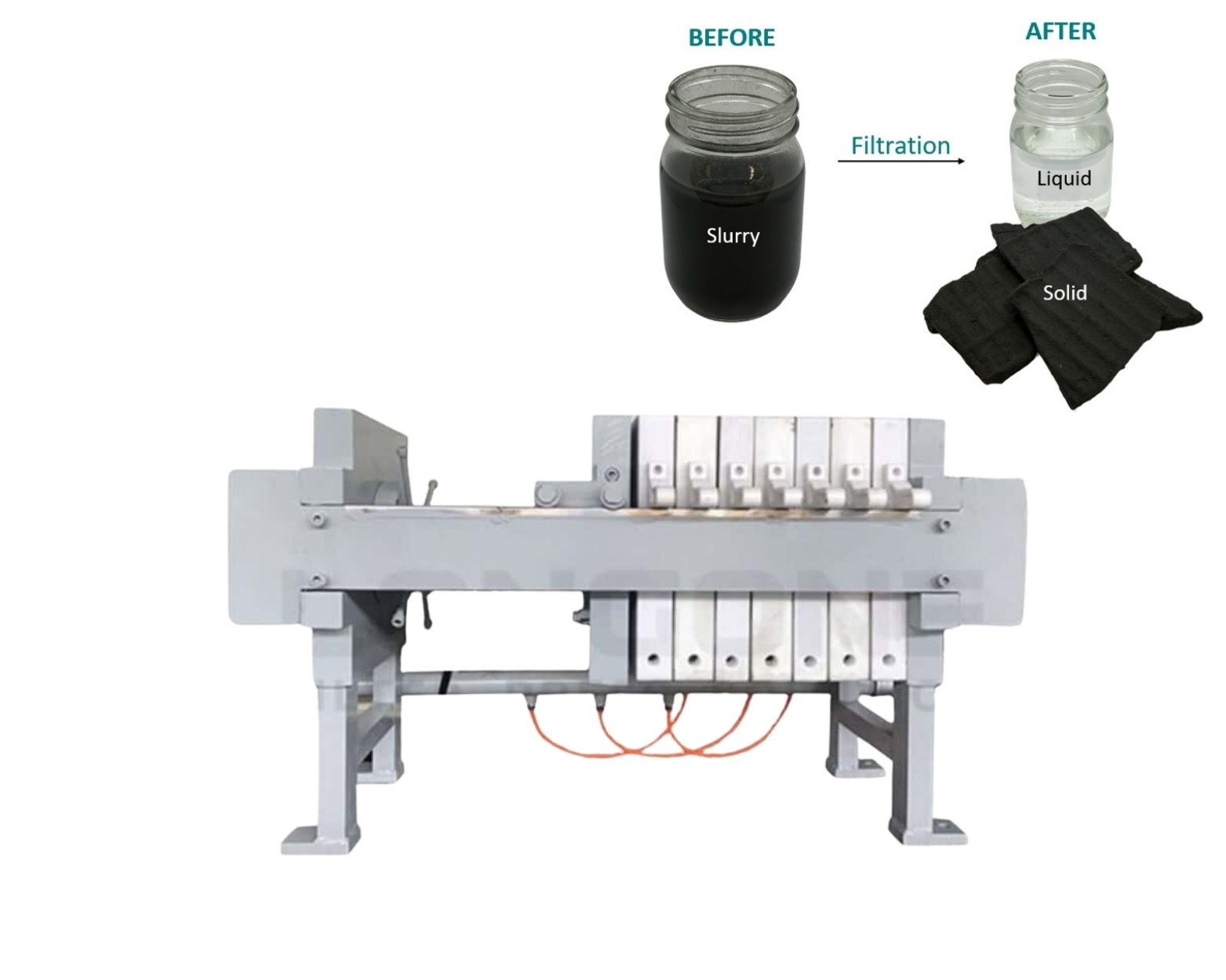
A filter press works in repeating cycles: close the plates, fill with slurry, press out the liquid, then open and discharge the cake.
A typical cycle has four stages:
- Closing. The hydraulic system pushes the plates together and holds them under enough force to keep the chambers sealed against feed pressure.
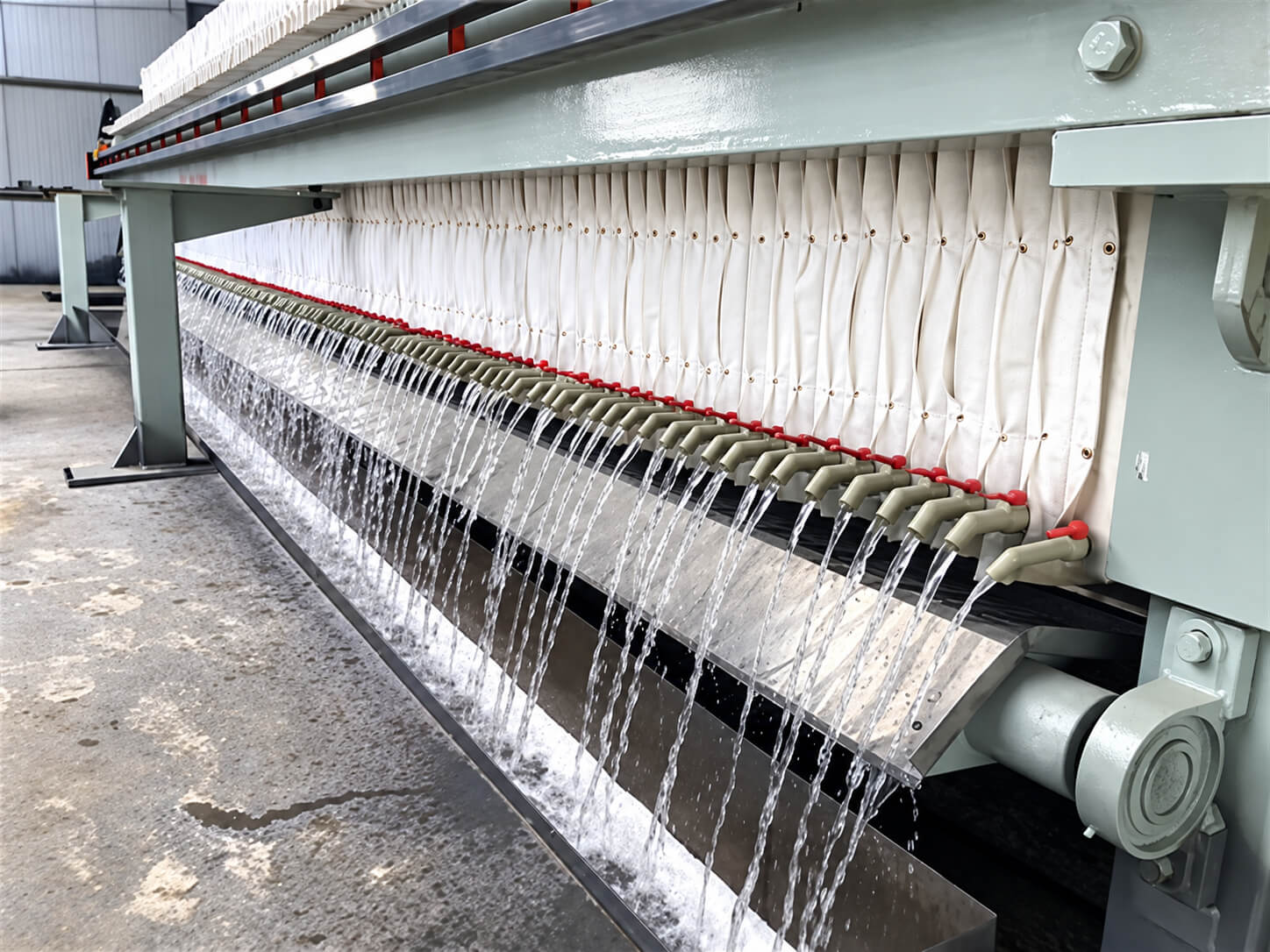
- Filling. A feed pump sends slurry into the chambers. Liquid passes through the cloth and exits through the plate drainage channels, while solids collect against the cloth.
- Pressing. As the chambers fill, feed pressure rises and the cake consolidates. On membrane presses, a second squeeze stage inflates the plate membranes to remove more moisture.
- Discharge. The press opens, plates are separated one by one, and the cake drops out. Cloths are checked or washed before the next cycle begins.
Cycle time depends heavily on the slurry. Fine, sticky particles filter slowly, while coarse, free-draining solids filter quickly. This is why slurry characteristics, rather than machine size alone, should drive equipment selection.
Key Components of a Filter Press Machine
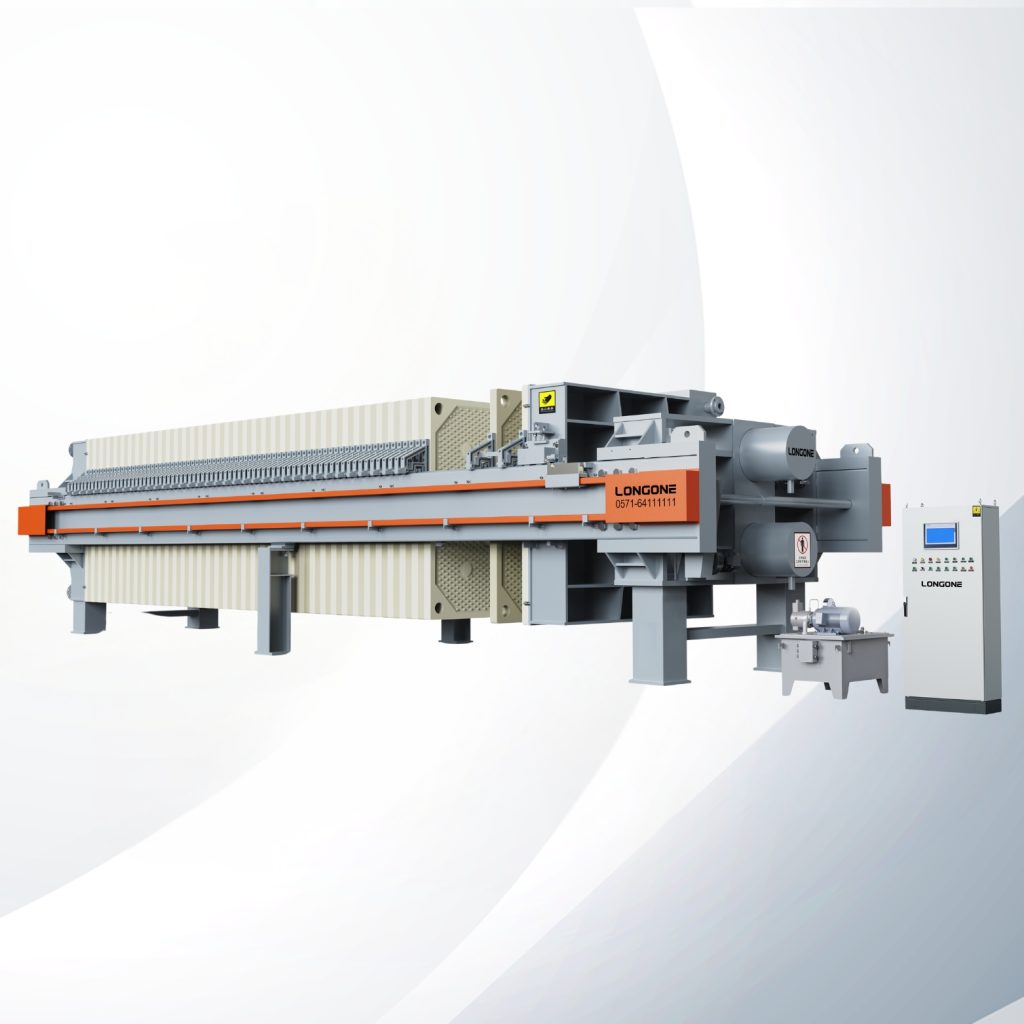
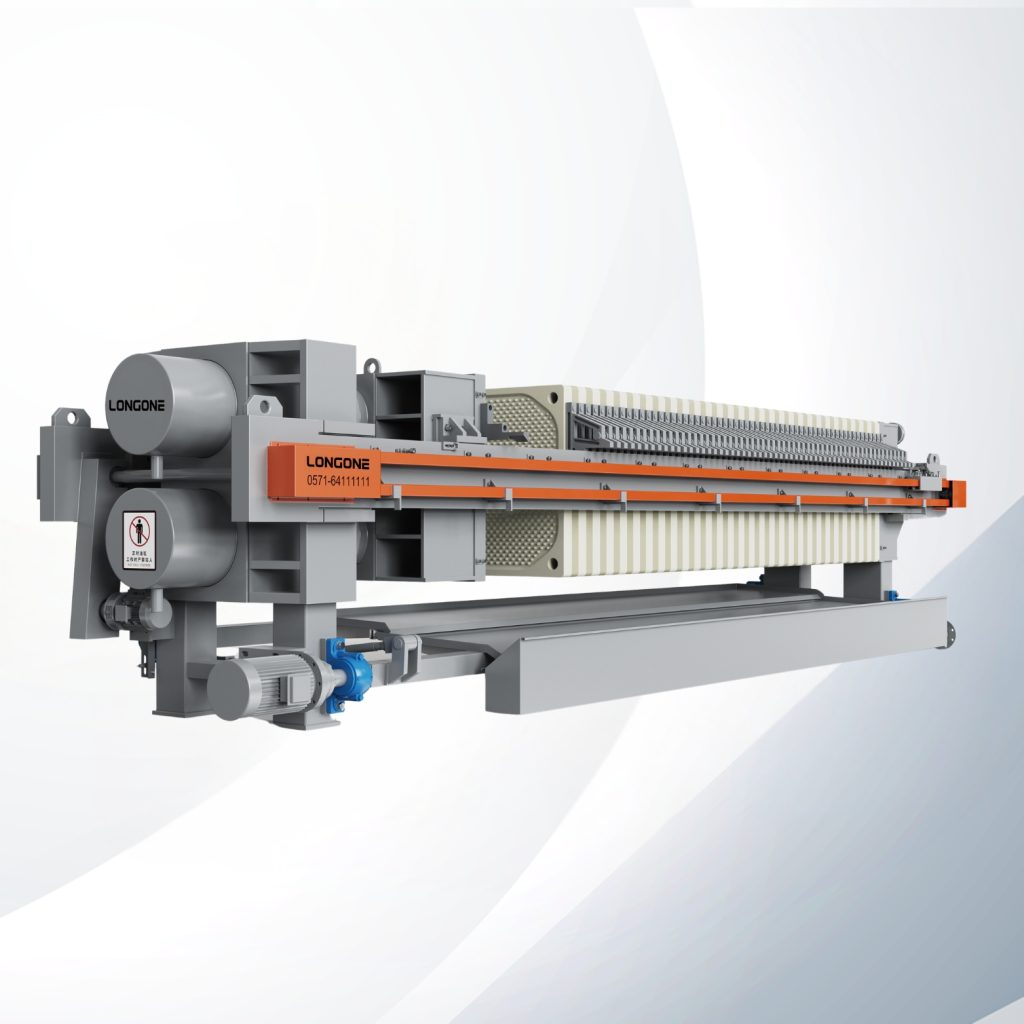
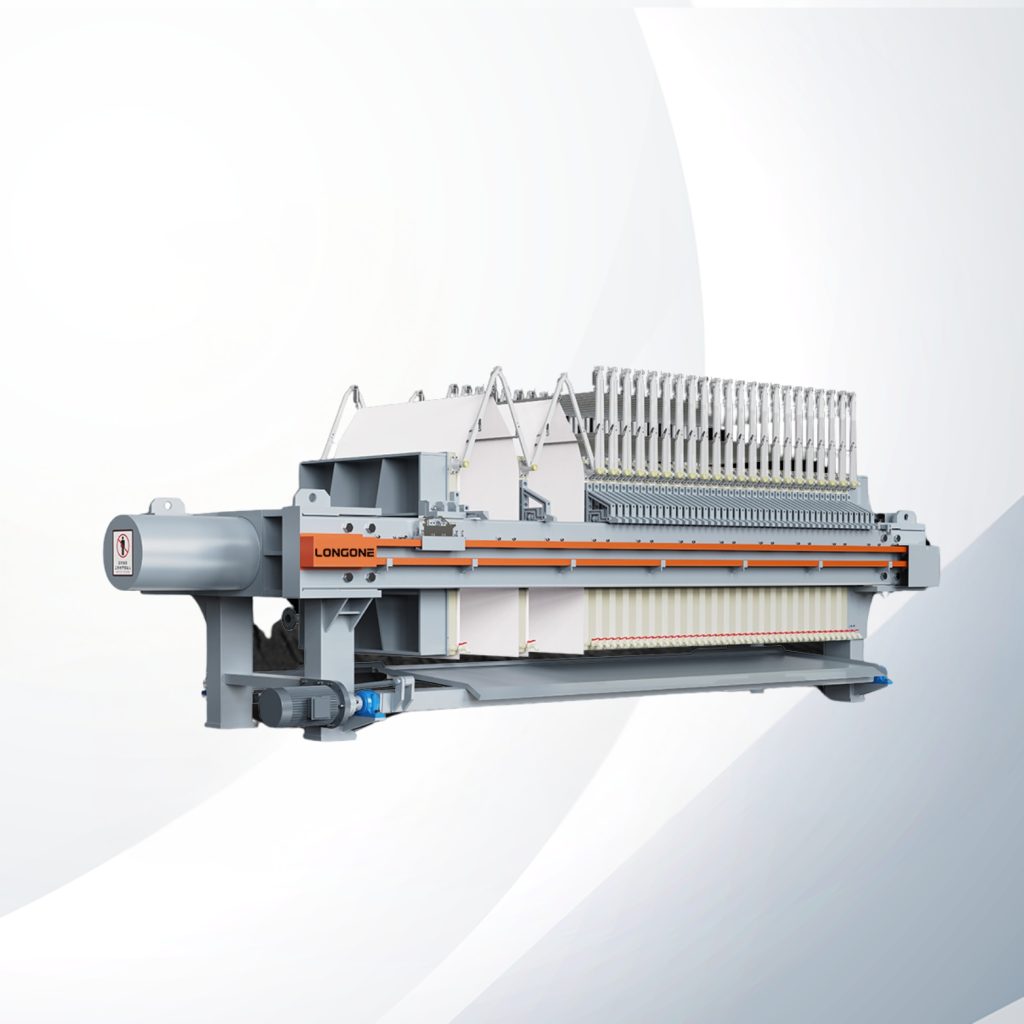
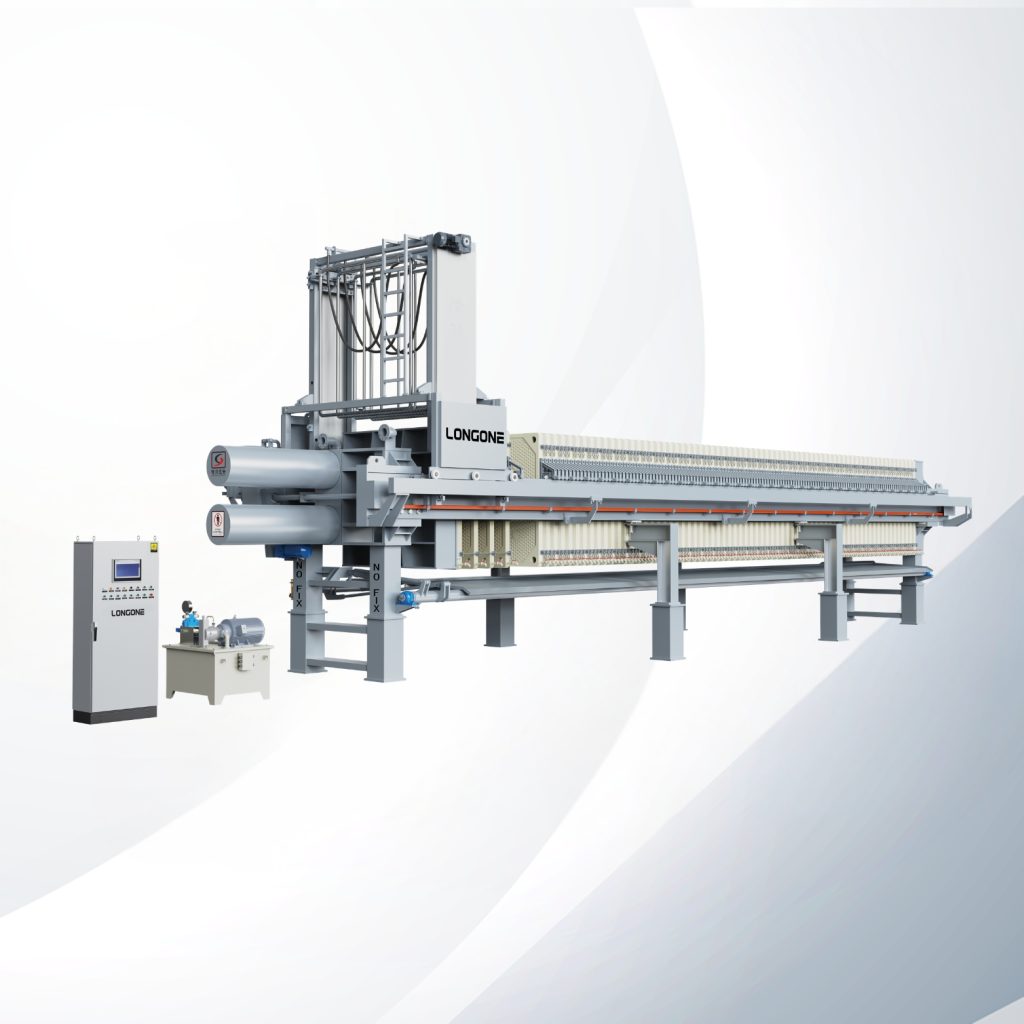
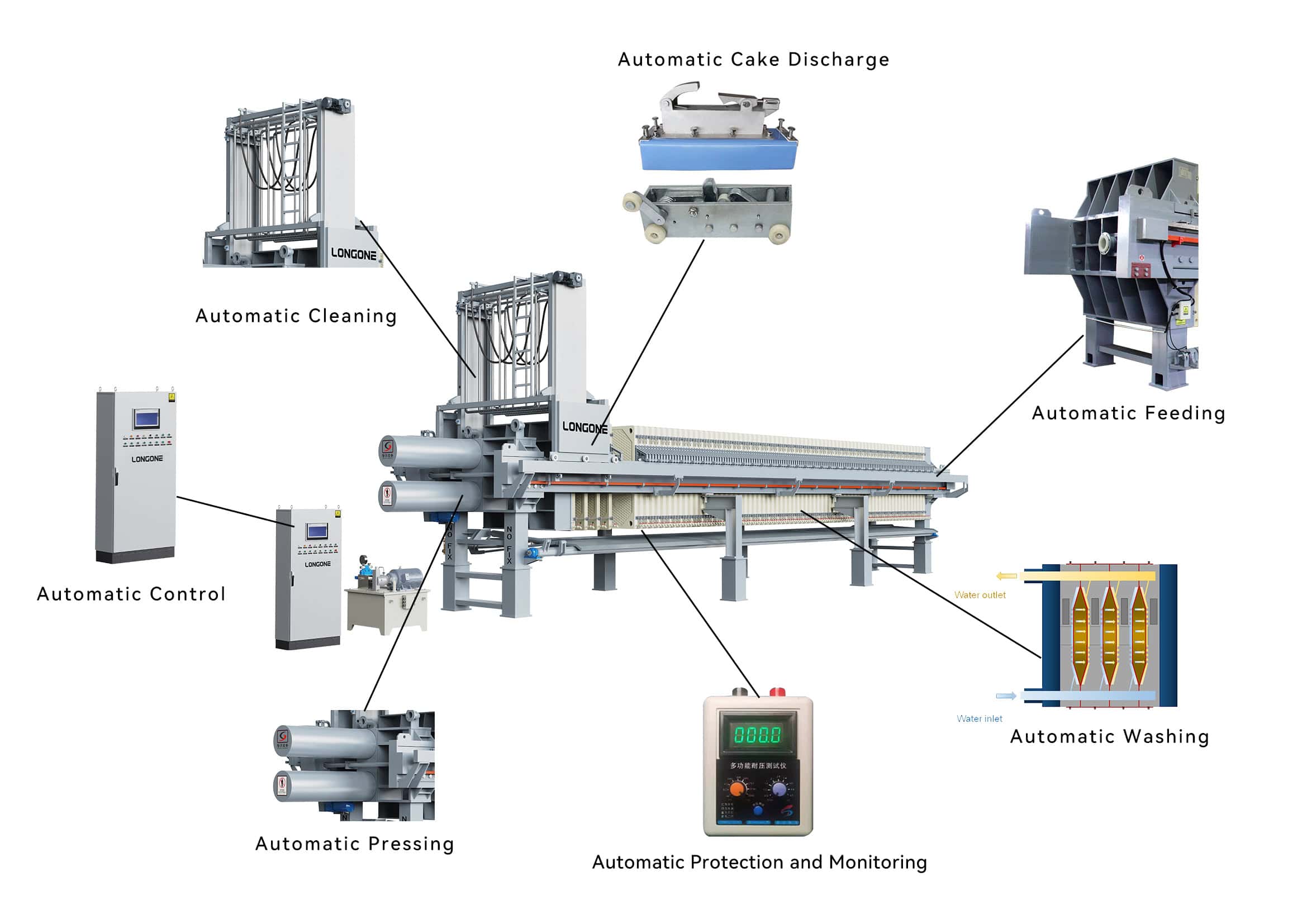
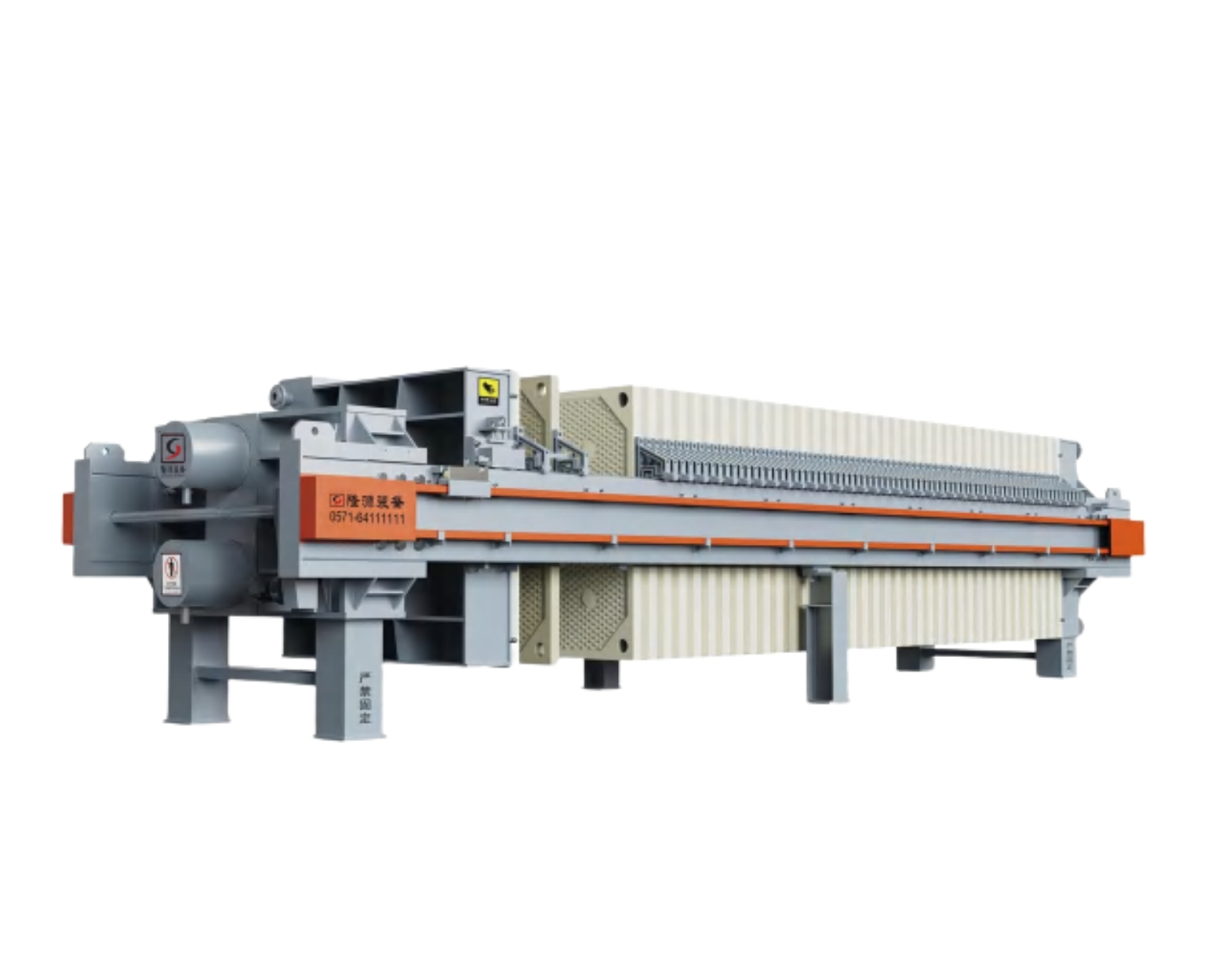
The main filter press components are the frame, filter plates, filter cloths, the hydraulic closing system, and the feed and filtrate manifold.
- Frame. Two end frames connected by side bars, which support the plate pack and carry the closing load. Frames are usually fabricated steel, often coated or lined for corrosive service.
- Filter plates. These form the filtration chambers and are the parts that wear most. Polypropylene is the most common material for general use. Cast iron and other materials are used for higher temperatures or specific process conditions.
- Filter cloths. The cloth does the actual filtering. Material, weave, and permeability must match the particle size and chemistry of the slurry.
- Hydraulic system. A cylinder and pump unit that closes the plate pack and maintains pressure during filtration.
- Manifold and piping. These carry slurry in and filtrate out, and may include air blow or wash connections.
In our experience, buyers often concentrate on the frame and hydraulics, but the plates and cloths have the largest influence on cake dryness, cycle time, and running cost. A plate with poor flatness or the wrong material will leak or deform well before the frame shows any wear.
Types of Filter Press Machines
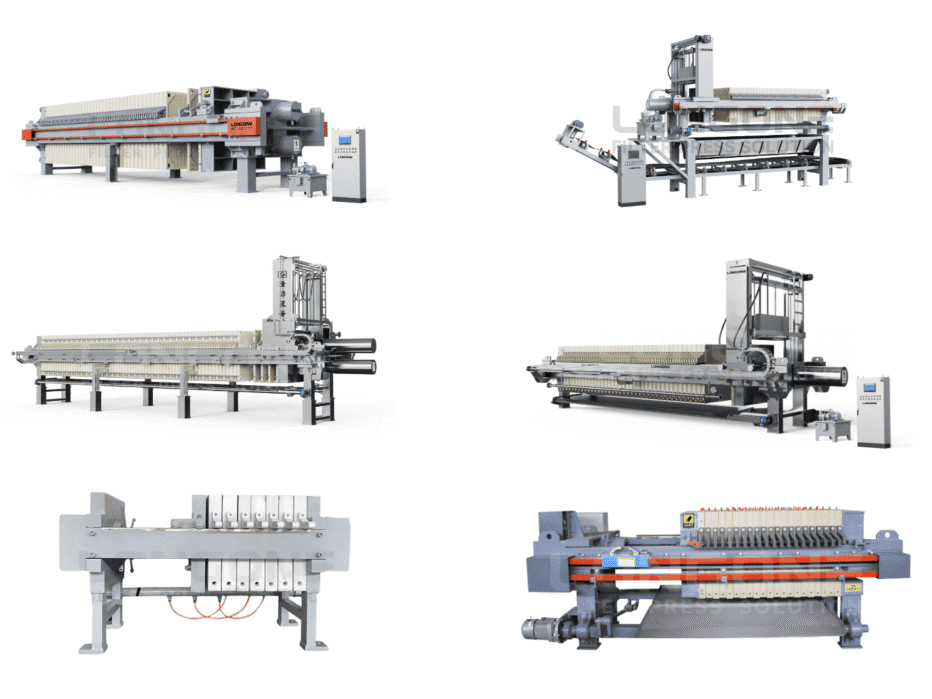
The main filter press types are recessed plate, membrane, and plate-and-frame presses, available in manual, semi-automatic, and fully automatic configurations.
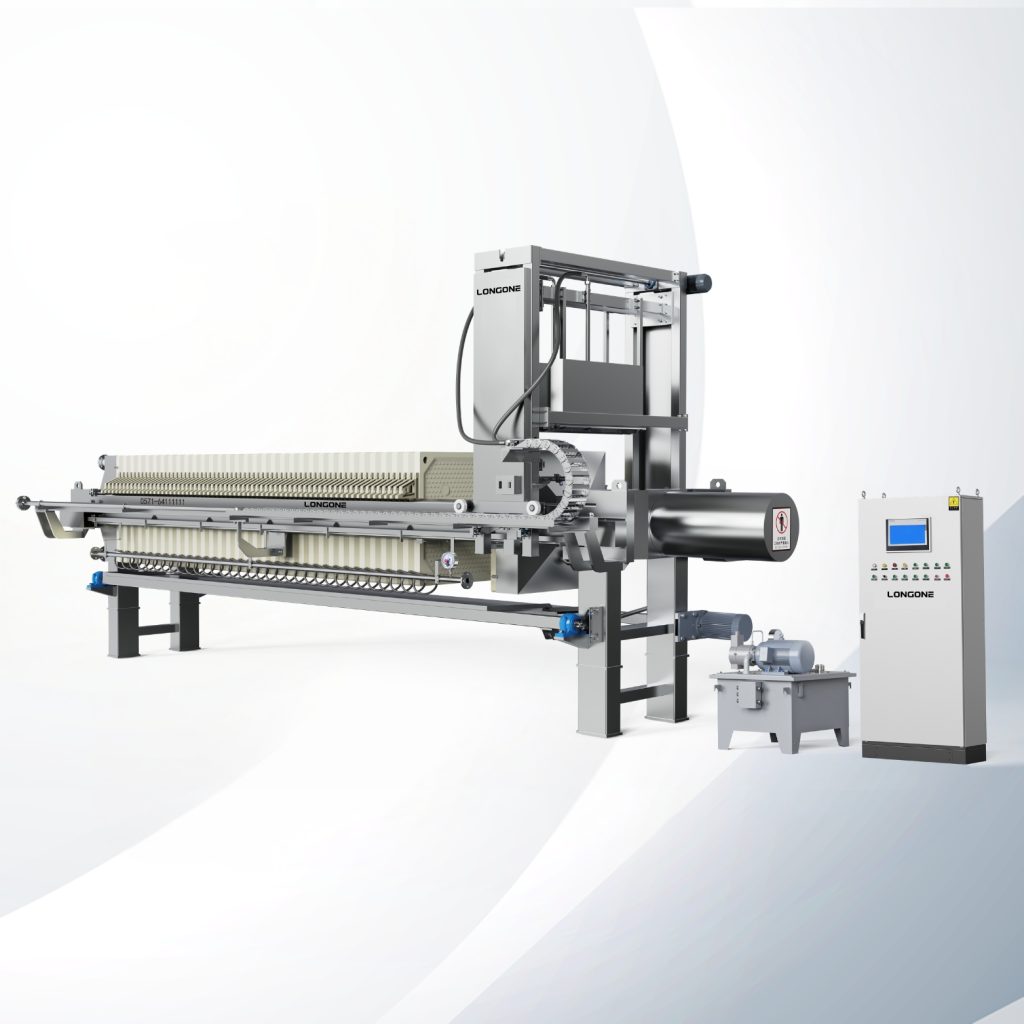
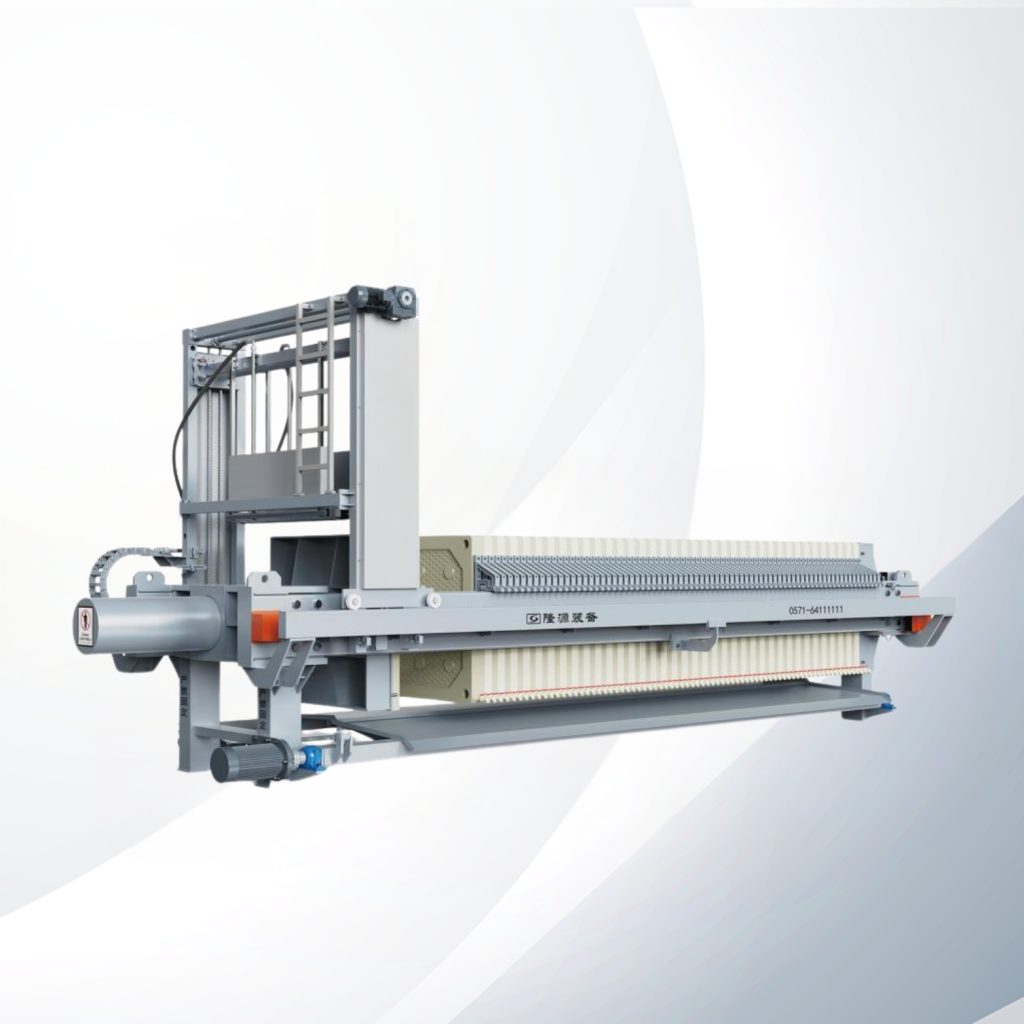
Recessed plate presses are the most widely used. Membrane presses add a squeeze stage for drier cake. Plate-and-frame designs are older but still suit certain low-solids or polishing applications. Automation level is a separate choice: it affects labor requirements and cycle consistency rather than the filtration principle itself.
| Type | Plate Design | Cake Dryness | Typical Operation | Best Suited For |
|---|---|---|---|---|
| Recessed plate | Fixed chamber recessed into each plate | Good | Manual to fully automatic | General industrial filtration, mining, chemicals |
| Membrane (diaphragm) | Recessed plate with inflatable membrane for squeeze stage | Higher than recessed plate | Usually semi- or fully automatic | Applications where low moisture content reduces disposal or drying costs |
| Plate and frame | Alternating flat plates and hollow frames | Moderate | Mostly manual | Low-solids slurries, clarification, polishing |
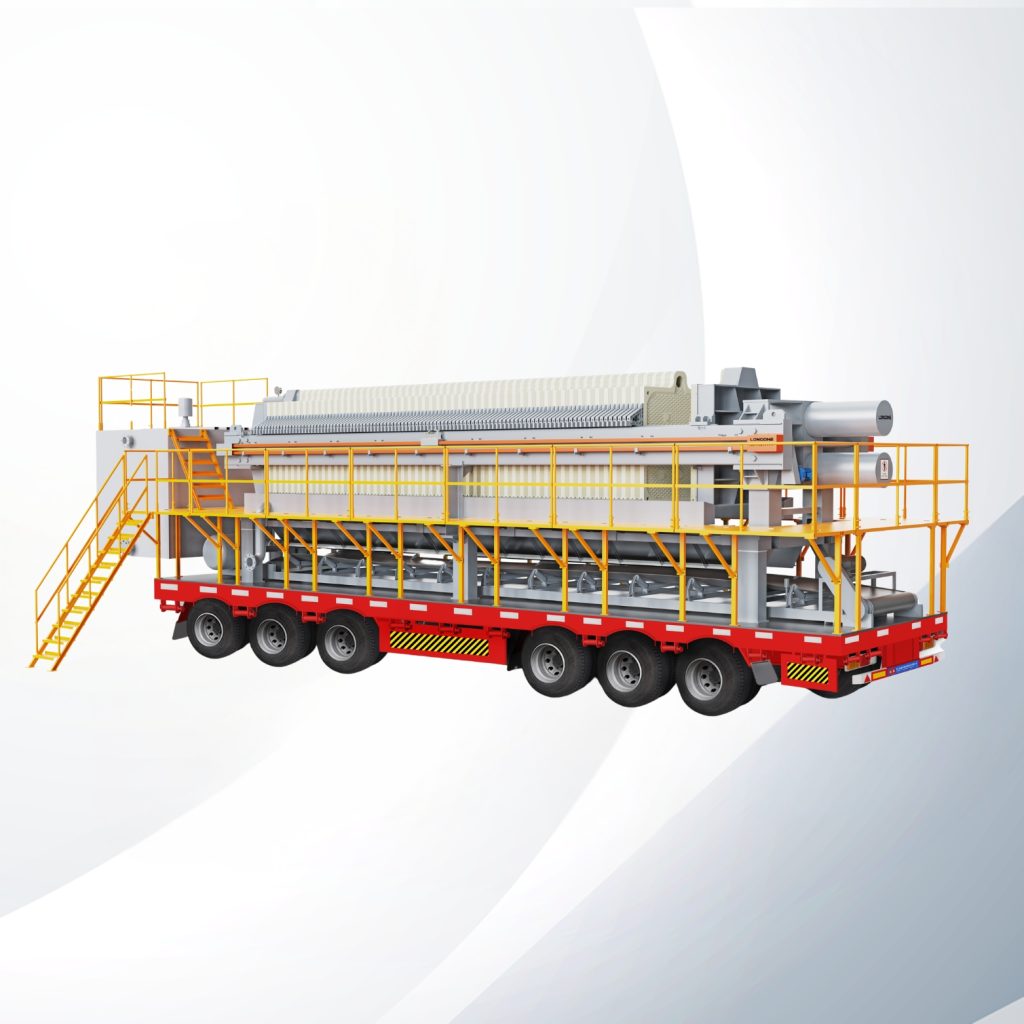
| Automatic high-capacity | Any of the above with plate shifter, cloth washing, and drip trays | Depends on plate type | Fully automatic | Large plants running continuous batch cycles with limited labor |
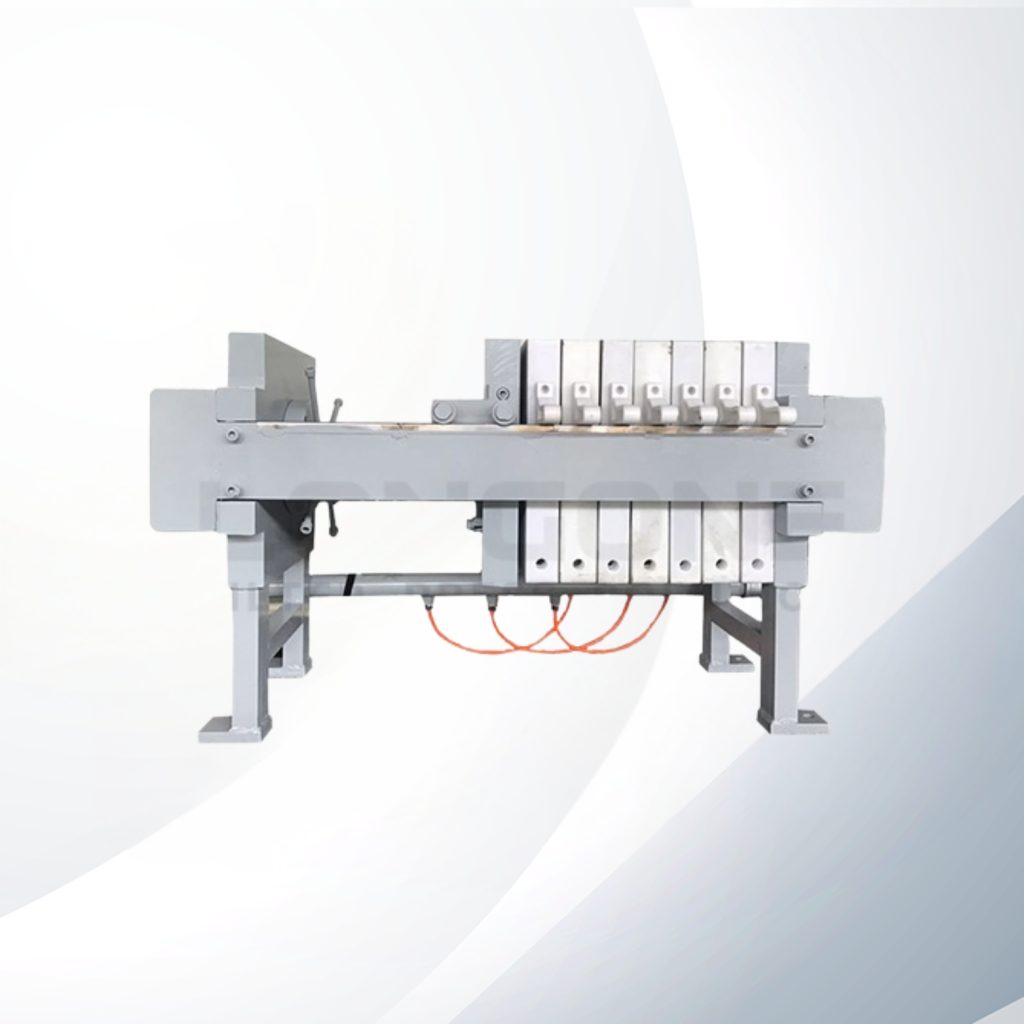
| Small-scale / laboratory | Compact recessed plate design | Similar to full-size units | Manual | Testing, pilot trials, small production runs |
Note that “cake dryness” in the table is relative. Actual results depend on the material being filtered, and a lab or pilot test is the reliable way to confirm expected performance before ordering.
What Maintenance Does a Filter Press Require?
Routine maintenance covers cloth cleaning, plate and seal inspection, hydraulic checks, and monitoring feed pressure for irregularities.
Most filter press problems we see are preventable. The most common are blinded cloths, worn plate sealing surfaces, and uneven feed pressure. A basic maintenance routine should include:
- Cloth inspection and washing. Blinded or torn cloths reduce filtration rate and cause leaks. Wash frequency depends on the slurry; some applications need washing every few cycles, others much less often.
- Plate sealing surfaces. Check for cracks, deformation, and material buildup around the edges. Even small deposits can cause leaks under pressure.
- Hydraulic system. Monitor oil level, check for leaks, and confirm the system holds closing pressure throughout the cycle.
- Feed pump and pressure. Sudden pressure changes or unusually long fill times usually indicate a cloth or slurry problem rather than a machine fault.
- Frame and side bars. Look for corrosion and confirm plates slide freely.
Keeping simple records of cycle time, feed pressure, and cake dryness makes problems easier to spot early. A gradual increase in cycle time is often the first sign of cloth blinding.
What Is the Average Lifespan of a Filter Press?
A well-maintained filter press frame can operate for many years, often 15 years or more, while plates and cloths are wear items replaced on a shorter schedule.
There is no single lifespan figure, because it depends on the duty. Abrasive or corrosive slurries, high cycle counts, and poor maintenance all shorten service life. Gentler applications with regular upkeep can run much longer.
It helps to think of the machine in two parts. The frame and hydraulic system are long-life assets. Filter cloths are consumables, typically replaced after a period ranging from a few months to a couple of years depending on the application. Plates fall in between: they can last many years, but they are subject to gradual wear at the seal edges and to damage from over-pressure or thermal stress.
One practical advantage of the filter press design is that worn plates can be replaced individually. If the frame is sound, you do not need to scrap the machine. We supply replacement plates in standard and OEM-compatible sizes for existing equipment, which is a common way to extend the working life of an older press.
How Do I Choose the Right Filter Press for My Application?
Start with the slurry: particle size, solids concentration, chemistry, and temperature. Then match plate type, size, and automation to your throughput and labor situation.
Choosing a press starts with the material, not the machine. We recommend working through these questions in order:
- Slurry properties. What are the particle size, solids concentration, pH, and temperature? These determine plate material, cloth selection, and maximum working pressure.
- Required cake dryness. If disposal or downstream drying is costly, a membrane press may justify its higher price. If moderate dryness is acceptable, a recessed plate press is often sufficient.
- Throughput. Calculate daily slurry volume and solids load, then work backward to the number and size of chambers needed for your cycle time.
- Automation. Consider labor cost and operator availability. Automatic plate shifting and cloth washing add cost but reduce manual work and improve cycle consistency.
- Site conditions. Check available floor space, ceiling height for discharge, feed pump capacity, and utilities.
- Support and spare parts. Confirm that plates, cloths, and hydraulic components are readily available.
If possible, send a slurry sample or lab test data to the supplier before requesting a quote. A small-scale filtration test gives far more reliable sizing information than a datasheet alone. We are happy to review your application details and recommend a configuration, including whether a complete machine or replacement plates for your existing press is the more practical option.
Are Filter Presses Suitable for Sludge Dewatering?
Filter presses are widely used for sludge dewatering and generally produce a drier cake than most other mechanical methods, though results depend on the sludge type.
Municipal and industrial wastewater sludge is one of the most common applications. Drier cake reduces the volume and weight that must be hauled away, which directly lowers disposal cost. Filter presses also produce a clear filtrate that can usually be returned to the treatment process.
Some points to keep in mind:
- Sludge type matters. Biological sludge, chemical sludge, and mineral sludge behave differently. Chemical conditioning, such as lime or polymer addition, is often needed to improve filterability.
- Batch operation. Filter presses are not continuous, so plants need to size the press and any holding tank to match daily sludge production.
- Alternatives. Belt presses and centrifuges run continuously and may suit sites with lower dryness requirements or limited labor. A filter press is usually the better choice when cake dryness is the priority.
As with any dewatering project, a pilot test on your actual sludge is the best way to confirm cake dryness and cycle time before committing to equipment.
Final Thoughts
A filter press is a straightforward machine, but a good result depends on matching it correctly to the slurry. Focus on plate and cloth selection, confirm performance with a test where you can, and plan for routine maintenance from the start. If you are evaluating equipment or need replacement plates for an existing press, our team can review your application and suggest a suitable configuration.
FAQ
What is the difference between a recessed plate and a membrane filter press?
A recessed plate press filters slurry under feed pump pressure only. A membrane press adds a second stage: after filling, the plate membranes are inflated with water or air to squeeze the cake further. This usually gives a drier cake and shorter overall cycles for some materials, but the plates and control system cost more. If moderate dryness is acceptable, a recessed plate press is often the simpler and more economical choice.
What factors affect the price of a filter press?
The main cost drivers are the number and size of chambers, plate type (recessed or membrane), plate and frame materials, automation level, and any options such as cloth washing, drip trays, or a plate shifter. Corrosive or high-temperature service may require special materials, which also raises cost. Price depends on the specification, so it is best to request a quote based on your actual slurry and capacity requirements.
How often should filter cloths be replaced?
There is no fixed interval. Cloth life depends on the slurry’s abrasiveness and chemistry, the number of cycles per day, and how well the cloths are washed. Replace cloths when you see tears, permanent blinding that washing cannot fix, or a steady rise in cycle time and drop in cake dryness. Recording cycle data makes the right replacement point easier to identify.
What information do I need to provide to get an accurate quote?
Please provide the material being filtered, solids concentration, particle size if known, pH, temperature, and daily volume or throughput. Also tell us your target cake moisture, available feed pump pressure, and preferred automation level. A slurry sample or lab test data helps us recommend the right plate material, cloth, and machine size.
Can I replace plates on a filter press made by another manufacturer?
In many cases, yes. Plates can be made to match your existing press if key dimensions are confirmed, including plate size, thickness, feed eye position, handle design, and the plate count the frame can hold. Sending drawings, photos, or a sample plate with measurements helps us confirm compatibility before production. This is often a practical way to extend the life of a sound frame.
Why is my filter press leaking between plates?
Common causes include worn or damaged sealing surfaces, cloth folds or wrinkles at the plate edge, solids buildup on the seals, insufficient closing pressure, and cracked or deformed plates. Check the cloths and plate edges first, clean the sealing surfaces, and confirm the hydraulic system holds pressure throughout the cycle. If leaks continue at the same position, the plate may need replacement.